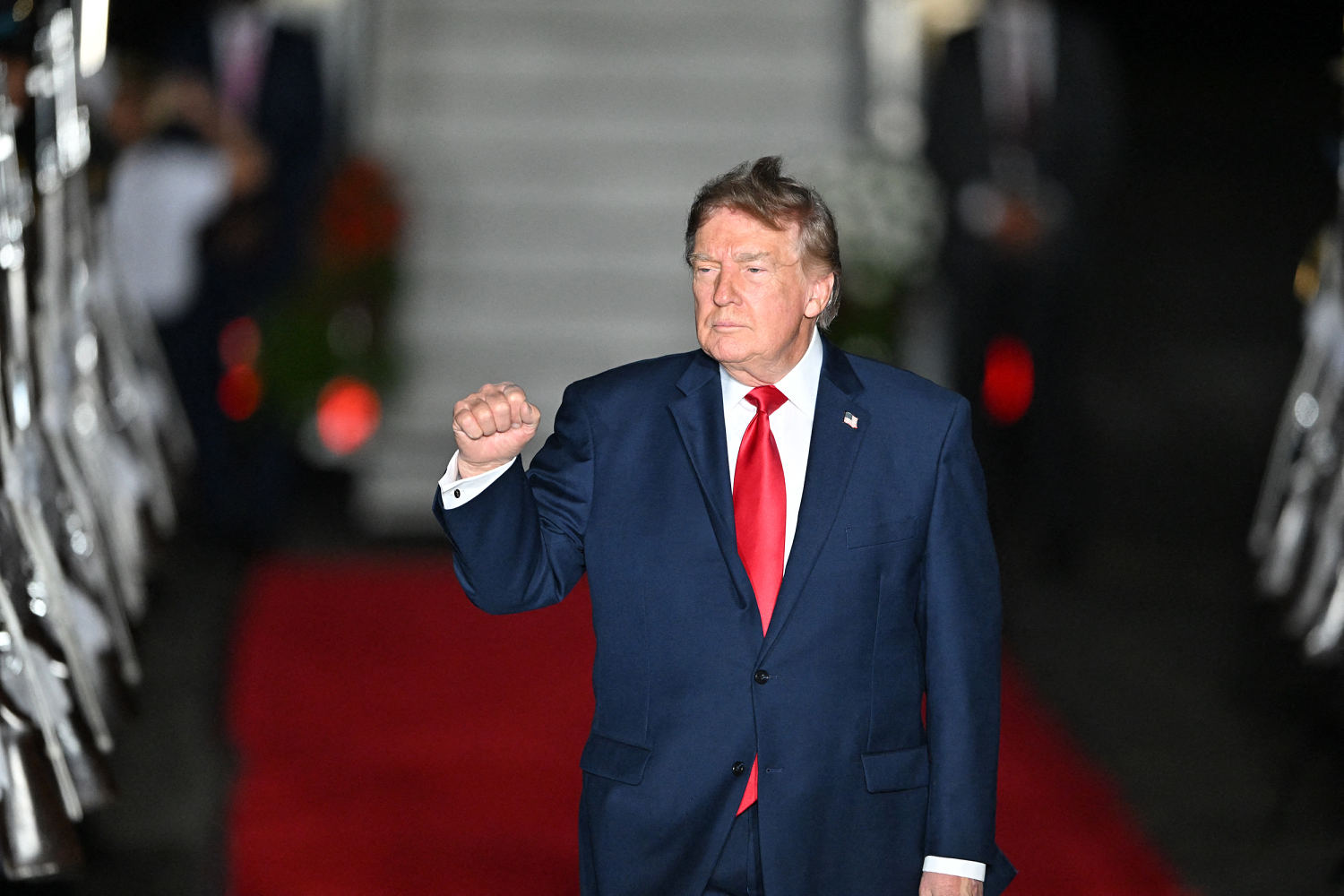
Cable news loves a good photo op. The moment Air Force One touches down on an Asian tarmac, pundits start breathless commentary about handshakes, body language, and historic turning points. Yet when Donald Trump travels to Asia for high-stakes talks involving Chinese President Xi Jinping and Russian President Vladimir Putin, the real story rarely happens in front of the cameras.
Most observers treat these summits like high-stakes poker games where one leader walks away with all the chips. That's a fundamental misreading of how great power diplomacy actually works. When the leaders of the United States, China, and Russia converge in the same diplomatic theater, nobody is signing a magic document that solves decades of structural friction overnight. Instead, they are testing boundaries, managing escalation risks, and playing to domestic audiences back home.
If you want to understand what is actually at stake during a Trump-Xi-Putin convergence in Asia, you have to strip away the partisan noise and look at the hard mechanics of trade, military posture, and energy security.
Why This Three-Way Dynamic Matters Right Now
For decades, American foreign policy operated on a simple rule of thumb. Keep Moscow and Beijing further apart from each other than either was from Washington. Henry Kissinger and Richard Nixon built an entire era of Cold War strategy around that exact triangulation.
Today, that triangle looks completely different. According to trade data tracked by the General Administration of Customs of China, bilateral trade between China and Russia surged past $240 billion annually in recent years, driven heavily by Russian energy exports and Chinese manufacturing goods. They aren't formal treaty allies in the way NATO members are, yet their shared interest in pushing back against American economic sanctions and diplomatic pressure has bound them closer together than at any point since the 1950s.
Trump's approach to this reality breaks sharply from traditional Washington orthodoxy. Rather than treating China and Russia as a monolithic bloc that must be isolated simultaneously, Trump has consistently favored personalized, bilateral dealmaking. He views direct leader-to-leader engagement not as a reward for good behavior, but as the primary tool for extracting concessions.
Critics from the foreign policy establishment, including analysts at institutions like the Brookings Institution and the Council on Foreign Relations, often warn that sitting down without extensive lower-level preconditions gives authoritarian leaders unearned legitimacy. Supporters argue the exact opposite. In systems where Xi Jinping and Vladimir Putin hold centralized, top-down authority, talking to mid-level bureaucrats is a waste of time. Nothing moves unless the top boss signs off on it.
What Trump Actually Wants From Xi Jinping
Forget the diplomatic pleasantries. When Trump sits across from Xi Jinping, the conversation revolves around concrete economic leverage and industrial capacity.
The core friction between Washington and Beijing isn't an abstract ideological debate anymore. It's about supply chains, tariffs, and technological dominance. During his first term, Trump fundamentally altered the bipartisan consensus in Washington by slapping sweeping tariffs on hundreds of billions of dollars in Chinese imports under Section 301 of the Trade Act of 1974. The Biden administration kept those tariffs in place and added targeted export controls on advanced semiconductors.
When Trump engages Xi in Asia, three specific issues dominate the room.
Trade Deficits and Tariff Leverage
Trump views bilateral trade deficits as a direct scorecard of national strength. Beijing, facing sluggish domestic consumer demand and a prolonged downturn in its real estate sector, relies heavily on manufacturing exports to keep its economy growing. That gives Washington real tariff leverage, though it cuts both ways. American farmers and manufacturers feel the immediate sting of Chinese retaliatory tariffs on soybeans, pork, and industrial components.
Technology and Supply Chain Decoupling
Both countries are racing to control the foundational technologies of the next thirty years, from artificial intelligence to electric vehicle batteries and rare earth processing. China currently processes the vast majority of the world's rare earth minerals, according to the International Energy Agency. Trump wants guaranteed market access and intellectual property protections without letting Beijing capture critical American tech sectors.
Taiwan and the South China Sea
No meeting between an American president and Xi Jinping avoids the Taiwan Strait. Beijing views Taiwan as a breakaway province and has steadily increased military patrols around the island. Washington maintains its longstanding "One China" policy alongside commitments under the Taiwan Relations Act to provide Taiwan with defensive arms. Trump has historically favored strategic ambiguity—keeping Beijing guessing about how the United States would respond militarily while pressing Taipei to spend far more on its own defense.
The Putin Factor and the Limits of Personal Diplomacy
Adding Vladimir Putin into the same Asian diplomatic orbit changes the chemistry entirely. Even if Trump, Xi, and Putin aren't sitting at the exact same three-sided table for every session, their overlapping schedules in the region create an unmistakable geopolitical signal.
Putin travels abroad far less frequently than he once did, largely due to the International Criminal Court arrest warrant issued against him in 2023 and the ongoing war in Ukraine. When he does travel to Asia, he is looking to demonstrate that Western efforts to isolate Russia have failed.
Trump has repeatedly stated his desire to bring a rapid negotiated end to the war in Ukraine, arguing that the conflict drains American resources and pushes Russia deeper into Beijing's orbit. From Moscow's perspective, any high-level engagement with an American president is an opportunity to discuss European security architecture, sanctions relief, and territorial realities on the ground without European leaders dictating the terms.
Here is where the skepticism from foreign policy veterans kicks in. Many analysts at the Carnegie Endowment for International Peace point out that Putin's core objectives in Ukraine—preventing Kyiv from integrating into Western security structures and retaining control over occupied territory—directly clash with Ukrainian sovereignty and NATO's credibility. Personal rapport between leaders can open a backchannel, sure. It cannot easily erase fundamentally incompatible security demands.
What Most Commentators Miss About Asian Host Nations
Watch the television coverage and you'd think the host country is just providing the catering and the flags. That's completely backwards.
Whether a summit takes place on the sidelines of an APEC gathering, an ASEAN forum, or a bilateral stop in Tokyo, Seoul, or Hanoi, the regional dynamics are doing half the diplomatic work. Countries across the Indo-Pacific do not want to be forced into a binary choice between Washington and Beijing.
Look at the numbers. China is the largest trading partner for almost every major economy in East and Southeast Asia. At the exact same time, countries like Japan, South Korea, and the Philippines rely on the U.S. military umbrella to deter Chinese territorial claims in the East and South China Seas.
When Trump arrives in Asia, regional leaders watch every word for signs of two extremes they both fear. First, they worry about unchecked U.S.-China confrontation that could disrupt regional shipping lanes and tank their export-driven economies. Second, they worry about a sudden "G2" grand bargain where Washington and Beijing cut a bilateral deal over the heads of smaller Asian allies.
Japan and South Korea, in particular, pay close attention to how Trump frames alliance burden-sharing. Trump has consistently pushed treaty allies to pay significantly more for the stationing of U.S. troops on their soil. For Tokyo and Seoul, hosting or supporting high-level diplomacy is also a way to keep Washington anchored to the region's security architecture.
Separating Summit Theater From Real Policy Shifts
If you are trying to read the news coming out of a major summit in Asia without getting misled by spin, ignore the adjectives used in official press releases. Words like "candid," "constructive," and "productive" are standard diplomatic code. "Candid" usually means they argued fiercely behind closed doors. "Constructive" means they didn't walk out of the room.
Instead, track the tangible indicators that actually move markets and shift military postures.
- Working Group Announcements: When leaders actually want to solve a problem, they assign named cabinet officials—like the Treasury Secretary or Trade Representative—to specific bilateral working groups with concrete 30- or 60-day deadlines. No working groups means no real follow-through.
- Tariff Suspensions or Licensing Changes: Watch the Federal Register and China's Ministry of Commerce in the weeks immediately following the trip. Real progress shows up in delayed tariff hikes, agricultural purchase commitments, or adjusted export license rules.
- Military-to-Military Communication Channels: During periods of high tension, Beijing often freezes direct hotlines between the Pentagon and the People's Liberation Army. Restoring regular talks between theater commanders is one of the clearest signs that both sides want to avoid an accidental collision at sea or in the air.
- Energy and Sanctions Enforcement: If talks with Putin produce anything substantive, you won't see it in a handshake. You will see it in how the U.S. Treasury Department enforces secondary sanctions on third-party banks and shipping tankers carrying Russian crude oil through Asian waters.
How to Follow Geopolitical News Without Getting Played
Major diplomatic trips generate thousands of conflicting headlines within a forty-eight-hour window. Every delegation leaks selective details to friendly reporters to make their leader look tough to domestic voters.
To cut through that noise, cross-reference official White House readouts against statements from China's Ministry of Foreign Affairs and Russia's Kremlin press service. The gap between what Washington emphasizes and what Beijing or Moscow highlights tells you exactly where the unresolved disagreements sit. Follow primary source reporting from outlets with dedicated diplomatic correspondents on the ground—such as Reuters, the Associated Press, or the Financial Times—rather than partisan commentary panels reacting to thirty-second video clips. Look at bond yields, currency movements in the offshore yuan, and defense sector equities during the summit window; financial markets price in real policy shifts long before pundits stop arguing about who won the handshake.