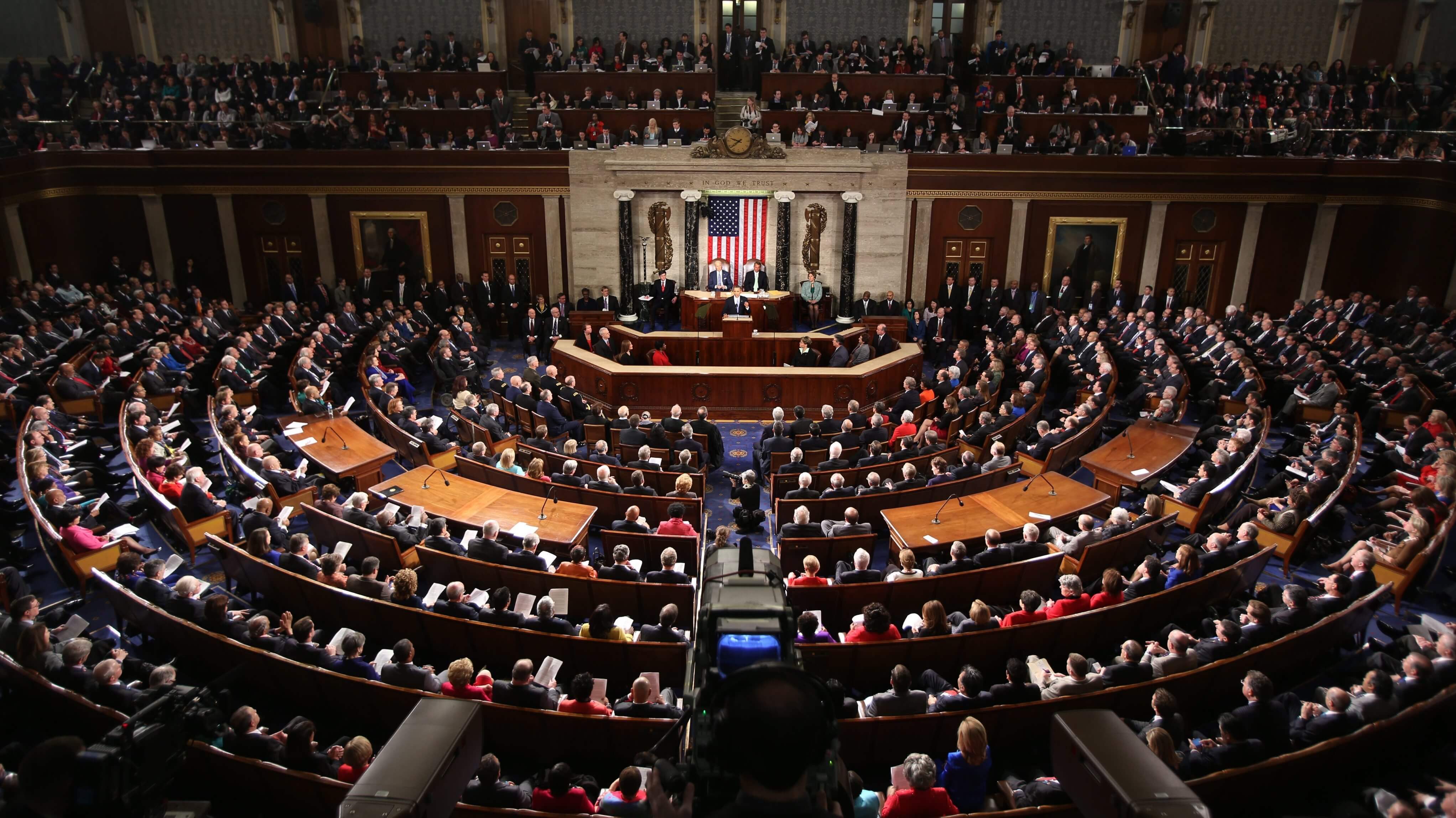
Every two years, Washington media plays the exact same parlor game. The midterm ballots get counted, the gavel changes hands, and pundits immediately start drawing up scorecards on what the "new Congress" will do about immigration. They count House seats. They tally Senate committee chairs. They speculate endlessly about border funding bills and high-skilled visa caps.
It is complete theater. In other news, read about: Why Making Stephen Miller Chief of Staff Is Actually a Brilliant Lame-Duck Power Play.
If you are an executive planning global talent mobility, a legal strategist mapping out compliance, or a voter trying to figure out where border policy actually goes next, looking at Capitol Hill is a waste of your time. The lazy consensus assumes that legislative majorities dictate immigration outcomes. In reality, Congress abdicated its constitutional authority over the border decades ago. Today, a divided or newly constituted Congress holds almost zero operational power over the day-to-day movement of people into the United States.
The real levers sit inside the executive branch, federal district courtrooms, and arcane regulatory rulebooks that never see a floor vote. The New York Times has analyzed this fascinating issue in extensive detail.
The Legislative Gridlock Illusion
To understand why the midterm seat count is mostly noise, look at the mechanics of the United States Senate. Under current rules, passing any substantive statutory reform requires 60 votes to overcome a filibuster. Neither party has held a filibuster-proof majority capable of passing comprehensive immigration reform since the late 2000s, and the political incentives actively punish compromise.
Politicians on both sides of the aisle prefer the issue over the solution. A broken border and a backlogged visa system are fundraising goldmines. Solving them removes a primary wedge issue used to mobilize base voters every November.
I have sat in boardrooms where Fortune 500 general counsels burned hundreds of thousands of dollars on Washington lobbying firms, convinced that a slight shift in the House Judiciary Committee would finally unlock green card backlogs or expand H-1B caps. Every single time, those budgets vanished into thin air. Bills die in committee. Discharge petitions stall. Messaging bills pass one chamber purely to die in the other.
When you hear commentators ask, "Who holds the power on immigration after the midterms?" they are asking the wrong question entirely. Power does not live in the legislative branch anymore. It lives in administrative discretion.
Where the Real Power Actually Lives
While cable news obsesses over C-SPAN feeds, three quiet, non-legislative engines actually run the American immigration system.
1. Executive Orders and Parole Authority
Under the Immigration and Nationality Act (INA), specifically Section 212(d)(5), the Secretary of Homeland Security holds broad statutory authority to grant "parole" to noncitizens on a case-by-case basis for urgent humanitarian reasons or significant public benefit.
Presidents of both parties have stretched this single paragraph into a de facto legislative tool. Through executive proclamations, presidential memoranda, and agency directives, the White House can effectively open or close the southern border, create entirely new humanitarian pathways for hundreds of thousands of people, or impose sweeping entry bans under Section 212(f). None of this requires a single vote from a newly elected member of Congress.
2. The Regulatory Rulemaking Machine
If you want to know how business immigration changes, stop watching Congress and start reading the Federal Register. Agencies like U.S. Citizenship and Immigration Services (USCIS) and the Department of Labor (DOL) control the real friction in the system.
Consider how an agency alters legal immigration without changing a single word of the U.S. Code:
- Fee Schedules: By raising filing fees by 200% or 300%, USCIS can price out smaller employers and applicants without Congress touching a cap.
- Requests for Evidence (RFEs): Simply instructing adjudicators to apply stricter scrutiny to specialty occupation definitions can cause denial rates to skyrocket overnight.
- Prevailing Wage Calculations: Adjusting the mathematical formula used by the DOL to determine minimum salaries for foreign workers can instantly make hiring international talent financially unviable for mid-sized tech and engineering firms.
- Processing Times: Shifting internal staffing away from employment-based petitions toward humanitarian backlogs effectively freezes legal immigration through administrative starvation.
3. The Federal Judiciary and Venue Shopping
Whenever the executive branch uses its regulatory or parole powers to bypass a deadlocked Congress, state attorneys general immediately sprint to federal court.
The real power brokers in American immigration are often single federal district judges in Texas, Louisiana, California, or Washington. Through nationwide injunctions, a single judge can freeze a presidential border policy or a new visa rule across all fifty states before it even takes effect. Because the Supreme Court has increasingly curtailed agency deference—most notably by overturning the Chevron doctrine—federal courts now hold massive veto power over how the executive branch interprets decades-old immigration statutes.
The Power of the Purse Is a Blunt Instrument
The standard pushback from Capitol Hill insiders is simple: Congress still controls the money. They argue that through the appropriations process, the House and Senate can starve agencies of funds, dictate detention bed counts, or attach policy riders to must-pass spending bills.
In theory, the power of the purse is absolute. In practice, it is a blunt, ineffective club.
First, USCIS is largely fee-funded. Unlike most federal agencies, roughly 96% of its budget comes from the application fees paid by immigrants and sponsoring employers, not congressional appropriations. Congress cannot easily defund an agency that pays its own bills.
Second, DHS routinely uses reprogramming and transfer authorities to move money around internally when crisis demands it. If Congress refuses to fund a specific border initiative, the executive branch shifts funds from other departmental accounts to cover operational shortfalls.
Third, attaching radical immigration riders to government funding bills almost always results in a game of chicken that ends with a Continuing Resolution (CR). A CR simply extends existing spending levels and policies, locking the status quo in place and proving once again that legislative brinkmanship produces zero structural change.
Dismantling the Common Myths
If you are trying to forecast how a new Congress impacts immigration, you have to strip away the talking points you hear on Sunday morning political shows.
Will a new Congress finally fix the H-1B and green card backlogs?
No. Per-country caps on employment-based green cards have created multi-decade waits for applicants from countries like India and China. Fixing this requires passing a bill through both chambers and getting a presidential signature. Every attempt to recapture unused visas or eliminate country caps gets hijacked by partisan poison pills or squashed by competing industry lobbies. Expect zero statutory relief from Capitol Hill. Any relief will come solely from regulatory tweaks to work authorization extensions or visa revalidation pilots run by the State Department.
Can the House of Representatives shut down the border on its own?
Not a chance. Passing a strict border enforcement bill in the House without Senate support and a presidential signature is a purely symbolic exercise. Even if Congress passes funding for physical barriers or additional Border Patrol agents, the executive branch controls how those personnel are deployed—whether they are patrolling the line or processing paperwork at intake facilities.
Does congressional oversight actually change agency behavior?
Subpoenas and heated committee hearings make for great viral video clips, but they rarely alter agency operations. Cabinet secretaries routinely weather hours of hostile questioning without changing a single internal adjudication manual. Oversight only bites when paired with litigation or when an administration is already looking for political cover to pivot its own policies.
The Risks of Betting on Executive Unilateralism
To be clear, relying on the executive branch and the courts instead of Congress creates massive instability. That is the glaring downside of this reality.
When policy is built on executive orders and regulatory guidance rather than statutes, nothing is permanent. A rule implemented in year two of an administration can be rescinded on day one of the next. Businesses cannot make five-year capital allocation or workforce expansion plans when visa eligibility criteria swing wildly every forty-eight months.
Furthermore, executive actions are constantly vulnerable to legal paralysis. An employer or applicant might rely on a new administrative parole program or a revised work permit rule, only to have a federal appellate court strike it down mid-process, leaving thousands of people in legal limbo. Statutory law is durable; administrative policy is written in pencil.
What Smart Operators Do Instead
Stop reading legislative trackers and start watching the regulatory and judicial pipelines. If your business, legal practice, or personal future depends on U.S. immigration mechanics, adjust your playbook immediately:
- Audit your exposure to regulatory shifts. Identify every point in your talent pipeline that relies on sub-regulatory guidance, such as STEM OPT extensions, remote-work site rules, or prevailing wage tiers. Build contingency budgets for sudden fee hikes and heightened RFE rates.
- Track the Federal Register, not C-SPAN. Pay attention to Notice of Proposed Rulemaking (NPRM) announcements from DHS and DOL. The 30-to-60-day public comment periods give you a six-to-twelve-month early warning system before a policy actually hits your operations.
- Follow the appellate dockets. Watch the Fifth and Ninth Circuits, along with the Supreme Court's shadow docket. Major shifts in border enforcement, asylum eligibility, and work authorization now happen via judicial stays, not congressional votes.
- Diversify jurisdictional footprints. If you run a multinational company, stop treating U.S. high-skilled immigration as a guaranteed pipeline. Establish nearshore engineering and operations hubs in Canada, Latin America, or Europe so a sudden USCIS processing freeze does not halt your product roadmap.
Congress is no longer the architect of American immigration policy; it is merely the peanut gallery. Stop waiting for a floor vote to save your strategy and start navigating the people who actually hold the pen.