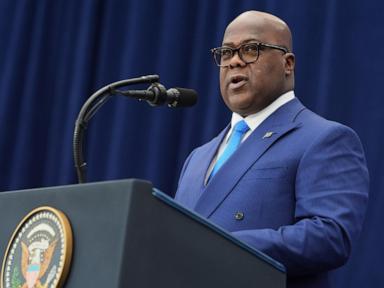
Democracy in the Democratic Republic of Congo (DRC) is hitting a brick wall. President Félix Tshisekedi just dropped a bombshell that should make anyone tracking African stability very nervous. He's officially warned that the country won't be able to hold its next elections—scheduled for late 2028—unless the brutal conflict in the east is completely resolved.
It's a classic catch-22. You can't have a vote without peace, but without a clear democratic path, peace becomes even more elusive. Tshisekedi's logic is straightforward on the surface: how do you send poll workers and ballot boxes into territories held by the M23 rebellion or the Congo River Alliance (AFC)? You don't. But for the millions of Congolese people who already feel disenfranchised, this sounds like the first draft of a "glissement"—the dreaded sliding of the electoral calendar.
The Security Crisis Making Voting Impossible
The situation in North Kivu and South Kivu isn't just a "border skirmish." It's a full-scale regional crisis. The M23, a group that the U.S. and UN have repeatedly linked to Rwandan support, has been capturing strategic hubs like Goma and Bukavu.
When a rebel group controls the roads, the towns, and the people, the Independent National Electoral Commission (CENI) can't exactly set up shop. During the 2023 elections, hundreds of thousands of people in Masisi and Rutshuru were already unable to vote. Tshisekedi's recent comments suggest this localized exclusion could become a national delay.
- Displaced populations: Over 7 million people are currently displaced within the DRC.
- Territorial control: M23 and other groups like the ADF control swaths of territory where government authority is nonexistent.
- Logistics: Moving electoral materials across the world's second-largest rainforest is a nightmare even in peacetime. During a war? It's impossible.
Is This About Security or Staying in Power
Critics aren't buying the "security first" argument without a healthy dose of skepticism. Former President Joseph Kabila famously used similar delays to overstay his mandate by two years, a move that sparked deadly protests.
The irony here is thick. The U.S. Treasury recently sanctioned Kabila for allegedly supporting the very same M23 and AFC rebels that Tshisekedi says are preventing the elections. It’s a messy web of accusations. Tshisekedi claims he wants to protect the integrity of the vote. His opponents argue he's using the war as a convenient excuse to avoid a 2028 exit.
Honestly, the lack of trust is the real killer here. Only about 12% of the Congolese population expresses confidence in their electoral institutions. When the person in charge says "we might not vote," that 12% is likely to shrink even further.
The International Angle and the Washington Accords
We can't talk about Congo without talking about Rwanda. Tshisekedi has been vocal about the "silent genocide" occurring in the east, fueled by the illegal exploitation of minerals like cobalt and coltan.
The 2025 "Washington Accords" were supposed to be a turning point. Mediated by the U.S., the agreement called for the withdrawal of Rwandan troops and an end to M23 support. But as we've seen on the ground in early 2026, agreements on paper don't always stop the bullets.
If the international community doesn't put real teeth into these sanctions, the M23 won't budge. If the M23 doesn't budge, the "conflict isn't resolved." And if the conflict isn't resolved, Tshisekedi stays in the Palais de la Nation past his expiration date.
What Happens Next
If you're looking for a silver lining, there isn't much of one today. The DRC is at a tipping point. For the country to move forward, several things need to happen fast:
- Enforce the Ceasefire: The UN and regional powers must move beyond "consultations" and actually enforce the ceasefire terms from the Washington Accords.
- Separate Security from the Calendar: There needs to be a clear, transparent plan for how to hold elections in "pockets of peace" while securing the rest, rather than a blanket "no peace, no vote" policy.
- Sanction the Spoilers: Pressure needs to stay on actors like Corneille Nangaa and any political figures providing financial lifelines to the AFC.
Keep an eye on the CENI's upcoming budget reports. If the money for the 2028 cycle starts getting diverted to "defense spending," you'll know exactly which way the wind is blowing. Democracy in the DRC isn't dead, but it's definitely on life support.
Stop waiting for a "perfect" peace to demand a plan for the vote. History shows that in the DRC, waiting for peace is often just a way to wait out a term limit. Push for transparency in the electoral roadmap now, or don't be surprised when 2028 comes and goes with no ballots in sight. Reach out to local civil society groups like LUCHA or CENCO—they're the ones on the ground actually fighting for a timeline that sticks.