Mirrors are disappearing from the shops of Kabul.
It is not an act of mass superstition or a sudden aesthetic craze. It is a survival strategy. When a reflection becomes a liability, when the glass that once held a fleeting smile or verified a centered headscarf turns into an informant for the passing patrol, you take it down. You wrap it in old newspaper, carry it to the alleyway, and let it shatter against the stones.
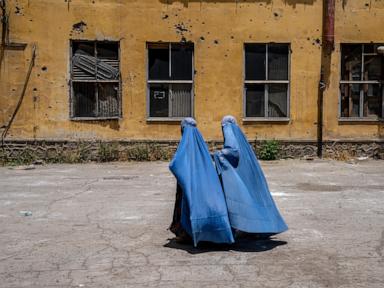
Consider what happens next. A morning arrives when a woman steps out onto a sidewalk where the air carries the sharp, familiar scent of wood smoke and dust. She wears a coat that brushes her ankles, dark, thick, completely obscuring the shape of her body. Her face is veiled. Her eyes, the only exposed geography, scan the horizon for the Toyota Hilux of the Ministry for the Propagation of Virtue and the Prevention of Vice. But today, the checkpoint officers are looking closer than usual. They are not checking papers. They are looking at her shoes. They are looking at the faint, sweet trace of scented lotion on her wrists. They are looking for the crime of color.
According to recent findings by the United Nations Assistance Mission in Afghanistan, the enforcement apparatus has expanded its reach into the most intimate corners of daily existence. Arrests are mounting. The alleged violations are staggering in their arbitrariness: wearing cosmetics, failing to adhere strictly to prescribed dress codes, or walking through a market without a male chaperone. These are not broad policy debates happening in distant halls. These are handcuffs clicking shut in the dust because a woman chose to wear a shade of red that reminded her of a garden she used to tend.
To understand the weight of this, you have to remember what it feels like to live in a room where the walls are slowly moving inward.
I remember the sound of a heavy wooden door being bolted from the inside during the darkest years of the previous regime. We learned to speak in frequencies that stayed beneath the hum of the refrigerator. We learned to read the weather not by the clouds, but by the posture of the guards stationed at the corner of the street. Fear has a physical weight. It sits on the collarbone. It makes you shorten your stride. It forces you to calculate the risk of every single breath you take outside your own front door.
When the rules govern the curve of a hemline or the presence of kohl on an eyelid, the entire world shrinks. The street is no longer a path to the market, to the university, to the park, or to a friend's house. It becomes a minefield of invisible tripwires.
Imagine, for a moment, a hypothetical young woman we will call Nilofar. She is twenty-two. Before the sweeping bans emptied the lecture halls, she studied chemistry. She knew the precise equations that govern how elements bond and transform under heat. Today, her universe is reduced to a single question: Will the strap of her bag be deemed too narrow? Will the texture of her black fabric be judged insufficiently thick?
Nilofar wakes up before dawn. She prepares tea for her younger brother and mother. The television is silent; music has long since been banished from the airwaves. She reaches into her drawer, bypassing the blue scarf her grandmother embroidered, and selects the mandatory shroud. It is heavy, coarse, and suffocating in the summer heat.
When she walks to the neighborhood bakery, she does not look up. To look an official in the eye is an invitation for interrogation. To walk with too much speed is suspicious; to walk too slowly is defiant. She navigates the pavement like a ghost trying not to disturb the dust.
This is the reality documented in the dry, statistical reports issued by international monitors. The UN briefings speak of arbitrary detentions, brief interrogations, and the requirement of male guarantors to secure a release. But statistics are shields. They protect our minds from the raw, jagged edges of human suffering. They turn a weeping mother whose daughter was hauled away for wearing nail polish into a data point on page four of a PDF.
Strip away the acronyms and the geopolitical maneuvering, and you are left with a fundamental assault on human dignity.
Why cosmetics? Why shoes with a slight heel? Why the desperate obsession with erasing the female form from public sight?
Authoritarianism requires a canvas of absolute uniformity. When diversity of expression is permitted—even in something as simple as the tint of a lip balm or the cut of a coat—it asserts individuality. It whispers a subversive truth: I am a person. I exist outside your control. Totalitarian control cannot tolerate whispers. It demands a roar of absolute compliance. By criminalizing the ordinary, everyday acts of self-care and personal expression, the rulers ensure that everyone remains permanently guilty of something. If the law is impossible to navigate without error, then everyone is a criminal-in-waiting. Freedom is replaced by perpetual anxiety.
The international community issues statements. Condemnations are drafted in crisp, diplomatic language in Geneva and New York. Committees meet. Resolutions are passed.
Yet the women of Kabul walk through the twilight, listening for the sound of tires on gravel.
They do not have the luxury of academic debate. Their resistance is quiet, stubborn, and heartbreakingly fragile. It happens behind closed doors where women gather to teach each other mathematics and literature in secret basement schools. It happens when an older woman slips a banned poetry book into the lining of a shopping bag. It happens in the defiant tilt of a chin beneath a heavy veil, a silent declaration that the mind cannot be locked away in a box.
We look away because the story is too grim, too tangled in the complexities of failed interventions and shifting global priorities. We prefer our narratives neat, with clear heroes and tidy resolutions. But history does not offer tidy resolutions. It offers long stretches of darkness punctuated by the fierce, stubborn light of human endurance.
The shadows on the streets of Kabul are deep, but they are not empty. They are filled with women who remember the sun. And as long as they remember, the mirrors may be broken, but the reflection cannot be erased.