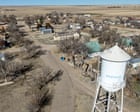
When local government completely evaporates, you get a front-row seat to municipal disaster. In late July 2026, the Office of the Colorado Secretary of State officially declared the tiny southeastern town of Hartman abandoned.
Let that sink in. An entire incorporated municipality was legally wiped off the operational map because every single elected official quit, leaving a population of roughly 30 residents stranded with toxic water and zero legal leadership.
Most people assume municipal governments just run in the background. You pay taxes, the lights stay on, the water flows. But what happens when the system rots from the inside out? Hartman didn't just fail. It imploded under the weight of bitter feuds, crumbling infrastructure, and a total vacuum of civic responsibility.
The Anatomy of a Total Government Collapse
How does a town of thirty people completely stop functioning? It starts long before the resignation letters pile up. In Hartman's case, years of vicious infighting crippled basic operations. Think local politics resembling a low-budget mob movie rather than a town council meeting.
By late 2025 and early 2026, things went off the rails entirely. The mayor resigned. Then, allegations of embezzlement flew, restraining orders were filed, and a physical brawl broke out between four women following a contentious board meeting. The remaining trustees threw in the towel the very next day.
Pam Packer, one of the trustees who walked away, put it bluntly to the press: their safety mattered more than pretending to run a broken government.
Once the dust settled, the town hall was empty. No clerk remained to call an election. No trustees were left to approve contracts. No one was authorized to spend a dime of public funds. The town was essentially a ghost ship spinning in circles with nobody at the wheel.
When Water Stops Being Drinkable
A headless government is bad enough. A headless government presiding over a public health catastrophe is a nightmare.
While the local leadership was busy fighting, the town’s water infrastructure was literally falling apart. Hartman had been stuck under a mandatory boil-water advisory for months. State inspectors found that the water tank was heavily compromised, featuring holes and corrosion that allowed potential contaminants to seep right in.
Things got worse by mid-summer 2026. State documents revealed that the water had completely lacked chlorine treatment for over a month. It stopped being potable. It smelled horrible. State officials from the Department of Local Affairs and the Department of Public Health and Environment had previously funneled over a million dollars in reimbursement-based grants to fix the system, but without a functional municipal government to manage the projects or certified water operators willing to step into the toxic political crossfire, the money sat uselessly on the table.
Residents were caught in bureaucratic quicksand. They couldn't fix the pipes themselves legally, and nobody else had the jurisdiction to step in.
The Legal Exit Strategy of Abandonment
Desperate times call for desperate legal measures. Jessie Simmons, a local resident, landowner, and voter, took matters into her own hands by petitioning the state to officially declare Hartman abandoned.
Under Colorado statute section 31-3-201, the state has a mechanism to dissolve incorporated towns that can no longer sustain a basic government. Deputy Secretary of State Andrew Kline granted the request, noting that refusing to declare the town abandoned would leave residents trapped in an unlivable legal limbo.
The ruling effectively transfers control of Hartman's remaining assets, streets, and water infrastructure over to the Prowers County Board of Commissioners. It’s a harsh remedy, but it is currently the only path forward to get clean, treated water flowing back to the people who actually live there.
As resident Shawna Casey pointed out, Hartman wasn't necessarily a failed community of people—it was a community deeply failed by the administrative systems meant to protect tiny populations.
What This Means for Rural Infrastructure
Cases like Hartman expose a glaring vulnerability in rural America. We love the idea of hyper-local independence. Small towns pride themselves on self-governance. But when population numbers dwindle to a few dozen, the tax base evaporates, volunteer burnout sets in, and a single bad actor or petty feud can derail the entire apparatus.
When a municipality owns its own critical water and sewer infrastructure, it cannot afford to treat local elections like a high school popularity contest. Neglecting basic civil maintenance while bickering over personal vendettas turns a town into a hazard zone.
Counties across the country should take note. Clearer emergency intervention laws are desperately needed before minor local political disputes morph into full-scale humanitarian failures. If a local government stops serving its fundamental purpose of keeping the water clean and the citizens safe, it needs to forfeit its charter before the taps run dry completely.
Check your local municipal budgets. Pay attention to who is running your local water districts. Local politics might seem boring until the day your tap water turns brown and your town legally ceases to exist.