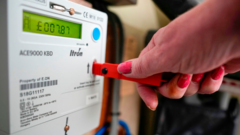
The silence of a freezing house has a specific weight. It settles in the corners of a room, thick and heavy, slowing your breath until you can see it mists before your face. For thousands of people across Britain, that silence was accompanied by a distinct, rhythmic sound.
Click.
Then, nothing. The boiler dies. The radiators begin their slow, ticking descent into iron-cold metal.
In the winter of 2023, this wasn't just a hypothetical nightmare for the vulnerable; it was a corporate strategy. British Gas, the nation’s largest energy supplier, found itself at the center of a national scandal when it was revealed that third-party debt collectors acting on its behalf were breaking into the homes of struggling customers—including the disabled, the elderly, and mothers with newborns—to forcibly install prepayment meters.
Now, the financial reckoning has arrived. British Gas has agreed to pay a £20 million redress package. It is a massive sum, a headline-grabbing figure meant to signal accountability and closure. But a penalty notice on a corporate balance sheet cannot retroactively warm a frozen living room. To understand the true cost of this scandal, we have to look past the millions and look at the mechanics of vulnerability.
The Business of Breaking In
Imagine returning home after a grueling shift, or perhaps waking up from a fitful sleep because the chronic pain makes it impossible to rest. You find your front door lock has been changed. Inside, a new box sits on your wall. It demands money before it gives you heat.
This is not a metaphor. This was the reality of the warrant process.
Historically, energy companies possessed the legal right to obtain court warrants to enter a property if a customer fell hopelessly behind on their bills. The intent of the law was to prevent outright fraud. The reality, however, became a conveyor belt of bureaucratic cruelty. Debt collection agencies, hired by British Gas, flooded the courts with batch applications. Hundreds of warrants were authorized by magistrates in minutes, with little to no scrutiny of who lived behind those doors.
Consider a hypothetical customer based on the profiles uncovered during the investigation. Let’s call her Sarah. Sarah is a single mother of a child who requires an electrical nebulizer for asthma. She fell behind on her bills when wholesale gas prices spiked. She didn't ignore the letters out of malice; she ignored them out of a paralyzing fear of what the numbers said. Under the rules set by the energy regulator, Ofgem, Sarah should have been fiercely protected. She was deemed vulnerable. Forcing her onto a pay-as-you-go system meant that if she ran out of cash, her child’s medical equipment would stop working.
Yet, the contractors came anyway. They picked the locks. They installed the meter. They left.
The system failed because the human element was entirely stripped from the equation. To the spreadsheet, Sarah was not a mother keeping a sick child alive; she was an unpaid balance sheet item. The debt collectors were incentivized by volume, not compassion. The faster the meter went in, the faster the debt could be aggressively clawed back. Every time the meter clicked, a percentage of the topped-up money went toward past arrears rather than current gas. It was a financial trap designed to self-replicate.
The True Anatomy of the £20 Million Penalty
When Ofgem stepped in after an undercover investigation by The Times exposed the practice, the shockwaves hit the highest levels of government. The forced installations were paused. A massive, multi-year investigation began.
The resulting £20 million package is broken down into two distinct pillars. First, there is a direct payout of £10.1 million to the customers who were wronged. This includes compensation for the distress, the violation of their homes, and the immediate return of any wrongful fees charged for the installation itself. The remaining £9.9 million is being funneled directly into Ofgem’s Voluntary Redress Fund, which finances charities that provide energy advice and financial support to low-income households.
On paper, justice seems served. But look closer at the math.
British Gas serves millions of homes. In the grand scheme of corporate revenue, a £20 million hit is painful, but it is not fatal. It represents a cost of doing business when oversight is outsourced to the lowest bidder. The real damage wasn't done to the company's bank account; it was done to the fragile fabric of trust between the public and the utilities that power their lives.
When we talk about energy, we are not talking about a luxury item. We are not talking about a streaming subscription or a dining-out budget. We are talking about the baseline requirements for human dignity. Food, shelter, warmth. When a society allows a corporation to breach the sanctuary of a home to deny that warmth, a line is crossed. The panic it induces lingers long after the compensation check clears.
The Mechanics of Prepayment
To truly appreciate the anxiety of the prepayment system, you have to understand how it operates on a psychological level.
With a standard credit meter, you use the energy first and pay for it later. You have a buffer. You have time to figure out how to bridge the gap before the next monthly or quarterly bill arrives.
A prepayment meter reverses that dynamic entirely. It is a relentless, unforgiving master. You pay upfront. If you don't have the cash to top up the card at the local corner shop, the supply cuts off. There is a small amount of "emergency credit"—usually around £5 or £10—but that disappears rapidly in the dead of winter.
Worse still is the phenomenon known as "self-disconnection." This is a polite, clinical term used by regulators to describe a horrific reality: people choosing to sit in the dark and the cold because they simply do not have the money to feed the meter. They aren't being disconnected by the energy company; they are disconnecting themselves out of sheer economic necessity.
During the height of the force-fitting crisis, thousands of families were pushed into this invisible limbo. Because they were on prepayment meters, their lack of heating didn't register as an active cut-off on the corporate dashboard. It looked like a choice. The system allowed British Gas to wash its hands of the consequences, pretending that these customers were simply managing their consumption efficiently.
The Long Road to Rebuilding Trust
But the real problem lies elsewhere, rooted deeply in the systemic way we view poverty and debt.
Following the scandal, Ofgem implemented a stricter code of practice. Energy companies are now banned from forcibly installing prepayment meters for households with residents over the age of 75 who have no support, or in homes where there are children under the age of two. There are more rigorous assessment steps. There are mandatory body cameras for recovery agents.
These are welcome guardrails, but they represent a reactive sticking plaster on a structural wound. The fundamental vulnerability remains. As long as energy prices fluctuate wildly and wages fail to keep pace, the pressure on the poorest households will continue to mount.
The £20 million redress is a warning shot to the rest of the energy sector. It proves that regulatory oversight still has teeth, and that corporate negligence will eventually face a public reckoning. Chris O’Shea, the chief executive of Centrica—the parent company of British Gas—publicly apologized, stating that the treatment of these customers was deeply regrettable and did not reflect the values of the company.
But apologies are easy when the spring arrives and the ambient temperature rises. The true test of British Gas, and the energy sector as a whole, will not be measured by their contrition in the aftermath of a scandal. It will be measured by their conduct when the next winter arrives, when the frost creeps back across the windowpanes, and when the bills begin to climb once more.
Consider what happens next: a customer sits at a kitchen table, looking at a red letter. The fear is still there. The memory of the men at the door, the changed locks, and the cold metal box on the wall does not vanish because a regulator issued a press release. Trust is destroyed in an afternoon; it takes a generation to rebuild.
The next time you walk past an energy meter, listen closely. It isn't just measuring kilowatt-hours or cubic meters of gas. It measures the threshold of what a society is willing to tolerate in the name of a balanced ledger. It reminds us that behind every account number is a human being trying to survive the night, waiting for the clicking to stop.