The smell of cutting fluid and hot metal stays in your clothes for days. If you walk into an aerospace manufacturing plant, you expect a sterile, laboratory-like silence. You expect pristine white floors and automated arms moving with robotic indifference. But in the historic heart of Central European aviation, the air carries a different weight. It smells like grease, pressurized hydraulic fluid, and the sharp, metallic tang of shaved aluminum.
For decades, the global defense and aviation sectors looked past this region. They looked past the quiet towns outside Prague. They focused instead on the massive, multi-billion-dollar conglomerates in Seattle, Toulouse, or Dallas. Those giants built the roaring beasts of the sky.
But aviation is changing. The world is getting noisier, more volatile, and intensely expensive.
While the headlines chase stealth fighters that cost more than the GDP of small nations, a quiet transformation has been brewing in the Czech Republic. It is a story about survival, precision, and a staggering 400% jump in profit that caught the global financial markets completely off guard.
To understand how a jet maker quietly quadruples its bottom line in a single fiscal year, you have to leave the spreadsheets behind. You have to look at the pilots, the mechanics, and the sheer grit of an industry trying to reinvent itself on the fly.
The Weight of the Clouds
Imagine sitting in a cockpit three miles above the earth. The sky is an oppressive, featureless grey. Beneath your wings, the terrain is rugged, unpredictable, and unforgiving. You are not flying a commercial airliner on autopilot; you are training the next generation of tactical pilots. Every input on the control stick matters. Every fluctuation in engine temperature could be the difference between a successful mission and a catastrophic failure.
For years, military flight training was trapped in a financial vice.
Air forces around the world faced an agonizing dilemma. They could train new pilots on aging, analog aircraft that resembled flying museums, or they could burn millions of dollars an hour putting rookies into advanced, frontline fighters. It was like teaching someone to drive by handing them the keys to a vintage tractor or a Formula 1 car. There was no middle ground.
This is where the Czech aviation legacy enters the frame.
The engineers at Aero Vodochody, a name that carries deep historical resonance in the airspace of Eastern and Central Europe, saw the gap. They realized that the world didn't just need faster jets. It needed smarter ones. It needed aircraft that could mimic the digital architecture of a fifth-generation fighter without the crippling operational costs.
But realizing a need is very different from surviving the brutal economics of aerospace.
A few years ago, the factory floors were quiet. Orders were stagnant. The skeptics argued that a regional manufacturer could never compete with the geopolitical muscle of Western defense behemoths. The numbers looked bleak on paper. Fixed overhead costs were eating into razor-thin margins. The supply chain was a tangled web of post-pandemic bottlenecks and rising material costs. Titanium prices were soaring. Electronic components were backordered for months.
Then, the world shifted.
The Pivot Point in Vodochody
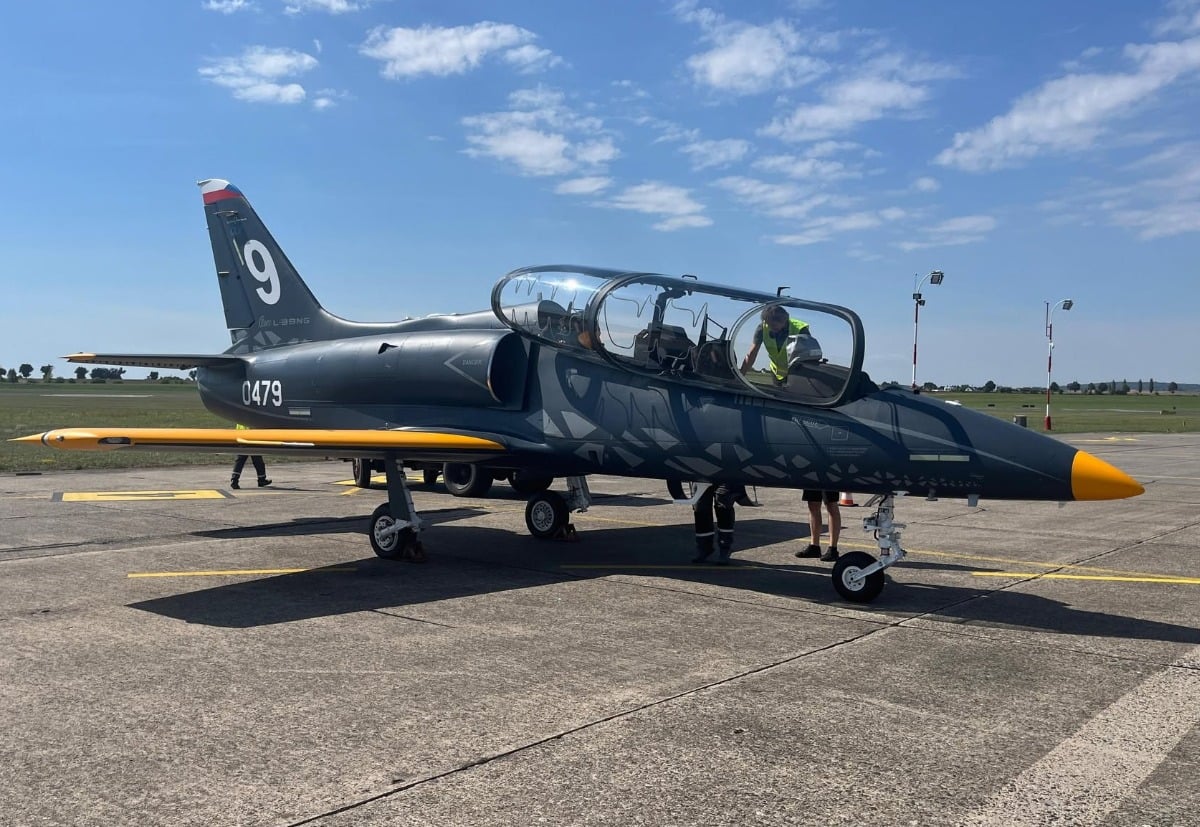
Walk through the assembly line during a turnaround year, and the tension is palpable. You can see it in the eyes of the line managers staring at production schedules. You can hear it in the rhythmic thud-thud-thud of the riveting guns securing the fuselage panels of the L-39NG, the company's flagship next-generation trainer.
Consider what happens next when a company decides to gamble its entire future on a single modernized platform.
They didn't just tweak the old designs. They ripped out the old Soviet-era legacy systems and replaced them with a highly efficient American Williams International engine. They integrated advanced virtual training systems that could simulate air-to-air combat inside the pilot's helmet while the plane was still thousands of feet in the air.
Suddenly, the proposition changed.
European neighbors and global buyers began looking at their defense budgets with newfound urgency. The threat landscape on the continent had shifted dramatically, pushing air forces to modernize their fleets rapidly. They needed planes that could get in the air immediately. They needed reliability.
The financial results that followed were not a product of luck. They were the result of a calculated, grueling operational overhaul. When the company announced a 400% surge in profit, the financial analysts ran the numbers twice to be certain. The leap wasn't driven by an artificial accounting trick or a one-time asset sale. It was driven by real, physical deliveries.
The factory floor transitioned from a slow, bespoke workshop into a synchronized, high-output assembly line. Production rates doubled, then tripled.
The Physics of Profit Margins
In aerospace, the math is brutal. High fixed costs mean that if you build five airplanes a year, you lose money. If you build ten, you might break even. But if you can optimize the supply chain, streamline the manufacturing jig, and push that number to twenty, the profitability curve doesn't just climb. It spikes vertically.
That vertical spike is exactly what happened in the historic hangars just north of Prague.
By securing long-term contracts with nations like Hungary and Vietnam, and cementing training partnerships closer to home, the manufacturer achieved a critical mass of production. The efficiency gains cascade down through every sub-assembly.
When you buy aluminum billet in massive quantities, the price drops. When your technicians build the twentieth wing assembly of the year, their hands move with a fluid, muscle-memorized speed that cuts labor hours in half. The waste disappears. The margin expands.
But talk to the people who actually grease the gears, and they will tell you that the numbers are just a lagging indicator of human effort.
The true story belongs to the master craftspeople who have spent forty years at the same workbench, passing down the art of aerodynamic riveting to apprentices who were born well after the Cold War ended. It belongs to the test pilots who push the airframes to their absolute structural limits, pulling nine times the force of gravity over the Czech countryside to ensure that a young pilot halfway across the world will come home safe.
Beyond the Balance Sheet
The defense industry often speaks in a sanitized language of metrics, procurement cycles, and fiscal quarters. It is easy to get lost in the abstraction of a four-fold profit increase. It sounds clean. It sounds like a line graph on a projector screen in a corporate boardroom.
The reality is much louder, grittier, and intensely human.
It is found in the pride of a manufacturing town that survived economic obsolescence to become an indispensable hub of European defense infrastructure. It is found in the realization that smaller, agile players can disrupt an industry long dominated by monopolies if they focus on precision, cost-efficiency, and a deep understanding of what the market actually needs.
The hum of the machine shop in Vodochody hasn't faded. If anything, it has grown deeper, resonance building upon resonance as the backlog of orders stretches out toward the horizon. The world outside the hangar doors remains unpredictable and fraught with tension, but inside, the focus remains entirely on the metal, the math, and the next aircraft waiting to meet the sky.