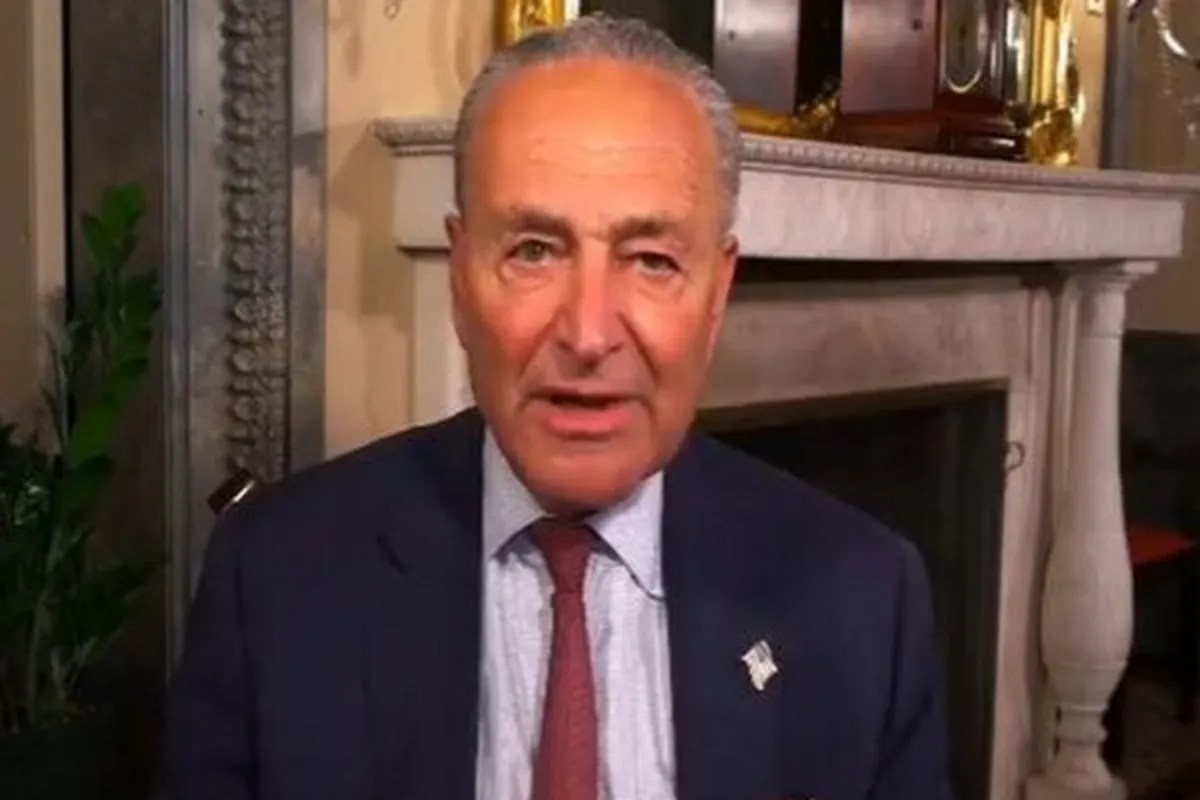
Chuck Schumer promised to end the war against Iran after Democrats flipped Congress in the 2026 midterm elections. Sounds decisive. Sounds reassuring. It is also political theater wrapped in constitutional wishful thinking.
The headlines and competing pundits treat Schumer’s post-election vow as a turning point. Democrats won control of both the Senate and the House. Voters punished Republicans over energy prices, inflation, and a war launched without a formal congressional authorization. Schumer stepped to the microphones and pointed to Congress’s "power of the purse" and war powers to bring the conflict to a close.
That narrative is lazy consensus. It assumes a campaign talking point translates automatically into executive obedience. It ignores how modern war financing actually works, how presidential vetoes operate, and how deeply divided Schumer’s own party is on Middle East policy.
Anyone watching Washington closely knows that passing a resolution or threatening to cut off funds is miles away from halting military operations on the ground or at sea. Calling a midterm victory an automatic off-ramp for the Iran war misreads both constitutional mechanics and geopolitical incentives.
What the Competitor Gets Wrong About "Ending" a War
The standard takeaway from Schumer’s comments goes like this: Democrats won the midterms, Schumer is poised to lead the Senate majority in January, therefore the war against Iran is on borrowed time.
That logic skips three major hurdles.
First, timing matters. The newly elected Congress does not take office until January 2027. Between November and January, the current Congress still sits, and even in mid-November 2026 the Senate voted down a war powers resolution aimed at limiting President Donald Trump’s attacks on Iran in a narrow 51–48 tally. Two months of escalation, retaliatory strikes, or regional miscalculation can reshape the conflict before a single gavel changes hands.
Second, legislative votes do not equal self-executing policy. Even when majorities pass war powers resolutions or spending riders, a president can veto them. Overriding a presidential veto requires a two-thirds supermajority in both chambers—a bar that neither party comes close to clearing on a polarized foreign conflict.
Third, "ending" a war with Iran is not a light switch that Washington can flip unilaterally. Tehran has its own domestic pressures, proxy networks, and security calculations. Analysts have noted that military conflict has hardened Iranian leadership and pushed hardliners toward greater deterrence rather than quiet concessions. When two sides are locked in an active spiral of strikes and reprisals, a speech on Capitol Hill does not force the other side to stand down.
The Wrong Question Everyone Is Asking
People keep asking: Will Chuck Schumer end the war against Iran after the midterm win?
That is the wrong question. It treats the Senate leader as a commander-in-chief with a veto over foreign policy. He is not. Even as majority leader, his real power lies in setting the floor schedule, shaping committee pressure, and forcing uncomfortable votes—not ordering troops home or halting every strike.
A sharper question is this: Can a divided Democratic majority actually sustain enough pressure to raise the political and financial cost of the war without triggering a domestic shutdown or a deeper regional crisis?
When you reframe the question that way, the limits become obvious. Every lever Congress pulls carries side effects that lawmakers themselves fear.
"Can Congress Just Cut Off War Funding?"
On paper, Congress controls federal appropriations. In practice, cutting off war funding is notoriously messy.
Defense budgets are vast, fungible, and intertwined with routine readiness, force protection, and ongoing regional deployments. Lawmakers who try to strip funds for "offensive operations" run straight into debates over what counts as defensive force protection versus offensive action. Meanwhile, threatening a broad government funding standoff—such as around December deadlines—creates immediate economic pain at home, which can backfire on the very party that just ran on cost-of-living frustration.
"Did the Midterms Give Democrats a Mandate on Iran?"
Voters certainly punished Republicans in the 2026 midterms, and high fuel and living costs linked to Persian Gulf instability hurt the party in power. President Trump himself acknowledged that Iran played a role in Republican losses.
Yet elections rarely deliver a single-issue mandate. Voters punish incumbents for prices at the pump, grocery bills, uncertainty, and fatigue. That frustration gives Democrats political wind at their backs, not a blank check to rewrite foreign policy overnight—especially when factions inside the party disagree sharply on strategy, sanctions, and regional allies.
Battle Scars From Watching War Powers Collide With Reality
I have watched policy analysts and political strategists burn millions of dollars and endless credibility betting that a shift in congressional control would quickly wind down an overseas conflict. Time and again, they mistake procedural leverage for executive surrender.
In policy circles, people often conflate legislative authorization with operational control. A formal Authorization for Use of Military Force is a legal green light passed by Congress, whereas operational control is the day-to-day command of forces, targets, and rules of engagement held by the executive branch. Confusing the two leads people to think a floor vote can micromanage a conflict thousands of miles away.
Serious foreign policy observers—from defense restraint scholars at institutions like Defense Priorities to longtime congressional watchers—have pointed out for years that executive war powers have expanded precisely because Congress struggles to muster supermajorities or stomach the fallout of hard funding cutoffs. Even when war powers votes gain momentum or attract occasional crossover support, translating floor drama into binding restraint remains an uphill climb.
There is also a real downside to taking a skeptical view of congressional leverage. Being blunt about the limits of Schumer’s pledge can sound cynical, or it can understate how much public opposition and media scrutiny still shape a president’s room to maneuver. Political pressure does matter—administrations hate fighting an unpopular war with a hostile Congress investigating every misstep and dragging out every spending bill.
Imagine a Scenario Where Capitol Hill Tries to Force a Freeze
Consider a realistic test case in early 2027. Suppose the new Democratic majorities pass a binding measure restricting funds for strikes inside Iran unless explicitly authorized by Congress.
President Trump vetoes the measure, arguing the president has constitutional authority to protect American personnel and respond to attacks. Democrats lack the two-thirds vote in both chambers to override the veto. Now what?
If Democrats attach the restriction to a must-pass government funding bill, they risk a shutdown fight over foreign policy. If they back down to keep the government open, the restriction loses its teeth. Even if a narrower restriction survives, commanders on the ground still have broad latitude to respond to incoming fire or threats to shipping lanes.
That is the trap. Restraint requires unified discipline, supermajority math, or a president willing to bargain. Without one of those three ingredients, congressional opposition acts more like friction than a full stop.
What Actually Matters Next
If you care about whether this conflict cools down or drags on, stop hanging on every press conference soundbite from Washington and track the real pressure points:
- Watch the supermajority math, not the press releases. A simple majority in the House and Senate can pass messaging bills and hold hearings, but only veto-proof numbers—or enough Republican defections—force structural change.
- Track energy prices and shipping risk. Domestic political pressure on the White House rises and falls with oil markets, freight costs, and American casualties—not cable news debates.
- Separate rhetoric from funding mechanics. Look at actual appropriations text and spending deadlines rather than broad promises to "use the power of the purse".
- Monitor Tehran’s internal calculus. Washington can debate exit ramps all day, but de-escalation only holds when both capitals see less upside in another round of escalation.
Midterm wins change who chairs committees and who sets the agenda. They do not hand Chuck Schumer a remote control for the Middle East.


