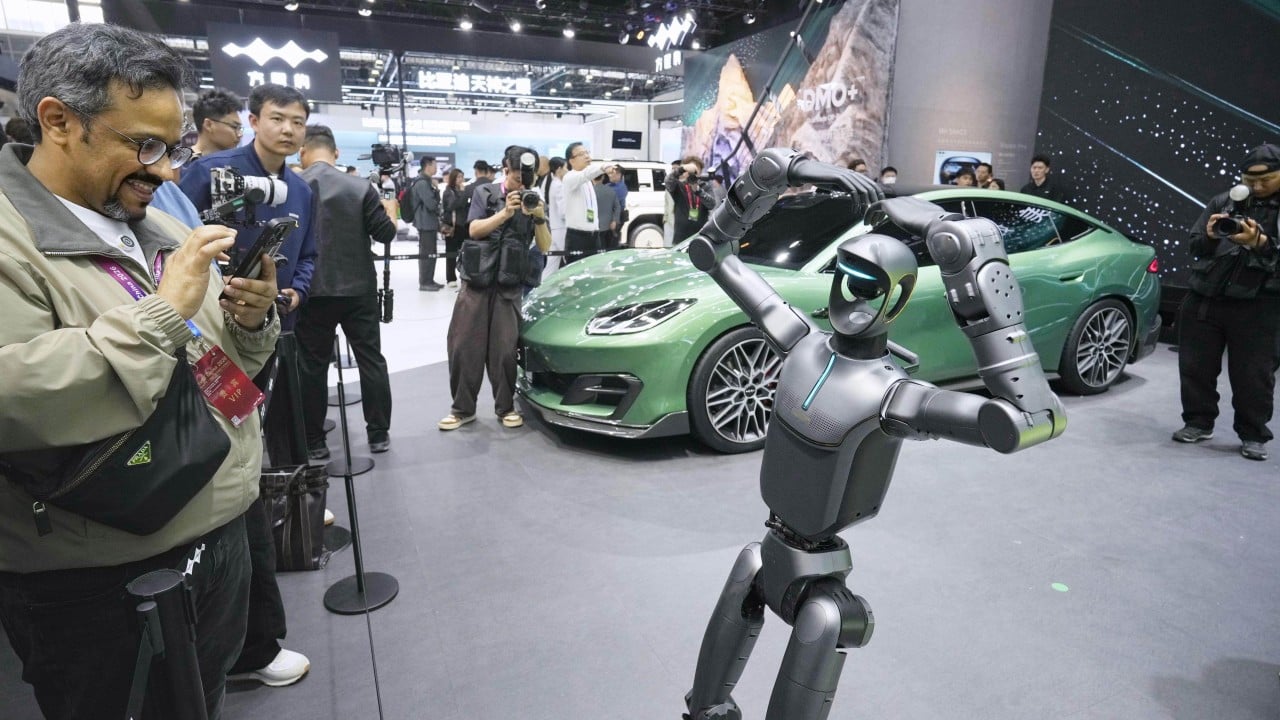
You've probably seen a car on your street lately that looked sleek, modern, and high-tech, only to squint at the badge and realize you’ve never heard of the brand. Chances are, it's Chinese. While legacy European carmakers and politicians are scrambling to protect their home turf, a silent invasion is happening. It isn’t just about cheap prices anymore. It's about a massive shift in who actually builds the best electric cars.
In the first four months of 2026, BYD didn't just participate in the UK market—it dominated it. Data from the Society of Motor Manufacturers and Traders shows BYD became the best-selling EV brand in the UK, grabbing over 7% of the market. They didn't just beat the local favorites; they jumped over Tesla, Kia, and Volkswagen. If you think the "Made in China" label is still a barrier for buyers, you haven't been paying attention to the sales charts.
The Tariff Wall that Failed to Block the View
The European Commission tried to slow this down. They slapped provisional tariffs on Chinese EVs, ranging from 17% up to nearly 38% on top of the standard 10% duty. The logic was simple: Chinese brands have an "unfair" advantage due to state subsidies. But here’s the thing—it’s not working the way Brussels hoped.
Chinese manufacturers are incredibly efficient. A study by the Rhodium Group pointed out that to actually make the European market "commercially unappealing" for these brands, tariffs would need to hit 45% to 55%. At 20% or 30%, companies like BYD and MG just absorb the cost or shave a bit off their margins. They’re still cheaper than a comparable VW or Renault, and honestly, the tech inside is often two years ahead.
Instead of retreating, these brands are doubling down.
- NIO is sticking with its battery-swap stations, giving drivers a full "tank" in three minutes.
- XPeng just launched the P7+ sedan across 25 European markets last month.
- BYD is already building a massive plant in Hungary to bypass tariffs entirely by 2026.
If you can't beat the tax, you move the factory. That’s exactly what’s happening.
Why You’re Probably Considering a Chinese EV Now
A couple of years ago, most Europeans wouldn't touch a Chinese car. They were seen as "cheap copies." That's dead. Perception has shifted faster than anyone expected. A recent Escalent survey found that 47% of potential buyers would consider a Chinese car. That’s up from just 31% in 2024.
Why the change? It’s a mix of three things:
- The Tech Gap: Have you sat in a NIO or a Zeekr lately? The screens are faster, the voice assistants actually work, and the software doesn't lag. European legacy brands are still struggling with software bugs while Chinese firms are treating cars like rolling smartphones.
- Safety Wins: Most new Chinese EVs are hitting five-star Euro NCAP safety ratings. The "death trap" stigma is gone.
- The Price Reality: Even with tariffs, a Chinese EV is often €5,000 to €10,000 cheaper than a European equivalent. In a cost-of-living crisis, brand loyalty to a badge your grandfather liked doesn't pay the bills.
The Hybrid Loophole and the 2035 Shift
Europe recently blinked on its 2035 ban on internal combustion engines. They’ve modified the rules to allow some hybrids to stay on sale. This was supposed to help European brands, but Chinese firms like BYD and MG were already prepared with "New Energy Vehicle" (NEV) lineups that include world-class plug-in hybrids (PHEVs).
BYD’s DM-i hybrid tech allows for massive range and efficiency. In the UK, their combined BEV and PHEV sales gave them a 9.5% share of the total green car market so far this year. While European brands were busy lobbying to keep old tech alive, Chinese brands just built better versions of the new tech.
What This Means for the Average Driver
If you're in the market for a car right now, you're in a weird spot. You've got the "old guard" (VW, Stellantis, BMW) finally waking up, and the "new guard" (BYD, MG, XPeng) already at the door.
Don't buy into the "cheap" narrative. Buying a Chinese EV in 2026 isn't a compromise; for many, it’s a tech upgrade. However, there's one big risk: after-sales service. European brands have thousands of dealerships for repairs. Chinese brands are still building those networks. If you buy a NIO or a GWM today, check where the nearest authorized repair shop is. Most are partnering with existing European chains, but it’s not as seamless as taking your Ford to the local garage just yet.
Your Next Steps
Stop looking at the badge and start looking at the spec sheet. If you're ready to make the jump to electric, here’s what you should do:
- Test drive the software first. The driving dynamics of most EVs are similar, but the software experience will make or break your daily commute.
- Check the local service footprint. Before you sign for a BYD or an XPeng, make sure there’s a service center within 30 miles of your house.
- Watch the lease deals. Because Chinese brands want market share, they’re offering aggressive lease rates that often undercut European rivals by 20%.
The market isn't "going" to change. It already has. Either get comfortable with the new names on the road or prepare to pay a "heritage tax" for a European badge that might not offer the same value.