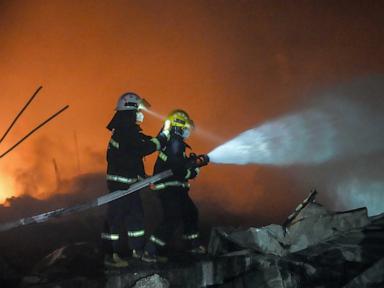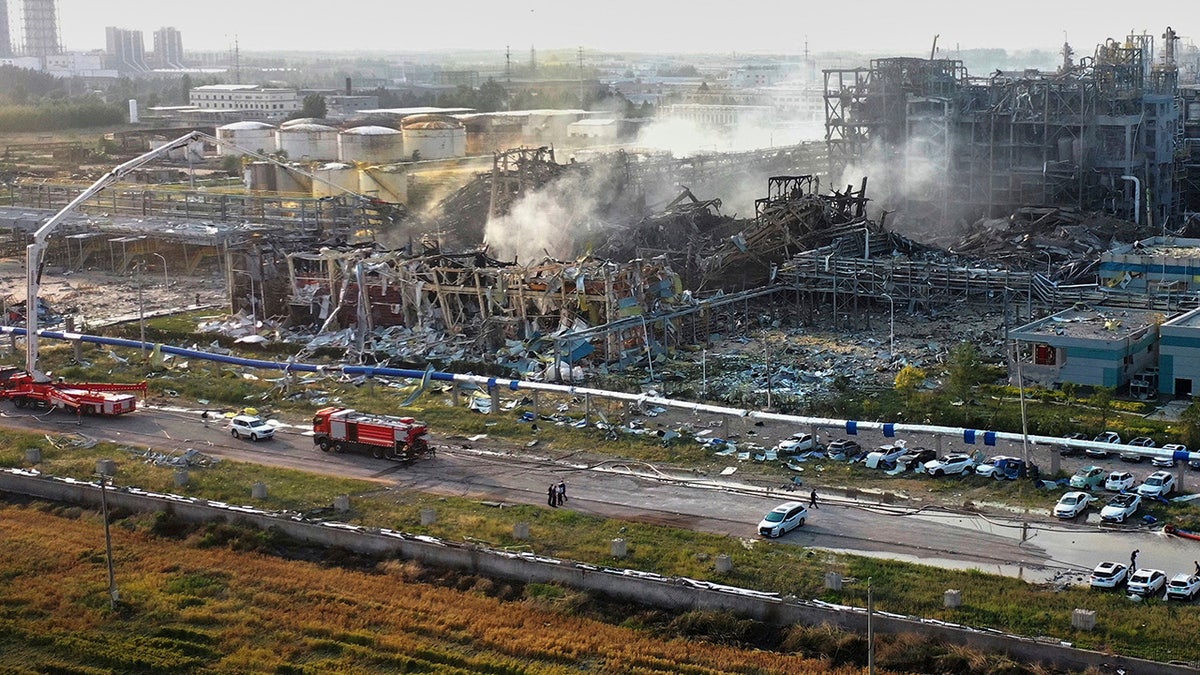
Twenty-one people are dead in Hunan. The headlines follow the same tired script: a fiery explosion, a stern call for a "probe" from the highest levels of the Chinese government, and a vague promise of stricter safety protocols. Mainstream media treats these tragedies as isolated failures of oversight or the result of a few "bad actors" cutting corners.
They are wrong. In similar developments, read about: The Hollow Promise of a Russian Ceasefire.
The blast in Hunan isn't a glitch in the system. It is the logical, inevitable output of a global economic architecture that demands high-velocity production at floor-scraping costs. When Xi Jinping calls for a probe, he isn't just looking for a cause; he’s performing a ritual that masks the uncomfortable truth. The "safety gap" isn't a matter of missing paperwork. It is the price paid for the cheap, festive pyrotechnics that the rest of the world considers a birthright.
The Illusion of "Strict Regulation"
Whenever a factory level-up ends in a crater, the first reaction is to blame a lack of regulation. This is the "lazy consensus." The reality is that China has volumes of safety laws that look impressive on paper. The problem isn't the absence of rules; it's the economic impossibility of following them while staying in business. NBC News has provided coverage on this important subject in extensive detail.
In the fireworks industry—specifically in the Liuyang and Liling regions of Hunan—the profit margins are razor-thin. We are talking about a sector where success is measured in cents per unit. To implement the kind of gold-standard safety protocols seen in Western chemical plants, these factories would have to triple their prices. If they did that, the global market would evaporate overnight.
The "probe" is a political pressure valve. It allows the state to punish a few local officials and factory owners, providing a sense of justice without addressing the structural demand for cheap labor and high-risk manufacturing.
The Geography of Risk
Hunan is the global capital of fireworks for a reason. It has the history, the specialized workforce, and most importantly, the tolerance for risk that more developed coastal provinces like Guangdong have outgrown. As China’s "Tier 1" cities move toward high-tech and services, the dangerous, dirty, and volatile industries are pushed into the interior.
This is internal outsourcing. The "Hunan Blast" is a symptom of a province trying to maintain its industrial relevance in a country that is rapidly trying to shed its "world's factory" image. When we talk about these explosions, we usually ignore the "People Also Ask" questions like Why don't they just automate?
Automation in explosives manufacturing is incredibly expensive and technically difficult. It requires a level of capital investment that these mid-sized Hunanese firms simply don't have. So, they rely on human hands. Human hands are cheap. Human hands are replaceable. And human hands, unfortunately, are flammable.
The Hypocrisy of Global Demand
The Western consumer wants to feel good about their purchases. They want "ethical" labels and "sustainable" sourcing. But they also want a $5 box of sparklers for the Fourth of July or New Year’s Eve. You cannot have both.
I’ve seen how these supply chains work from the inside. When a buyer from a major Western retailer visits a factory, they look at the "Safety First" signs and the fire extinguishers. They check the boxes on their compliance forms. Then, they sit down and demand a 15% price cut on the next order.
Where do you think that 15% comes from? It doesn’t come from the owner’s luxury car fund. It comes from the ventilation budget. It comes from the training hours. It comes from the storage density—packing more explosive material into smaller spaces to save on warehouse costs.
The "Xi Probe" is a Performance
When the state media reports that "Xi calls for a probe," it’s meant to signal that the central government is separate from the local failure. This is a classic governance tactic: "The Emperor is good, it's the local magistrates who are corrupt."
But the central government sets the GDP targets. The central government maintains the export-led growth model. The central government knows exactly what happens in Hunan. These probes rarely lead to systemic overhauls. Instead, they lead to "Strike Hard" campaigns where factories are shut down for two weeks, everyone attends a safety seminar, and then production resumes at the same breakneck speed because the export quotas haven't changed.
If the Chinese government were serious about ending factory blasts, they would mandate a minimum price floor for dangerous goods that accounts for real safety overhead. They won't do that, because it would hand the market to competitors in Southeast Asia or India, where the safety standards are even lower.
Breaking the Cycle of "Thoughts and Prayers"
Stop asking how the fire started. That’s the wrong question. A spark is just physics. The real question is why 21 people were in a position where a single spark could end their lives.
The industry insider secret is that we accept a certain level of "acceptable loss." In the world of high-risk manufacturing, there is a calculated trade-off between human life and economic throughput. We only care when the number of deaths exceeds a certain threshold or when the footage is too spectacular to ignore.
To truly fix this, we have to dismantle the "Made in China" mythos that safety is a purely local administrative issue. It's a global pricing issue.
Actionable Reality for the Cynical Investor
If you are looking at the volatility of the Chinese manufacturing sector, don't look at the safety reports. Look at the energy consumption and the shipping freight rates. When those go up, safety goes down. The more pressure there is to perform, the more likely the next Hunan blast becomes.
Don't buy into the "reformed safety" narrative. Until the cost of a human life in a Hunanese fireworks factory exceeds the cost of a safety-compliant automated assembly line, nothing changes.
The next blast is already scheduled; we’re just waiting for the date.
The probe won't find a "failure" of the system. It will find the system working exactly as intended, producing the maximum amount of product for the minimum amount of investment, with the occasional, predictable explosion as the cost of doing business.
Pay the price at the register, or pay it in the morgue. There is no third option.