The headlines are lying to you again. You’ve seen them splashed across every financial terminal this morning: "China beats forecasts," "Retail sales surprise to the upside," and the inevitable "Green shoots in Beijing." It is a comfortable narrative. It suggests that the global engine is humping along just fine despite a few geopolitical hiccups.
It is also total fiction.
The "better-than-expected" growth figures being touted by mainstream analysts aren't a sign of resilience. They are the result of a massive, state-mandated inventory build-up and a desperate pivot toward an export-led strategy that the rest of the world is already preparing to block. We aren't witnessing a recovery; we are watching the CCP attempt to export its domestic deflation to your doorstep. If you’re looking at these numbers and seeing a "buy" signal, you aren't paying attention to the plumbing.
The Manufacturing Trap
The core fallacy in the "China is back" argument lies in the obsession with industrial production. Yes, the factories are humming. But look at what they are producing and where it is going. Beijing has abandoned the dream of a consumption-led economy. That "rebalancing" everyone talked about for a decade? It's dead.
Instead, they have doubled down on the old playbook: massive credit allocation to the supply side. They are flooding the world with cheap EVs, legacy chips, and green tech because their own middle class is too spooked to buy a toaster, let alone a second apartment.
I’ve spent twenty years tracking capital flows through Shenzhen and Shanghai. I have seen the "ghost cities" turn into "ghost balance sheets." When you see a 7% jump in industrial output while domestic property investment is cratering by double digits, that isn’t health. That is a factory floor running at a loss to maintain social stability.
Why the "Consumer Recovery" is a Myth
Analysts point to retail sales and travel data as proof that the Chinese consumer is "thriving." This is a shallow read.
- The Base Effect: Comparing this year’s numbers to the localized lockdowns of previous cycles is a statistical trick.
- The Substitution Effect: People are spending on "low-cost joys"—a coffee, a domestic train ticket, a movie. They are not buying big-ticket items.
- The Wealth Effect is Gone: With 70% of household wealth tied up in a property market that is currently a slow-motion car crash, the "Piggy Bank" is empty.
The Iran War Distraction
The media loves a "shadow of war" narrative. It adds drama to a dry earnings report. The current thesis suggests that an escalating conflict involving Iran is the primary external threat to China’s growth.
This is backward.
Beijing doesn't fear a localized conflict in the Middle East; they thrive on the volatility it creates for their rivals. A distracted Washington is a gift to Zhongnanhai. The real threat isn't a spike in Brent Crude—which China hedges through discounted Russian and Iranian barrels anyway—it is the accelerated decoupling that war-time footing triggers in Europe and North America.
The "Iran war" isn't a headwind for the Chinese economy. It is a convenient excuse for the CCP to explain away the structural failures of their own making. If the economy stalls, they blame "global instability." If it grows, they claim "superior governance in a chaotic world." It’s a win-win propaganda loop.
The Productivity Paradox
The "Lazy Consensus" insists that China’s shift into high-tech manufacturing will solve its aging population crisis. The math doesn't check out.
To offset the loss of millions of workers per year, China needs a Total Factor Productivity (TFP) growth rate that hasn't been seen since the Industrial Revolution. Robotics and AI are great, but they don't pay into a pension fund. When you replace a tax-paying human with a capital-intensive robot in a country with a shrinking tax base, you aren't "innovating" your way out of a hole. You are just digging it faster.
Consider the $Solow-Swan$ growth model:
$$Y(t) = K(t)^\alpha (A(t)L(t))^{1-\alpha}$$
Where $Y$ is output, $K$ is capital, $L$ is labor, and $A$ is knowledge or productivity.
For years, China pumped $K$ (Capital) to insane levels. Now, $L$ (Labor) is shrinking. To keep $Y$ (Output) growing, $A$ (Productivity) must skyrocket. But productivity doesn't grow in an environment of state-led crackdowns on tech entrepreneurs and a "Common Prosperity" mandate that punishes outliers. You cannot mandate brilliance from a central planning committee.
The Actionable Truth for Investors
If you are a fund manager or a retail investor, you need to stop asking "When will China recover?" and start asking "What does a stagnant China do to my portfolio?"
- Short the "Proxy" Trades: Historically, buying Australian miners or German automakers was a way to play Chinese growth. Those days are over. China is now a competitor to Germany, not a customer. They are building their own supply chains.
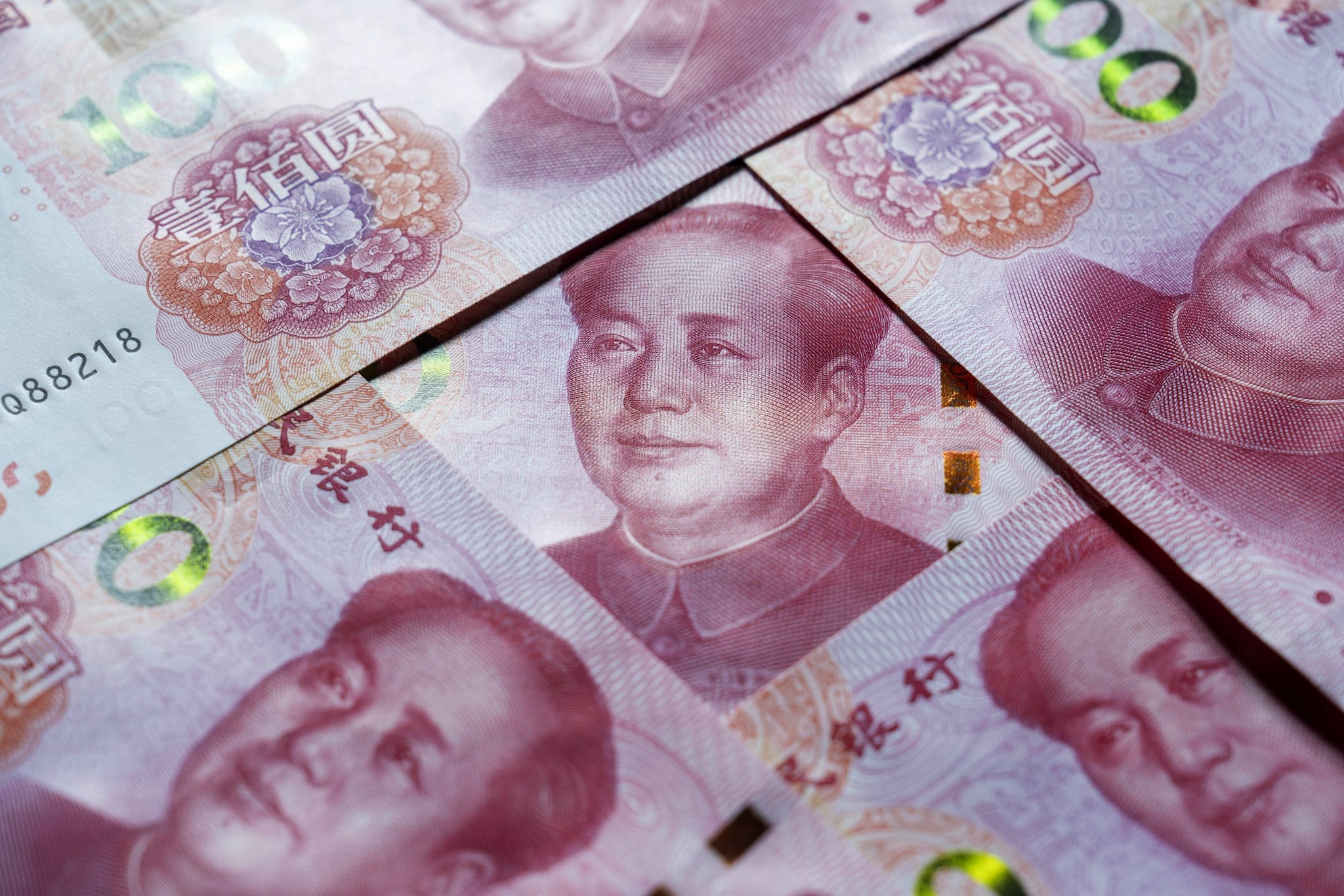
- Watch the Currency, Not the GDP: The $CNY$ (Yuan) is the only honest metric left. Watch how hard the People's Bank of China (PBOC) fights to keep it from sliding. A devaluing Yuan is the ultimate admission that the domestic economy is failing.
- The "Value Trap" Alert: Chinese stocks look cheap on a P/E basis. They’ve looked "cheap" for three years. In a command economy, the "E" (Earnings) belongs to the State, not the shareholder. You are buying a claim on assets that can be nationalized or "restructured" with a single memo.
The Premise of Your Questions is Wrong
People often ask: "Will China overtake the US in GDP?"
This is the wrong question. GDP is a measure of activity, not value. If I pay you $1 billion to dig a hole and then pay another $1 billion to fill it, GDP grows by $2 billion. That is exactly what has happened with China’s infrastructure and real estate boom.
The real question is: "Can China survive the transition from an investment-led model to a consumption-led model without a political collapse?"
The data says no. The recent "better-than-forecast" start to the year is just the sound of the engine revving in neutral. The tires aren't gripping the road, and the cliff is getting closer.
Stop looking at the scoreboard and start looking at the cracks in the stadium floor.
Would you like me to analyze the specific debt-to-GDP ratios of the Chinese local government financing vehicles (LGFVs) to show you where the next default will trigger?