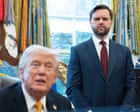
The chattering classes are obsessed with the optics of a delay. They see a "postponed summit" and smell hesitation. They see J.D. Vance defending the administration’s stance on Iran and call it "damage control." They are wrong. They are playing checkers while the board is being flipped.
Delaying a summit with Beijing isn't a sign of a fractured West or a nervous White House. It is the tactical deployment of silence. In high-stakes diplomacy, the person who wants the meeting more is the one who loses. By pushing the timeline, the administration isn't "avoiding" a confrontation; they are starving the Chinese delegation of the one thing they need to stabilize their cratering internal markets: certainty.
The Myth of the Diplomatic Wedge
The media is currently salivating over the idea of a "wedge" between the President and the Vice President regarding Iran. They want you to believe there is a fundamental breakdown in communication. This is a fundamental misunderstanding of "Good Cop, Bad Cop" scaled to a global level.
When Vance denies a rift while maintaining a hard line on Tehran, he isn't contradicting his boss. He is providing the administration with optionality. If the U.S. remains a monolith, it becomes predictable. If it presents as a complex, multi-faceted machine with varying degrees of aggression, Beijing and Tehran cannot build a unified counter-strategy.
Stability is the goal of the status quo. Volatility is the tool of the disruptor. We are no longer in an era of "stable" foreign policy because the previous stability was nothing more than a slow-motion surrender of American industrial dominance.
Market Panic Is the Intended Feature
Wall Street hates the delay. Good.
The "lazy consensus" among economists is that trade certainty drives growth. That’s true if you’re a mid-cap manufacturer in Ohio. It’s a lie if you’re trying to dismantle a thirty-year mercantilist disadvantage. If the U.S. grants China a summit and a handshake today, it signals that the current level of intellectual property theft and currency manipulation is "negotiable."
By refusing to sit at the table, the U.S. creates a vacuum.
Look at the capital flight data out of Shenzhen and Shanghai over the last quarter. It isn't reacting to tariffs; it's reacting to the unknown. When a summit is delayed, the Chinese Communist Party (CCP) has to burn through foreign exchange reserves to keep their domestic investors from jumping out of windows. The delay is an economic blockade without a single ship leaving port.
Why the "Iran Conflict" Is a Distraction
The press wants to link the China summit to the tensions in the Middle East. They argue that the U.S. cannot afford a "two-front" diplomatic war. This is a classic 20th-century mindset.
In reality, China and Iran are the same front.
China is the primary bankroll for Iranian regional aggression. Every barrel of "sanctioned" oil that moves from Kharg Island to Chinese refineries is a direct subsidy of the chaos the media is currently hand-wringing over.
- The Counter-Intuitive Truth: You don't solve the Iran problem in Tehran. You solve it by making the Chinese relationship so expensive and so precarious that Beijing decides the "Islamic Republic" is a bad investment.
- The Leverage Play: By delaying the summit, the U.S. is signaling to Beijing: Your proxies are costing you your seat at the big table.
The Vice President’s Role as the "Enforcer"
People ask: "Why is Vance the one out front on the Iran issue?"
Because the Vice President represents the future of the movement, not just the current administration. When he speaks, he isn't just speaking for the next two years; he is speaking for the next twenty. His role is to signal to the world that the "America First" posture isn't a fluke of a single election cycle—it is a structural shift in the American psyche.
His "denial" of a wedge isn't a defensive crouch. It’s a message to the neoconservatives and the globalists: The door is closed. We are unified in our disruption.
The Cost of Transparency
I have sat in boardrooms where executives begged for "clarity" from the government. I’ve seen companies lose billions because they bet on a "thaw" in relations that never came. The hard truth is that the U.S. government owes no "clarity" to the private sector if that clarity gives the CCP a roadmap for the next five-year plan.
If you are a CEO and your entire supply chain depends on the outcome of a single summit in Mar-a-Lago or Beijing, you haven't built a business; you’ve built a hostage situation. The administration’s delay is a forced de-risking event. It is a loud, clear signal to move your operations to Mexico, Vietnam, or back to the States.
The False Narrative of "Isolationism"
The critics call this isolationism. That is a lazy label used by people who miss the era of easy, lopsided trade deals.
This isn't isolation; it's selective engagement.
We are choosing when to talk, where to talk, and most importantly, when to stay silent. The summit delay is the ultimate power move because it proves we don't need the meeting. China’s economy is a house of cards built on exported deflation and imported energy. They need the American consumer more than the American consumer needs a slightly cheaper smartphone.
Stop Asking When the Summit Will Happen
You are asking the wrong question. The question isn't "When will they meet?" The question is "What has China conceded to earn the meeting?"
If the answer is "nothing," then the summit should be delayed indefinitely.
The Brutal Reality of Modern Statecraft
Diplomacy is not about "friendship." It is about the management of friction. The current administration has realized that friction is our greatest asset.
When the U.S. acts "unpredictably," the rest of the world has to hedge. When they hedge, they slow down. When they slow down, the U.S. gains a relative advantage. It is a brutal, cynical, and highly effective way to run a superpower.
The "wedge" narrative is a fairy tale for people who read the news but don't understand power. Vance and the President are synchronized in their chaos. They are using the media’s obsession with internal conflict as a smokescreen while they systematically dismantle the globalist architecture of the last forty years.
If you’re waiting for a return to the "normalcy" of 2012, you are going to go broke. The delay is the new normal. The tension is the point. The "wedge" is a mirage.
Stop looking for the handshake and start watching the capital flows. The silence from the White House is the loudest thing in the room.
If you can't handle the heat of a delayed meeting, you have no business playing at this level of the game.
Move your capital. Hedge your bets. The summit isn't coming to save you.