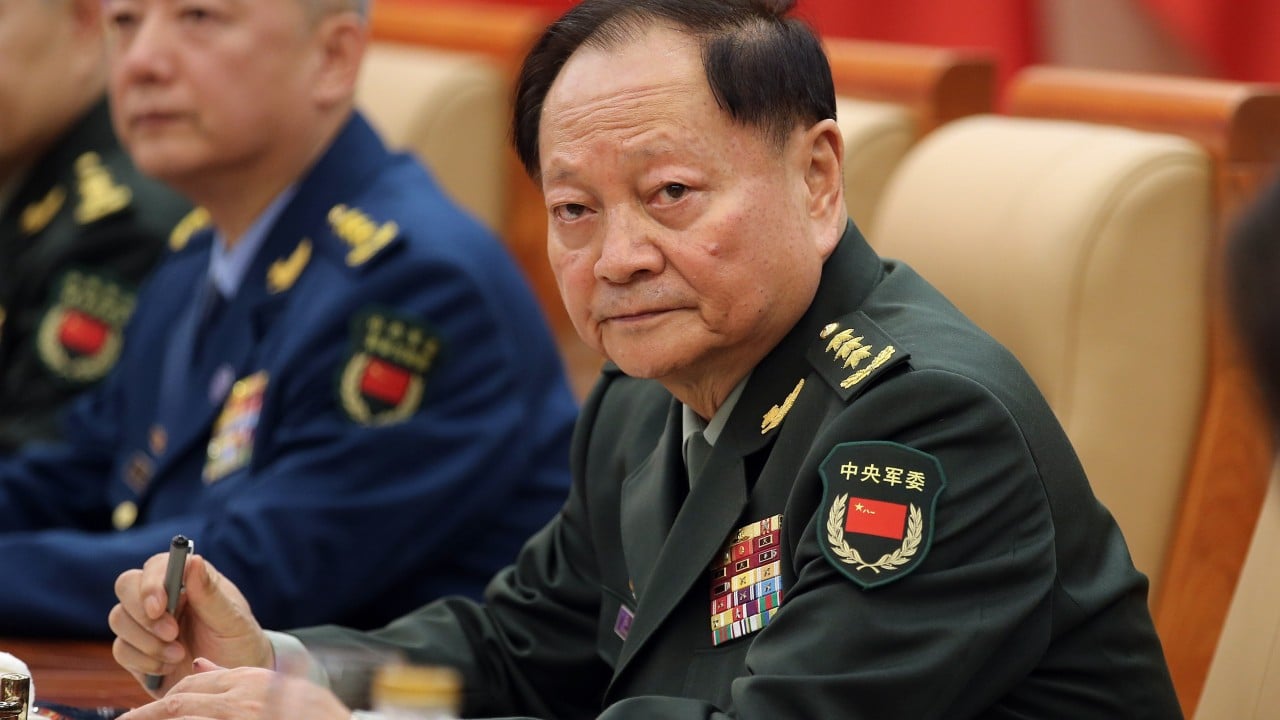
When Beijing's top legislature formally strips the country's highest-ranking uniformed officer of his title, the shockwaves reach far beyond domestic politics. China's official removal of General Zhang Youxia and General Liu Zhenli from the Central Military Commission (CMC) marks a massive turning point. It is not just another bureaucratic update. It is a ruthless restructuring of the world's second-largest military force.
If you have been tracking elite Chinese politics, you know Zhang Youxia was not supposed to fall. As the senior vice chairman of the CMC, Zhang held immense power and shared deep, generational ties with President Xi Jinping. His removal, alongside Liu Zhenli—who headed the CMC Joint Staff Department—signals an uncompromising escalation of an ongoing military purge.
The Anatomy of a High-Level Purge
The writing was on the wall back in January, when the Chinese Defense Ministry announced that both Zhang and Liu faced investigations for suspected "serious violations of discipline and the law". That phrase is Beijing's standard lexicon for corruption. But code words aside, the political reality is staggering. Zhang was China's highest-ranking general. Seeing him cast out shatters the illusion that anyone enjoys immunity within the system.
State news agency Xinhua confirmed the National People's Congress Standing Committee voted to strip them of their state CMC posts. Look closely at the structural fallout. The CMC is supposed to operate with a seven-member bench. Right now, after waves of investigations and dismissals across the defense apparatus, that roster is hollowed out. Only two known figures remain standing: Xi Jinping and anti-corruption chief Zhang Shengmin.
Why This Matters for Military Readiness
Outsiders often misinterpret these sweeping purges as simple political paranoia. They miss the operational angle. When the PLA Daily published editorials accusing the fallen generals of "seriously trampling on and undermining the system of ultimate responsibility", they pointed to a functional crisis.
Liu Zhenli oversaw combat planning as chief of staff. Tearing out the leadership responsible for joint operations right at the top introduces massive friction. Beijing insists that rooting out disloyalty removes stumbling blocks for modernization. Yet, replacing veteran commanders with untested loyalists during an era of high geopolitical tension creates immediate vulnerabilities.
外部 observers frequently ask whether these continuous crackdowns weaken combat readiness or strengthen command discipline. The truth is messy. Short-term chaos is inevitable when you decapitate your joint staff department. Long-term, it enforces absolute ideological conformity.
The Broader Cleanup Inside the Ranks
This isn't an isolated incident. Over the last few years, the anti-corruption campaign has devoured dozens of high-profile generals and defense executives. Former defense ministers and key logistics chiefs have vanished from public view or faced formal charges.
The message to the remaining officer corps is brutally clear. Technical expertise or personal proximity to power offers zero protection against accusations of disloyalty or graft. Officers must now navigate an environment where survival depends entirely on political compliance over independent tactical judgment.
Keep an eye on who eventually fills these vacant seats. The replacements will dictate Beijing's operational posture for the next decade. The old guard is gone. The new guard answers to one man alone.
.png?width=2560&name=Google Logo Evolution LM (3).png)

