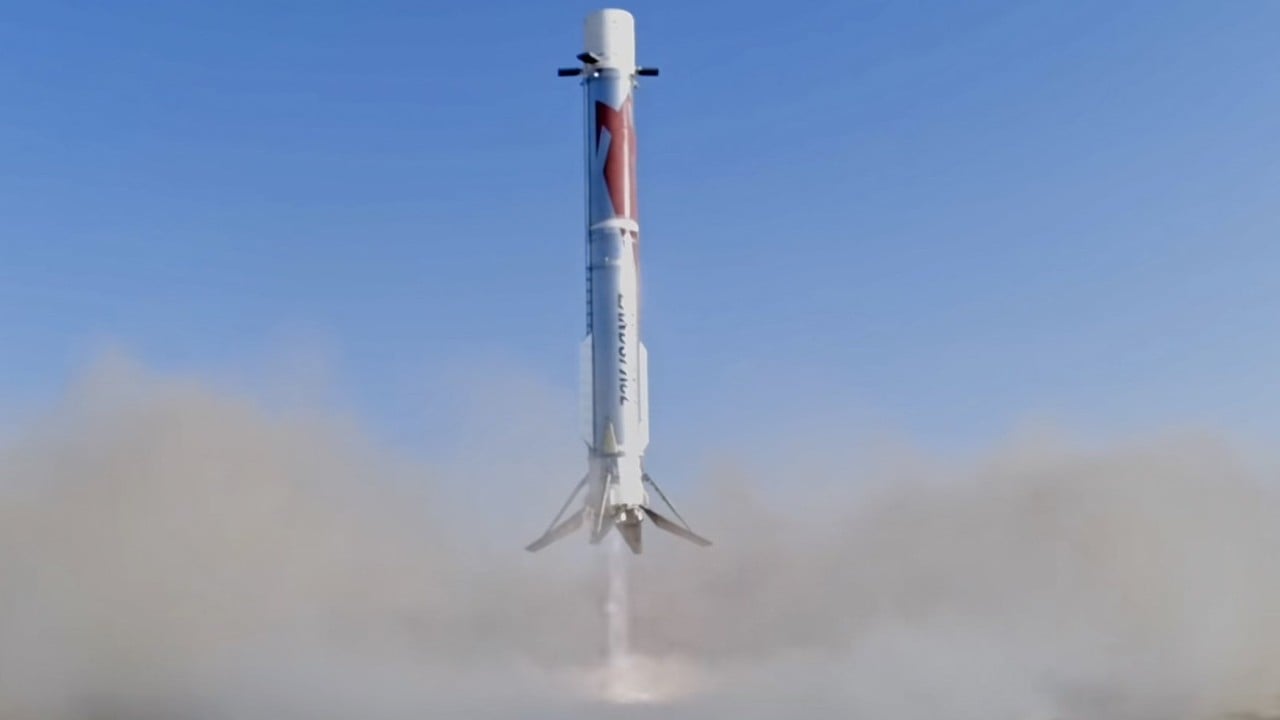
The recent successful land recovery of a reusable rocket booster by a Chinese commercial firm marks a shift in global power dynamics. When a Zhuque-3 vehicle lifted off from the Gobi Desert and returned to a precise touchdown minutes later, it signaled that Beijing has closed a vital technological gap. This milestone is not merely about space exploration. It is about logistics, throughput, and the ability to project force from orbit with an intensity that renders traditional attrition strategies obsolete.
For years, the United States maintained a distinct lead in reusable space launch systems. That gap has narrowed. By mastering the ability to recover and relaunch boosters, China is optimizing its military space architecture. The implications for the People’s Liberation Army (PLA) are immediate and substantial. They can now replenish satellite constellations at a rate that allows for constant, high-resolution surveillance of naval and land assets across the Pacific.
Military commanders rely on what analysts call the kill chain. It is a process of finding a target, fixing its location, tracking its movement, and finally engaging it with precision fire. Satellites act as the eyes of this operation. By putting more hardware into orbit more cheaply, Beijing ensures those eyes never blink. A constellation of hundreds of remote-sensing satellites provides a persistent view of the battlespace, allowing the PLA to queue long-range missiles against high-value targets like aircraft carriers or troop formations with chilling accuracy.
Consider the cost-benefit ratio. In a hypothetical conflict, a nation with expendable launch systems faces a brutal reality. Every lost satellite is a precious, irreplaceable asset. Once the initial infrastructure is attrited, the kill chain breaks. If you cannot see the target, you cannot hit it. A reusable launch capability changes that math entirely. China can now treat its satellite network as a replaceable commodity rather than a static asset. If a sensor goes offline, a rapid-turnaround launch can put a replacement in place within days, keeping the network functional while the adversary struggles to find, fix, and track the source of the persistent surveillance.
This transition from an industrial-style space program to a rapid-launch, high-cadence operation also signals a move toward distributed lethality. China’s ambition is to move away from relying on a few massive, vulnerable spacecraft toward a dense mesh of smaller, agile satellites. Reusable boosters are the enablers of this mass. The ability to launch, recover, and fly again means the total cost per kilogram into orbit drops significantly. This creates a financial environment where building and deploying thousands of small satellites becomes affordable, effectively drowning out traditional defensive systems through sheer numbers.
The shift extends to the deployment of complex payloads. Liquid methane-oxygen propulsion systems, now being verified in these test flights, offer cleaner combustion and reduce the wear on engines. This design choice is not just for efficiency. It is intended to permit the rapid refurbishment of boosters, reducing the time between missions. In a strategic sense, this capability supports the rapid deployment of maneuvering, non-kinetic weapons or specialized communications nodes that can be swapped out or upgraded based on the immediate needs of a specific theater of operations.
Critics often point to the complexity of these systems as a weakness. They argue that recovery maneuvers introduce failure points that don't exist with expendable rockets. That is true. However, that perspective ignores the iterative learning curve. Every flight provides telemetry that allows engineers to refine software and structural performance. What begins as a precarious landing becomes a routine maneuver through continuous practice. Once the technology matures, the reliability of a flight-proven booster may eventually exceed that of a brand-new, unproven unit.
The risk to existing theater defense strategies is profound. If the PLA can maintain an orbital presence that is immune to initial salvos, the ability for outside forces to project power near the Chinese coast becomes exponentially more dangerous. The traditional strategy of establishing air or naval superiority relies on clear communication and sensor data. If that network is disrupted or continuously degraded by an adversary that can launch and replace assets at will, the ability to make rapid, informed decisions evaporates.
We are witnessing the end of an era where space access was a luxury of the few. By commodifying the ascent to orbit, China is making space a contested, high-tempo theater of active engagement. The focus is no longer on simply reaching the stars. The focus is on how many times you can touch them in a week. As Beijing continues to iterate, the ability of competitors to maintain a credible presence in the region will depend on their own capacity to launch, sustain, and replace their networks at an equivalent pace. If they fail to adapt to this new, rapid-turnaround environment, they will find themselves fighting in the dark.
China Makes History With First Land Recovery of Reusable Rocket Stage
This video documents the recent landing of the Zhuque-3, illustrating the physical capability China now possesses to recover orbital-class launch vehicles on land.
http://googleusercontent.com/youtube_content/1