The Chernobyl Exclusion Zone (CEZ) serves as a planetary-scale laboratory for a phenomenon known as the "anthropogenic withdrawal effect." While the 1986 Reactor 4 meltdown released approximately $5.2 \times 10^{18}$ Bq of radioactive material, the resulting 2,600-square-kilometer restricted area has not become a barren wasteland. Instead, it has transitioned into a high-density wildlife sanctuary. This outcome reveals a brutal ecological truth: the presence of human industrial activity is more detrimental to biodiversity than chronic ionizing radiation.
The recovery of the CEZ is governed by three distinct structural drivers: the cessation of resource extraction, the radio-adaptive response of local genotypes, and the creation of an inadvertent "biological vacuum." By analyzing these drivers, we can quantify how ecosystems reorganize when human variables are removed from the equation.
The Hierarchy of Radiological Impact
To understand the current state of Chernobyl’s wildlife, the impact must be categorized by its temporal and physiological phases. The initial "acute" phase was characterized by mass mortality, particularly in the Red Forest, where radiation levels reached upward of 100 Gy. This killed most coniferous trees and caused widespread reproductive failure in mammals. However, the current "chronic" phase is defined by low-dose, long-term exposure where the primary stressors are internal contamination via the food chain.
Radionuclides such as Caesium-137 ($^{137}\text{Cs}$) and Strontium-90 ($^{90}\text{Sr}$) mimic essential nutrients. Caesium-137 behaves like potassium, concentrating in muscle tissue, while Strontium-90 mimics calcium, embedding itself in bone structures. This creates a permanent internal emitter within the fauna. Despite this, the biomass of large mammals—including wolves, elk, and wild boar—has reached densities that exceed those found in non-contaminated regional national parks.
The Anthropogenic Pressure Offset
The primary catalyst for the wildlife "explosion" is the total collapse of the human footprint. Before 1986, the area was a mosaic of agriculture, forestry, and urban sprawl. The removal of these stressors created a massive "ecological dividend" that outweighs the cost of radiation.
The Removal of High-Intensity Stressors
- Agricultural Cessation: The termination of pesticide and herbicide use allowed for the immediate recovery of insect populations, which form the base of the trophic pyramid.
- Habitat De-fragmentation: Road networks, fences, and power lines—which typically act as barriers to migration—have decayed or been reclaimed by vegetation. This has re-established the "connectivity" required for large carnivores like the Eurasian lynx and gray wolf.
- The Absence of Hunting Pressure: The exclusion of humans eliminated the apex predator (man). In a standard landscape, hunting regulates population sizes. In the CEZ, population limits are set solely by carrying capacity and inter-species competition.
The data suggests that the gray wolf population in the CEZ is seven times denser than in similar, non-contaminated reserves in Belarus. This is not because radiation benefits wolves, but because the lack of human interference allows them to reach their natural ecological ceiling.
Radio-Adaptive Response and Natural Selection
We are witnessing a real-time experiment in rapid evolution. The CEZ creates a selective filter: individuals with superior DNA repair mechanisms or higher antioxidant levels are more likely to survive and reproduce.
The Melanin Defense Mechanism
Research on the Eastern tree frog (Hyla orientalis) within the zone reveals a significant phenotypic shift. Frogs captured inside the CEZ are significantly darker—often pitch black—compared to those outside. Melanin is known to dissipate the energy of ionizing radiation and reduce the production of free radicals. This suggests a directional selection where "darker" individuals possessed a survival advantage, leading to a rapid shift in the population's genetic makeup over several generations.
DNA Repair Upregulation
Evidence suggests that certain species have developed "radio-resistance" through the upregulation of genes responsible for DNA damage response (DDR). By increasing the efficiency of the $p53$ protein pathway, which manages cell cycle arrest and repair, these organisms can survive radiation levels that would be lethal to their counterparts in "clean" environments. However, this comes with a metabolic cost. The energy diverted to cellular repair often results in smaller body sizes or reduced longevity, though not enough to collapse the population at a macro level.
Structural Vulnerabilities in the Rebound
The recovery is not a uniform success. The "Chernobyl Miracle" narrative often ignores the bottlenecks present in specific taxa.
The most significant failure is observed in "decomposer" communities. Invertebrates, fungi, and bacteria responsible for breaking down organic matter are highly sensitive to radiation. In highly contaminated areas, leaf litter does not decompose at the standard rate. This creates a massive accumulation of dry organic fuel, leading to a catastrophic wildfire risk. When these forests burn, they re-aerosolize the radionuclides trapped in the biomass, potentially redistributing the contamination outside the zone.
Birds also show disproportionate negative effects. Species with high metabolic rates and colorful plumage (which requires high antioxidant consumption for pigment production) exhibit higher rates of cataracts, smaller brain sizes, and partial albinism. This indicates that while the "biomass" of the zone is high, the "individual health" of certain species remains compromised.
The Trophic Cascades of the Exclusion Zone
The CEZ functions as a top-down ecosystem. The abundance of apex predators dictates the behavior and distribution of prey species, a phenomenon known as the "ecology of fear."
- Apex Predation: The high density of wolves suppresses the population of mesopredators (like foxes and raccoon dogs).
- Ungulate Distribution: Elk and deer have altered their grazing patterns to avoid high-wolf-traffic areas, which in turn affects where new forest growth occurs.
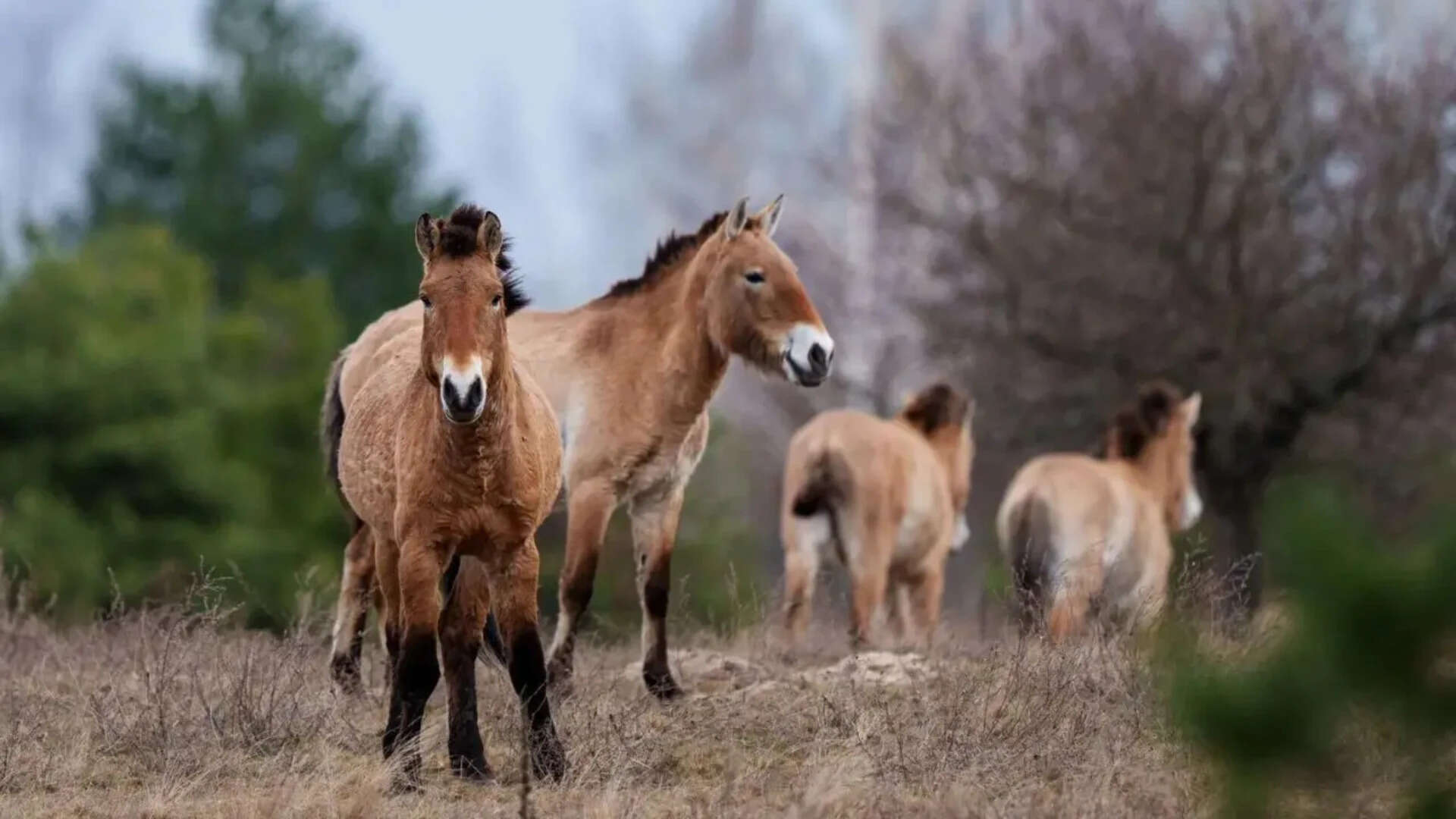
- Rewilding Success: The successful introduction of the Przewalski’s horse—an endangered species that had no prior history in the region—proves that the CEZ can serve as a "refugium" for species that are failing elsewhere due to human encroachment.
The Cost Function of Modern Ecology
The Chernobyl case study forces a re-evaluation of conservation priorities. If an area contaminated with long-lived isotopes can produce a more robust ecosystem than a "clean" managed forest, then current conservation models are failing to account for the true cost of human presence.
The "Anthropogenic Withdrawal" model suggests that the most effective way to restore biodiversity is not through active management, but through the creation of "Human Exclusion Zones." This is a politically difficult but scientifically sound strategy for mass carbon sequestration and species recovery.
Strategic Forecast for Post-Industrial Landscapes
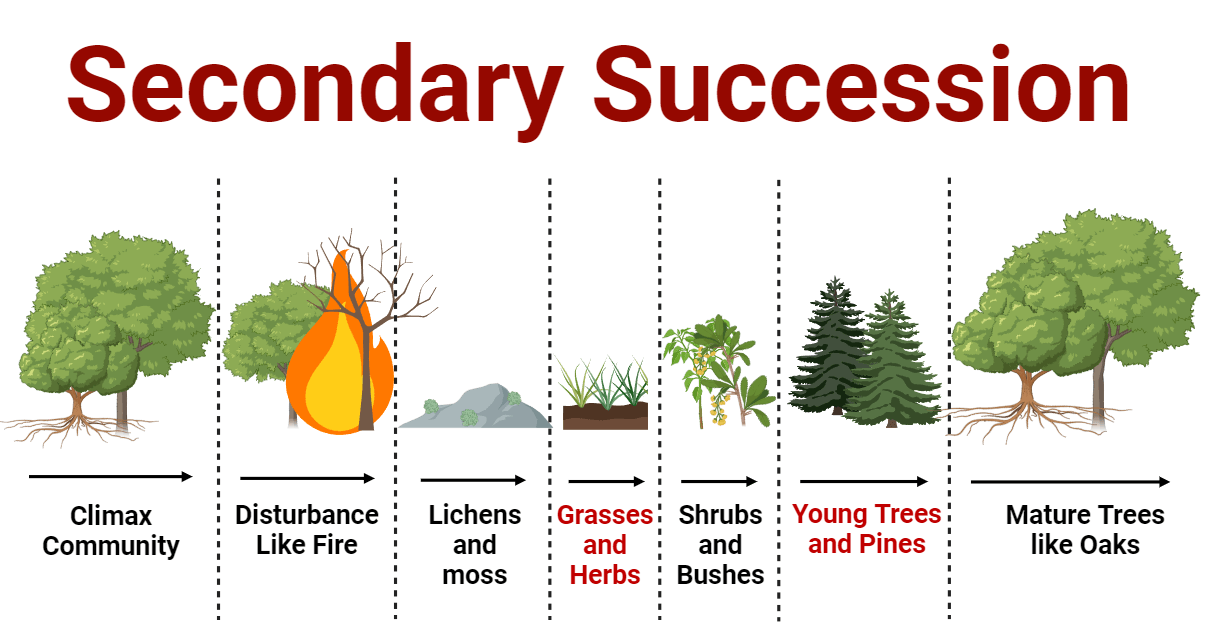
The CEZ is a precursor to the future of "abandonment landscapes." As rural populations globally migrate to urban centers, vast tracts of land are being de-facto rewilded. The lessons from Chernobyl indicate that these areas will not require human intervention to thrive. Instead, they will follow a predictable trajectory of biological reclamation:
- Phase 1 (0-10 years): Rapid expansion of pioneer plant species and small mammals.
- Phase 2 (10-40 years): Stabilization of large predator populations and closure of forest canopies.
- Phase 3 (50+ years): Selection for specialized, locally adapted genotypes.
The primary threat to these recovering ecosystems is not residual toxicity, but the return of human infrastructure. The strategic recommendation for global environmental policy is the formalization of "Passive Recovery Zones" (PRZs). Unlike traditional national parks, which encourage tourism and maintenance, PRZs would prioritize total human absence. This model, validated by the CEZ, provides the highest return on investment for biodiversity per square kilometer, even in the presence of significant environmental degradation.
The CEZ proves that nature does not need to be "saved"; it merely needs to be left alone. The radiological contamination is a minor variable compared to the devastating impact of the plow, the road, and the gun.