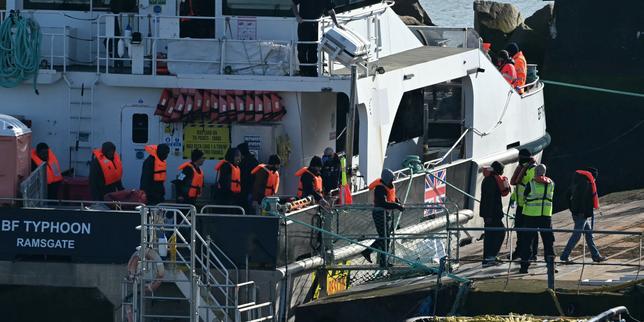
The recent political fanfare surrounding the "Europeanization" of English Channel border management misses the mark so spectacularly it borders on delusion. Analysts are lining up to cheer a new era of cross-border coordination, joint patrols, and shared surveillance data between the UK and its continental neighbors. They frame it as a crucial first step. A modern solution to an intractable humanitarian and logistical crisis.
They are wrong.
What the consensus calls a breakthrough is actually an expensive exercise in bureaucratic buck-passing. By treating a deeply entrenched, highly lucrative black market as a mere coordination problem, authorities are doubling down on the exact mechanics that created the crisis in the first place. Centralizing a failed strategy across multiple nations does not make it effective. It just makes the failure bigger, slower, and harder to correct.
The Fatal Flaw of the Europeanization Narrative
The core argument for a unified European approach relies on a simple, comforting premise: if we just pool our resources, share satellite data, and align our police forces, we can choke out the smuggling networks.
This ignores the fundamental laws of supply and demand.
Border enforcement does not eliminate the market for channel crossings; it merely alters the risk premium. Decades of data from global migration bottlenecks—from the Mediterranean to the US-Mexico border—demonstrate a consistent pattern. When you increase enforcement at a specific transit point, you do not stop the flow. You increase the price of the journey, enrich the most ruthless criminal syndicates, and force desperate people into more dangerous routes.
I have spent years analyzing maritime logistics and cross-border regulatory frameworks. I have watched governments burn through billions on high-tech thermal imaging, drone fleets, and joint task forces. The result? The business model of illegal trafficking remains entirely intact. In fact, increased security acts as a regulatory barrier to entry for small-scale operations, effectively handing a monopoly to highly organized, violent cartels capable of bypassing sophisticated state apparatuses.
Why More Data Won't Save the Strategy
The policy papers love to hyper-focus on technology. They talk about real-time data sharing and integrated command centers as if the problem is a lack of information.
It isn't. The French authorities know where the boats are launching. The British Coastguard knows where they are heading. The bottleneck isn't intelligence gathering; it is the legal and logistical impossibility of turning back small, unseaworthy vessels in international waters without violating basic maritime law and human rights conventions.
When the consensus claims that "European cooperation" is the missing piece of the puzzle, they are asking the wrong question entirely. The question shouldn't be "How do we coordinate the crackdown?" The question must be "Why are we subsidizing a cat-and-mouse game that the mouse is structurally guaranteed to win?"
Dismantling the "People Also Ask" Preconceptions
To understand the depth of the policy failure, we have to dismantle the flawed premises that dominate public debate.
- Does increased international policing deter channel crossings? No. It changes the economics, not the motivation. A migrant who has traveled thousands of miles across multiple continents is not going to turn back because France and the UK signed a new data-sharing treaty. They simply pay a higher premium to a smuggler who promises a stealthier, often far more perilous route.
- Can France just stop the boats on the beaches? Logistically impossible. The coastline of Northern France spans hundreds of kilometers of dunes, inlets, and difficult terrain. Expecting police officers to effectively blockade every meter of sand 24 hours a day is a fantasy. Even if you doubled the personnel, the operational reality of intercepting desperate people launching inflatable craft in the dead of night makes total containment an illusion.
- Is a unified European asylum quota the answer? This is the favorite talking point of NGOs and academic theorists. While a centralized processing system sounds elegant on paper, it collapses under geopolitical reality. Sovereign nations will not cede final veto power over who enters their borders to an external European committee. It is a political non-starter masquerading as a humanitarian fix.
The Economic Reality of the Smuggling Syndicate
Let us look at this through the lens of pure business mechanics. Human smuggling is a low-overhead, high-margin enterprise. The capital required to purchase an inflatable dinghy and an outboard motor is negligible. The revenue generated from packed vessels—often charging thousands of pounds per seat—yields astronomical profit margins.
When governments implement unified crackdowns, they create a classic market distortion:
| Enforcement Action | Market Reaction | Business Outcome |
|---|---|---|
| Increased beach patrols | Smugglers move to more remote, dangerous launch sites | Higher risk, higher fees charged to migrants |
| Enhanced sea surveillance | Use of larger, lower-quality, overcrowded boats | Increased casualty rates; higher profit per launch |
| Financial asset tracking | Transition to informal banking systems (Hawala) | Complete detachment from western banking scrutiny |
By driving the trade deeper underground, Europeanization simply consolidates market power into fewer, more dangerous hands. The mom-and-pop smuggling operations are wiped out. The transnational syndicates thrive.
The Hard, Counter-Intuitive Alternative
If the current trajectory is a guaranteed dead end, what is the alternative? It requires a complete rejection of the enforcement-first paradigm.
The only way to break the business model of the channel crossings is to remove the market demand for the smugglers' services. This does not mean open borders, nor does it mean turning a blind eye. It means establishing offshore, legal processing centers in transit countries, tied to strict, capped economic migration quotas.
The Trade-offs of a Realist Approach
This contrarian approach is not a magic bullet. It carries massive political and operational downsides:
- Voter Backlash: Acknowledging that enforcement has failed and establishing legal pathways is a tough sell to an electorate conditioned to demand hard borders.
- Logistical Complexities: Running secure, humane processing hubs in foreign jurisdictions requires immense diplomatic capital and constant oversight.
- The Quota Dilemma: Once the legal cap is reached for the year, the incentive for irregular crossings returns, meaning the system requires constant calibration.
Yet, despite these friction points, it remains the only mechanism that directly attacks the smugglers' revenue. If a migrant can apply for a legal, regulated path to status without risking their life on a dinghy, the market value of a smuggler’s spot drops to zero.
Stop Funding the Illusion
The current policy of Europeanization is essentially an expensive PR campaign designed to show anxious publics that "something is being done." It allows politicians on both sides of the Channel to hold press conferences, announce joint funding initiatives, and point to newly acquired surveillance hardware.
Meanwhile, the boats keep launching, the syndicates keep profiting, and the taxpayer keeps footings the bill for a strategy that cannot structurally succeed.
We are told that a unified European management system is the future. If the future is characterized by bloated budgets, empowered criminal networks, and a complete failure to address the core economic drivers of migration, then the consensus is exactly right. If we want to actually solve the crisis, we need to stop trying to perfect a broken machine and build a completely new one.


