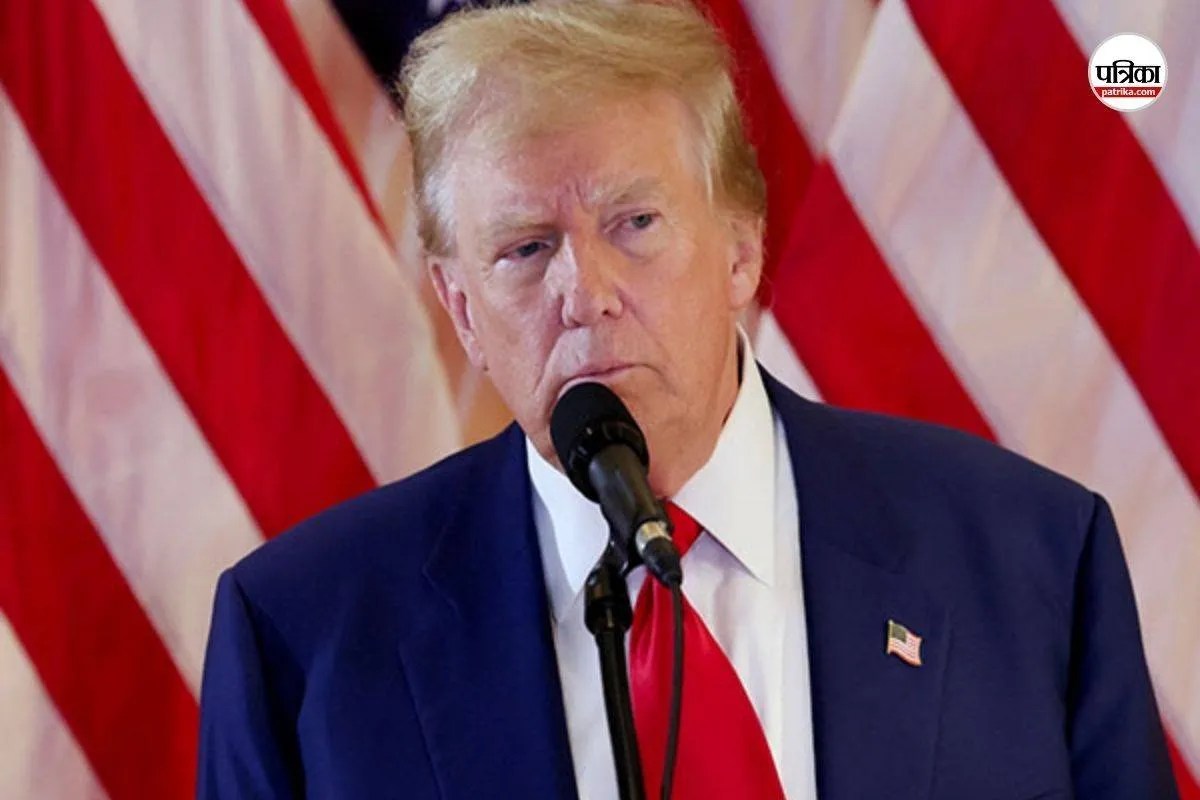
Mainstream media outlets love a sensationalist headline, especially when it mixes Donald Trump, a controversial territorial dispute, and the allure of a high-stakes real estate deal. Recent commentary surrounding the Chagos Islands suggests that the returning US President might simply bypass the United Kingdom, ignore international treaties, and "buy" the archipelago directly from Mauritius.
It is a gripping narrative. It is also legally impossible, financially absurd, and reveals a fundamental misunderstanding of how global sovereignty operates.
The lazy consensus dominating current discourse views the Chagos Islands through the lens of a standard corporate buyout. Pundits look at Trump’s history as a real estate developer, recall his 2019 inquiry into purchasing Greenland, and assume the same playbook applies to a strategic military hub in the Indian Ocean. They are asking the wrong question. The issue isn't whether Trump wants to buy the Chagos Islands; the issue is that sovereign territory hosting a critical joint military facility cannot be traded like a distressed hotel asset.
The Sovereignty Illusion: Why Mauritius Cannot Sell What It Does Not Yet Fully Control
To understand why the "Trump Buys Chagos" theory falls apart, we have to look at the actual mechanics of the October 2024 agreement between the UK and Mauritius.
For decades, the United Kingdom maintained control over the British Indian Ocean Territory (BIOT), while Mauritius claimed historical sovereignty. Under the 2024 accord, Britain agreed to recognize Mauritian sovereignty over the Chagos Islands. However, the fine print contains a massive caveat that the sensationalist press completely ignored.
The UK secured a 99-year lease to maintain full operational control over Diego Garcia, the largest island in the atoll and home to the highly strategic US-UK military base.
[Mauritian Sovereignty Recognized]
               │
               ▼
[99-Year Lease Granted to the UK]
               │
               ▼
[US Military Operations Retained on Diego Garcia]
If the Trump administration were to attempt a direct purchase from Mauritius, they would run into an immediate, insurmountable wall of international contract law. Mauritius cannot sell the unencumbered rights to Diego Garcia because those rights are legally tied up in a century-long lease with London.
I have watched analysts misinterpret sovereign leases for years, treating them as flimsy gentlemen's agreements. They are not. They are binding international frameworks backed by military deterrence. For Mauritius to break the lease and sell the land to Washington would require violating an accord they spent decades fighting to achieve. It would destroy Port Louis's international credibility for a short-term cash injection.
Dismantling the Greenland Analogy
Defenders of the purchase theory point directly to Greenland. If Trump could try to buy the world's largest island from Denmark, why not Chagos from Mauritius?
The comparison fails under basic scrutiny.
- The Nature of the Territory: Greenland is an autonomous territory within the Kingdom of Denmark with a population of over 56,000 people and its own domestic government. The Chagos Islands—specifically Diego Garcia—function exclusively as a militarized zone. There is no civilian infrastructure to acquire, no local economy to integrate, and no domestic population to govern.
- The Existing Superpower Footprint: When Trump floated the Greenland idea, the US already operated Thule Air Base there under a 1951 defense treaty. The US did not need to buy Greenland to secure its military presence. Similarly, the US already enjoys full, unrestricted access to Diego Garcia via its status as a joint base with the UK.
Why would the United States spend billions of dollars of taxpayer money to purchase land it already occupies and operates from practically for free? The US military footprint on Diego Garcia is secured by the UK-US Exchange of Notes, an agreement that runs alongside the UK-Mauritius treaty. Washington already has exactly what it needs: operational control without the administrative burden of sovereign ownership.
The Financial Reality of Sovereign Acquisitions
Let's engage in a thought experiment. Imagine a scenario where Mauritius attempts to void its treaty with the UK, and the US decides to pursue an outright purchase of the Chagos Islands. What is the actual price tag of an island chain that hosts a runway capable of launching B-2 bombers, submarine support facilities, and deep-water ports?
The cost would not merely be the real estate value of the coral atolls. The true cost would include:
- The geopolitical payout required to compensate the UK for breaking a long-term strategic agreement.
- The massive economic aid packages required to stabilize relations with regional powers like India, which closely monitors Indian Ocean maritime security.
- The long-term liability of managing environmental protection and potential resettlement claims by the Chagossian people, who were expelled in the 1960s and 1970s.
The financial downside of ownership heavily outweighs the benefits. Under the current setup, the United Kingdom shoulders the diplomatic heat and the legal liabilities of the Chagos dispute. The United States sits comfortably in the background, utilizing the base while letting London take the blame in international courts. Shifting sovereignty directly to Washington through a commercial sale would put a massive geopolitical target directly on the US. It is a terrible business deal, and even the most transactional administration would see that.
People Also Ask: Dismantling the Premise
Can the US President unilaterally buy foreign land?
No. The executive branch cannot simply write a check for foreign territory. Any acquisition of land by the United States requires congressional approval, specifically regarding the appropriation of funds. Furthermore, acquiring new territory introduces complex constitutional questions regarding the legal status of the land and any future inhabitants.
Why is Diego Garcia so important to the US?
Diego Garcia provides an unparalleled staging ground for operations across the Middle East, South Asia, and the Indo-Pacific. It allows the US military to project power across vital maritime trade routes without relying on the permission of volatile regional governments. However, this importance is exactly why the US prefers the stability of the current UK lease over a chaotic, legally dubious purchase attempt.
The Real Strategic Risk: China, Not Real Estate
The obsession with whether Trump will buy the islands distracts from the actual geopolitical challenge unfolding in the region. The real risk isn't an American buyout; it is Chinese economic encirclement.
Mauritius has deep economic ties with Beijing. As China continues to expand its "String of Pearls" strategy across the Indian Ocean—developing ports in Pakistan, Sri Lanka, and East Africa—Mauritius represents a vital piece of maritime real estate.
[Gwadar, Pakistan] ─── [Hambantota, Sri Lanka] ─── [Port Louis, Mauritius]
The true vulnerability of the UK-Mauritius deal isn't that Trump will disrupt it, but that future Mauritian administrations might leverage their sovereignty over the other islands in the Chagos Archipelago (excluding Diego Garcia) to allow Chinese commercial or scientific ventures. The outer islands, such as Peros Banhos or Salomon, are currently uninhabited. If Mauritius allows Chinese state-owned enterprises to develop "dual-use" fishing ports or research stations on these outer atolls, the intelligence-gathering capabilities directed at Diego Garcia would increase exponentially.
This is the nuance the mainstream press misses while chasing headlines about Trump's real estate ambitions. The battle over Chagos is not a property auction; it is a complex, three-dimensional chess game involving surveillance capabilities, maritime choke points, and long-term treaty compliance.
Stop viewing global geopolitics through the lens of a corporate balance sheet. The United States does not need to own the dirt to control the sky. The current lease structure gives Washington maximum military utility with zero administrative liability. Buying the Chagos Islands would be a diplomatic disaster, a legal nightmare, and a financial waste. The treaty stands, the base remains, and the real estate speculation belongs in the tabloid section.