Stop popping the champagne.
The financial press is currently backpatting the Federal Reserve because the Consumer Price Index clocked in at 3.5% in June. They want you to believe the dragon has been slayed, the "soft landing" is secured, and you can safely return to your regular scheduled programming of passive index investing and holding cash.
It is a lie.
Celebrating a 3.5% inflation rate because it is lower than 9% is like celebrating a home intruder who only steals your laptop instead of burning your house down. You are still being robbed.
The mainstream financial media operates on a lazy consensus. They regurgitate monthly Bureau of Labor Statistics data without pulling back the curtain on how those numbers are manufactured. If you are managing your personal balance sheet based on the headline CPI, you are actively destroying your purchasing power.
The Mirage of Falling Gas Prices
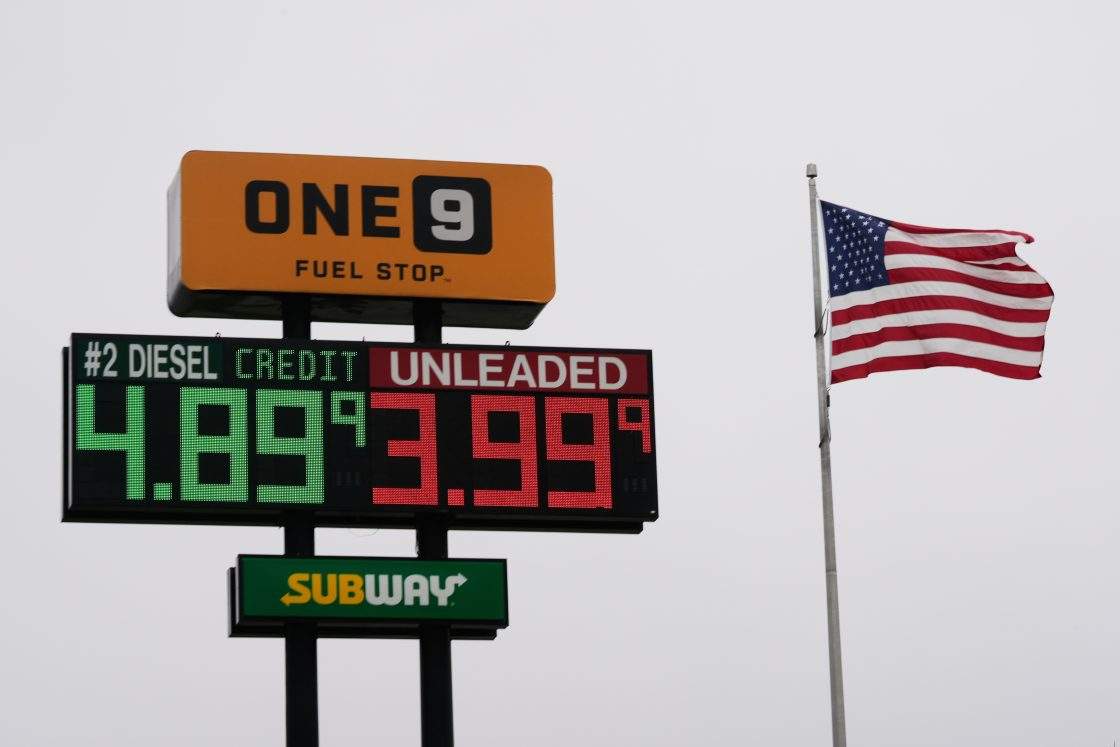
The core of the June "cooling" narrative rests entirely on a temporary dip in energy costs. Gas prices fell, so the headline number looked prettier.
This is a classic rookie mistake in economic analysis. Energy prices are highly volatile, driven by geopolitical posturing, seasonal refinery maintenance, and strategic petroleum reserve manipulation. Using a brief respite at the pump to declare that inflation is under control is intellectually bankrupt.
Strip out food and energy—the volatile elements—and look at core CPI. Look at services. Service-sector inflation is not cooling; it is sticky, stubborn, and deeply entrenched.
Headline CPI:   3.5% (Driven down by temporary energy dips)
Core Services:  Stuck near 5% (Driven by wage spirals and structural shortages)
When wages go up, dry cleaners, accountants, mechanics, and dentists do not lower their prices when oil drops five dollars a barrel. Their input costs are permanent human labor. Once service inflation gets hot, it stays hot.
The Phantom Math of Hedonic Adjustments
To understand why the official numbers are a fantasy, you have to understand how the government calculates price increases. They do not just track the sticker price of goods. They use a statistical sleight of hand called hedonic quality adjustment.
Imagine you bought a laptop five years ago for $1,000. Today, the replacement model costs $1,000. To any normal human, the inflation rate on that laptop is 0%.
But the BLS does not see it that way. They argue that because the new laptop has a faster processor, more RAM, and a better screen, you are getting "more value." They apply a mathematical discount to the price to reflect this quality improvement. In their spreadsheets, they might record that the laptop actually cost $700.
According to their math, the price of laptops fell by 30%.
Try explaining that to your bank account. You still had to hand over $1,000 in cold, hard cash. You cannot pay your mortgage with "improved microprocessor utility." Hedonic adjustments artificially depress the reported rate of inflation, hiding the raw cash outflow required just to maintain a baseline standard of living.
The Fiction of Owners' Equivalent Rent
The single biggest component of the CPI is shelter, making up roughly a third of the entire index. You would think the government measures this by tracking actual rent payments or mortgage costs.
You would be wrong.
Instead, they rely heavily on a metric called Owners' Equivalent Rent (OER). To calculate OER, the government literally surveys homeowners and asks them a hypothetical question:
"If you were to rent your home today, how much do you think it would rent for?"
This is a survey of vibes.
Homeowners have absolutely no incentive to track the real-time rental market with precision. They guess. They base their guesses on outdated information, neighborhood gossip, or pure emotion. Because of this, OER lags the real, on-the-ground rental market by up to twelve months.
When actual rents were skyrocketing by 20% across the country during the post-pandemic boom, the official CPI shelter metric barely budged because homeowners hadn't caught on yet. Now, as the real market cools slightly, the lag is keeping the numbers artificially elevated, prompting commentators to scream that "shelter is the only thing keeping inflation high."
It is a self-inflicted statistical lag. The data is disconnected from real-time reality.
The Compounding Trap of Disinflation
Let us address the most dangerous misunderstanding in modern financial literacy: the difference between disinflation and deflation.
When the media reports that inflation is "cooling" or "dropping" to 3.5%, most everyday consumers hear: "Prices are going down."
They are not. They are just rising at a slower pace.
Year 1: $100 baseline
Year 2: $109 (9% inflation)
Year 3: $115.54 (6% inflation)
Year 4: $119.58 (3.5% inflation)
The 3.5% increase of June is compounding on top of the 6% increase of last year, which compounded on top of the 9% increase of the year before that. Your dollar has lost roughly 20% of its purchasing power since 2020. That loss is permanent. Prices are never going back to where they were, short of a catastrophic economic depression.
For the average worker whose wages have not kept pace with this compounding spiral, a 3.5% inflation rate is not a cooling breeze. It is another bucket of water being poured into a sinking boat.
Why Two Percent Inflation is Dead
The Federal Reserve’s stated goal is 2% inflation. They want you to think this is a natural, healthy baseline.
It isn't. It is an arbitrary number invented by the Reserve Bank of New Zealand in the late 1980s that the rest of the world’s central banks adopted like a fashion trend.
More importantly, returning to 2% is structurally impossible without a severe economic collapse. The global economy has undergone three massive shifts that are permanently inflationary:
- Deglobalization: For thirty years, we exported inflation by outsourcing manufacturing to cheap labor markets like China. That era is over. Near-shoring and friend-shoring mean building factories in expensive jurisdictions. That costs money.
- Demographics: The massive Baby Boomer generation is retiring, moving from highly productive workers to heavy consumers of services and healthcare. The labor pool is shrinking, driving structural wage growth.
- Decarbonization: The transition away from cheap fossil fuels to more expensive, capital-intensive green energy sources is incredibly inflationary. Copper, lithium, and steel are expensive.
We are living in a structural 3% to 4% inflation world. The Fed knows this, even if they cannot admit it publicly because doing so would de-anchor inflation expectations and cause long-term bond yields to skyrocket.
The Portfolio Killer: Negative Real Yields
During my years managing institutional risk, I watched countless private clients make the same fatal mistake during inflationary periods: they hid in "safe" yielding assets.
Right now, cash sitting in a high-yield savings account or short-term Treasury bill yielding 4.5% looks like a great deal. You think you are beating the 3.5% inflation rate.
You are forgetting Uncle Sam's cut.
If you earn 4.5% on your money, you owe ordinary income tax on those interest earnings. If you are in a moderate tax bracket, your net yield drops to around 3%.
$$Net\ Yield = 4.5% \times (1 - 0.33) = 3.015%$$
Compare that 3% net yield to a real-world inflation rate that is likely much closer to 5% or 6% when you strip out the statistical manipulation of the CPI.
You are losing purchasing power every single day your money sits in a "safe" account.
The only way to survive a structurally high-inflation environment is to own scarce, productive assets. You must own businesses that have the pricing power to pass their costs onto the consumer. You must own real estate with leases that adjust with market rates. You must own assets that cannot be printed, devalued, or statistically adjusted away by a government desperate to hide its own insolvency.
Stop listening to bureaucrats who tell you the water is fine while the ship is taking on water. Wake up to the compounding destruction of your capital, ditch the cash hoarding, and position your portfolio for the permanent high-inflation reality.