Paper agreements don't stop bombs. If you want proof, look at the sky over Beirut.
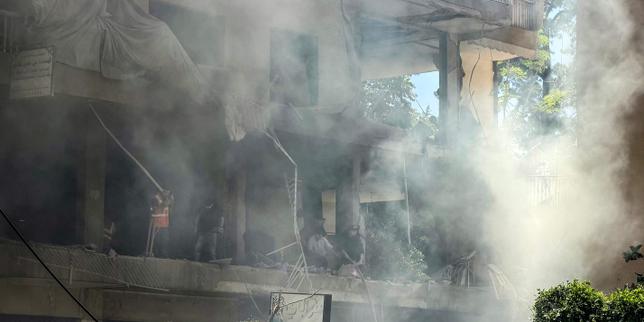
Just when diplomats were whispering about a finalized U.S.-Iran deal to end the wider regional war, the reality of the conflict struck right back. On Sunday, June 14, 2026, Israeli fighter jets slammed two missiles into Dahiyeh, the densely populated southern suburb of Beirut.
There was no warning. No standard Arabic-language tweets telling families to flee. Just sudden, deafening explosions that instantly tore through the fragile illusion of a diplomatic breakthrough.
The strike is a direct response to three projectiles launched from Lebanon into northern Israel earlier in the day. While the Israeli military called the rocket fire a blatant violation of the ongoing, shaky truce, the immediate retaliation in the heart of Beirut proves how quickly the conflict can reset to maximum escalation.
The Mirage of a Paper Truce
Let's be honest about the situation on the ground. The U.S.-brokered ceasefire, initially established back in April and patched up throughout May, has been a ghost of an agreement. It exists in press releases, not on the streets.
Lebanese Prime Minister Nawaf Salam recently noted that Israel has carried out thousands of air strikes and controlled demolitions since the supposed truce began. Most of that destruction has been concentrated in the south, flattening border villages. But hitting Dahiyeh changes the political math completely.
The southern suburbs aren't just a physical location. They represent the political and military nerve center of Hezbollah. By striking this specific zone without a pre-raid warning, Israel is signaling that its "Dahiyeh Doctrine"—the strategy of using disproportionate force against civilian and military infrastructure to deter attacks—remains active.
Before the jets even took off, far-right Israeli ministers were publicly demanding blood. Finance Minister Bezalel Smotrich explicitly called on Prime Minister Benjamin Netanyahu to implement the doctrine firmly and bring down buildings in the capital's suburbs. Hours later, the missiles hit.
Diplomatic Collateral Damage
The timing of this attack couldn't be worse for international negotiators. U.S. and Pakistani leaders were hinting at a monumental peace agreement between Washington and Tehran, scheduled to be signed as early as today.
Iran has consistently tied any broad diplomatic agreement with the West to a total cessation of hostilities in Lebanon. Every time a deal gets close, the battlefield erupts. Last week, a similar strike on Dahiyeh triggered a direct missile exchange between Israel and Iran.
We are seeing a dangerous cycle play out.
- Hezbollah launches rockets or drones to protest Israeli troops holding ground in southern Lebanon.
- Israel responds by hitting high-value political targets in Beirut.
- Iran feels compelled to retaliate to maintain its deterrence posture.
- The diplomatic track stalls out completely.
This isn't a series of miscalculations. It's a deliberate test of wills. Netanyahu and Defense Minister Israel Katz issued a joint statement making it clear that they will hit Beirut anytime a projectile crosses the border, regardless of what negotiators are doing in foreign capitals.
The Human Cost of Strategic Ambiguity
For the people living in Beirut, this strategic chess game is exhausting. More than a million Lebanese citizens—a staggering fifth of the country's population—have been displaced since the war escalated heavily in March.
When Israel conducts strikes without warning in dense urban neighborhoods, the panic is immediate. The standard routine used to involve tracking evacuation maps posted online by the Israeli military. Now, residents don't even have those few minutes to grab their passports and run.
Treating Dahiyeh solely as a military target ignores the millions of ordinary civilians caught in the crossfire. The supermarkets, the schools, the local pharmacies—they all exist under a cloud of permanent anxiety. You don't know if the building next door is on a target list until the shockwave hits your living room.
What Happens Next
The immediate focus shifts to Tehran and the southern front. Hezbollah has already claimed targeted drone and missile strikes against Israeli troops operating inside southern Lebanon, though they didn't officially claim the initial morning rocket fire that triggered the Beirut bombing.
If you are tracking this conflict, ignore the optimistic statements coming from Washington about an imminent grand bargain. Watch the reactions from the Iranian parliament and the movement of hardware in southern Lebanon instead. The region isn't waiting for a signing ceremony. It's bracing for the next round of sirens.