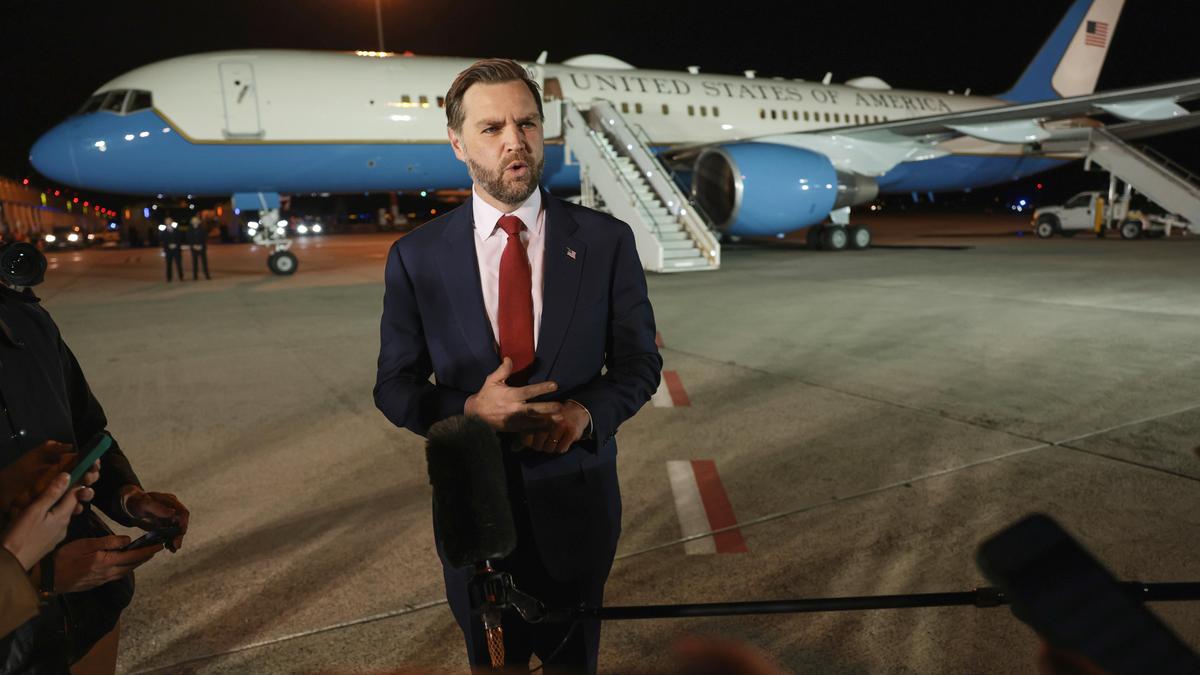
The modern diplomatic apparatus is obsessed with the "comprehensive" deal. It is a fairy tale for the bureaucratic class. When J.D. Vance clarifies that a Gaza ceasefire does not automatically extend to Lebanon, he isn't just stating a policy position; he is accidentally admitting that the entire framework of Western mediation is built on a fundamental misunderstanding of decentralized warfare.
The media treats the northern border of Israel and the southern tunnels of Gaza as a single light switch. They want to believe that if you flip it off in one place, the room goes dark everywhere. This is not just naive. It is dangerous. It ignores the gravity of regional mechanics and the specific, divergent goals of the actors involved.
The Myth of the Monolithic Front
Diplomats love the phrase "regional de-escalation." It sounds clean. It fits into a press release. But in the reality of Middle Eastern geopolitics, there is no such thing as a unified conflict. What we see is a series of overlapping, often contradictory, tactical theaters.
Hezbollah is not Hamas. To treat them as a package deal is to fail basic intelligence.
Hezbollah operates as a state within a state, possessing a sophisticated arsenal that dwarfs anything in Gaza. Their participation in the current conflict is performative but lethal—a "support front" designed to drain Israeli resources without triggering a total collapse of the Lebanese state. If the U.S. were to force a ceasefire that included Lebanon as a mere footnote to Gaza, they would be handing Hezbollah a strategic victory without requiring a single concession on the Litani River.
Vance’s point—whether you like the man or his politics—cuts through the fog: A ceasefire in Gaza is a solution for Gaza. Attempting to stretch that thin blanket over Lebanon leaves everyone exposed.
Why Separated Theaters Are Better for Everyone
The "lazy consensus" argues that a single, massive deal is the only way to prevent World War III. I have watched negotiators burn through years of political capital trying to build these "Grand Bargains." They almost always fail because they require too many moving parts to align.
By decoupling the Lebanon front from Gaza, the U.S. actually gains leverage. Here is why:
- Localized Pressure: You can apply specific economic and military pressure on Hezbollah without being held hostage by the pace of negotiations in Cairo or Doha.
- Operational Clarity: Israel can define clear, achievable security goals for the north—primarily the return of its citizens to their homes—without those goals being muddied by the humanitarian and hostage complexities of Gaza.
- Escalation Control: When you link the two fronts, an incident in a Rafah alleyway can trigger a rocket barrage on Haifa. Decoupling creates "firewalls." It prevents a tactical failure in one zone from becoming a strategic catastrophe in another.
The Litani River Reality Check
Let’s talk about UN Resolution 1701. Everyone cites it; almost nobody reads it. It was supposed to keep Hezbollah north of the Litani River. It failed. It failed because it relied on the "tapestry" of international cooperation—a word I despise because it implies things are woven together when they are actually falling apart.
If a Gaza ceasefire were to cover Lebanon today, it would merely freeze the status quo. Hezbollah would remain on the border. The 60,000+ displaced Israelis would remain in hotels. The "peace" would be a lie.
True stability requires a separate, grueling, and likely violent realignment of the northern border. To suggest that a deal made over the ruins of Gaza can solve the structural threat of 150,000 Hezbollah rockets is a level of geopolitical malpractice that should disqualify anyone from a seat at the table.
The Cost of the "Package Deal" Mentality
I’ve seen this before in corporate restructuring and in high-stakes litigation. When you try to settle every claim in the building at once, the worst actors hold the entire process hostage. They know they are the "holdouts." They know you want the "all-clear" headline.
By insisting that Lebanon is a separate entity, the U.S. is signaling to Tehran that they cannot use Hezbollah as a simple volume knob for the Gaza conflict.
The Uncomfortable Truth About Sovereignty
The international community treats Lebanon as a victim. It is, instead, a participant.
By allowing Hezbollah to launch attacks from its soil, the Lebanese state has abdicated its claim to the standard protections of a sovereign entity in a ceasefire discussion. You cannot demand to be included in a peace treaty for a war you claim you aren't officially fighting, while simultaneously allowing your territory to be used as a launchpad.
Vance’s rhetoric reflects an emerging realism: The U.S. is tired of subsidizing the fiction of Lebanese neutrality. If Beirut cannot or will not control its southern border, it cannot expect to be protected by the diplomatic umbrella of a Gaza deal.
The Logic of the "Long War"
We are entering an era of permanent, low-intensity friction. The idea that we can return to a "pre-October 7" status quo is a delusion shared by those who prioritize comfort over clarity.
The Gaza conflict is an existential urban counter-insurgency. The Lebanon conflict is a high-end, state-level deterrent game. They require different weapons, different rules of engagement, and entirely different diplomatic endpoints.
- Gaza: Requires a governance solution and a total dismantling of tunnel infrastructure.
- Lebanon: Requires a territorial buffer and a credible threat of conventional destruction against state infrastructure to keep Hezbollah in check.
You cannot solve a governance problem with a territorial buffer, and you cannot solve a rocket threat with a governance plan for a different country.
Stop Asking the Wrong Question
The media keeps asking: "Will the ceasefire hold?"
The better question is: "Why would we want a ceasefire that leaves the largest non-state army in the world perched on a border, ready to strike the moment the ink is dry?"
A Gaza ceasefire is a tactical necessity for the IDF to refit and for the hostages to return. But it is not a regional "reset" button. Anyone telling you otherwise is selling a fantasy. We are not looking at the end of a conflict; we are looking at the specialization of two different wars.
The U.S. position—dividing these conflicts—is the only path that acknowledges the sheer scale of the threat. It is messy. It is loud. It is unpopular in the salons of Paris and the halls of the UN. But it is the only way to deal with the world as it actually exists, rather than how we wish it appeared on a map.
The decoupling isn't a failure of diplomacy. It is the beginning of a strategy.