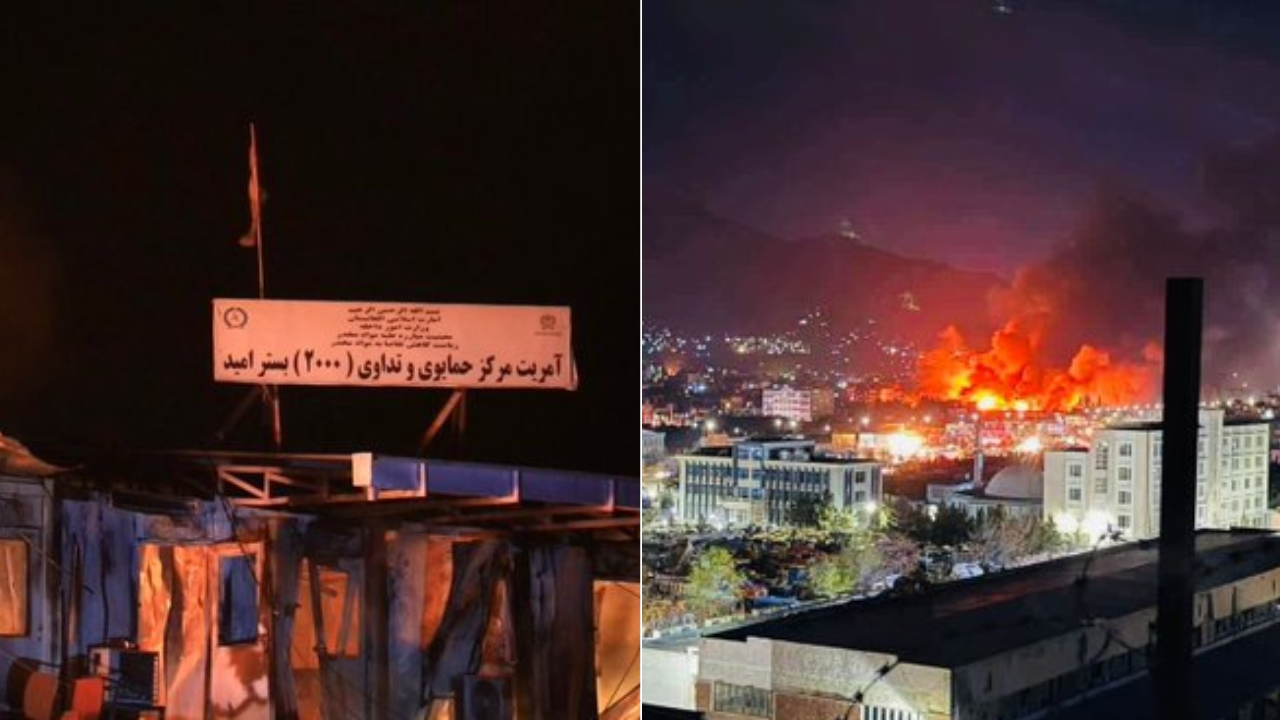
The reported strike on a medical facility near the Afghanistan-Pakistan border, resulting in a claimed 400 fatalities, represents a critical failure in the structural integrity of non-combatant immunity and international humanitarian law (IHL). In high-friction border zones, the fog of war is often compounded by asymmetric information environments where the first actor to define the casualty count dictates the initial geopolitical narrative. To analyze this event with clinical precision, one must look past the immediate emotional weight and deconstruct the three-phase breakdown: the mechanics of the strike, the verification of the 400-person figure, and the escalatory logic of the subsequent diplomatic fallout.
The Architecture of Proportionality and Target Identification
The legality of any strike on a medical facility hinges on the principle of distinction under IHL. Hospitals lose their protected status only if they are used to commit acts harmful to the enemy, and even then, a warning must be issued. The reported scale of 400 deaths suggests a high-yield kinetic event or the targeting of a high-density area, which raises immediate questions regarding the "Proportionality Calculus."
The Proportionality Calculus functions as a ratio:
- Anticipated Military Advantage: The strategic value gained by neutralizing a specific target.
- Incidental Loss: The expected damage to civilian life and property.
If the strike was intentional, the attacking force must justify that the presence of a high-value target (HVT) or a combatant command center within the hospital outweighed the lives of 400 individuals—a threshold rarely met in modern counter-insurgency doctrine. If the strike was accidental, it indicates a systemic failure in the Intelligence, Surveillance, and Reconnaissance (ISR) chain, specifically in the "Target Validation" phase where geospatial intelligence (GEOINT) failed to flag the facility as a protected site.
Evaluating the 400-Person Casualty Metric
A casualty count of 400 from a single strike is statistically significant and requires a specific set of physical conditions to be credible. In urban or semi-urban combat zones, casualty figures are frequently used as "Information Operations" (IO) tools. To determine the validity of the 400-person figure, analysts utilize the Static Density Model.
A standard hospital ward or outpatient area typically has a fixed maximum occupancy based on square footage and bed capacity. For 400 people to perish in a single event, the facility would need to be operating at approximately 300% capacity, or the strike must have occurred during a period of mass congregation, such as a mealtime or a communal prayer.
The verification process faces three structural bottlenecks:
- The Identification Gap: Rapid burials in accordance with local customs often prevent forensic accounting.
- The Aggregation Bias: Local officials may conflate the wounded with the deceased to increase the perceived gravity of the incident.
- The Attribution Void: Without independent ground-truth verification from third-party NGOs, the numbers remain "claims-based" rather than "evidence-based."
The Geopolitical Feedback Loop
The friction between Kabul and Islamabad regarding border strikes is not merely a tactical dispute; it is a manifestation of the Strategic Depth Dilemma. Pakistan’s military objectives often involve neutralizing cross-border militant threats, while the Afghan administration views such actions as a violation of territorial sovereignty.
This creates a self-reinforcing cycle of escalation:
- The Kinetic Trigger: A strike occurs, intended to neutralize a threat.
- The Narrative Explosion: High casualty figures (whether verified or not) are released to trigger international condemnation.
- The Sovereignty Tax: The host nation is forced to respond via border closures, artillery duels, or diplomatic expulsions to maintain domestic legitimacy.
The reported hospital strike serves as a "Sovereignty Tax" event. By claiming 400 deaths, the Afghan administration raises the political cost for Pakistan, effectively demanding a halt to future incursions by leveraging the global sensitivity toward medical facility protection.
Fragility of the Health Infrastructure in Conflict Zones
The destruction of a primary medical hub in a border region creates a "Healthcare Vacuum" that extends far beyond the immediate fatalities. When a hospital is neutralized, the local mortality rate experiences a secondary spike due to the loss of Critical Care Continuity.
The impact is measured through:
- Direct Attrition: The loss of specialized medical personnel who cannot be easily replaced in a conflict zone.
- Systemic Displacement: Patients with chronic conditions or trauma injuries are forced to travel long distances, often through active combat zones, to reach the next tier of care.
- Resource Depletion: The destruction of medical stockpiles, including vaccines and surgical equipment, which triggers localized outbreaks of preventable diseases.
The 400 lives lost in the initial strike represent the primary data point, but the "Shadow Casualties"—those who will die in the following six months due to a lack of surgical capacity—likely double the total impact of the event.
Verification Protocols for International Tribunals
For this incident to move from a news headline to a legal proceeding, a formal Joint Investigative Mechanism (JIM) is required. Such a mechanism must bypass the biases of the belligerent states.
The protocol involves:
- Crater Analysis: Determining the payload and angle of impact to identify the specific weapon system used.
- Signal Intelligence (SIGINT) Reconstruction: Reviewing intercepted communications to determine if the target was identified as a hospital prior to the launch.
- Digital Forensic Verification: Using time-stamped, geolocated social media footage to corroborate the timing and scale of the explosion.
Without these steps, the "400 deaths" figure remains a tactical variable in a broader psychological war. The burden of proof lies with the accuser to provide metadata-tagged evidence, while the burden of justification lies with the attacker to produce the ISR logs that led to the target selection.
Strategic Realignment of Border Security
The recurrence of these incidents necessitates a transition from "Unilateral Kinetic Action" to "Bi-national Deconfliction Zones." Currently, the lack of a shared "No-Strike List" between Kabul and Islamabad ensures that critical infrastructure remains at risk.
To mitigate future systemic failures, the following operational changes are required:
- The Establishment of a Neutral Red-Line Registry: A third-party database of all medical and educational facilities, updated in real-time and shared with all regional air commands.
- Mandatory Post-Strike Assessment (PSA): An agreement that any strike resulting in more than 10 civilian casualties triggers an immediate, transparent investigation by a neutral body.
- Hardened Communications: Direct hotlines between border commanders to verify targets in real-time, reducing the reliance on potentially flawed intelligence.
The focus must shift from casualty rhetoric to the hardening of the target validation chain. Until the mechanism of attribution is modernized, high-casualty reports will continue to serve as a form of "Kinetic Diplomacy," where the truth is less important than the resulting shift in political leverage.
The immediate priority for regional actors is the deployment of a third-party medical forensic team to the site. This team must prioritize the documentation of the blast radius and the recovery of munitions fragments. Only by establishing the "Technical Signature" of the strike can the international community move toward a definitive attribution that holds the responsible party accountable under the frameworks of the Geneva Conventions.