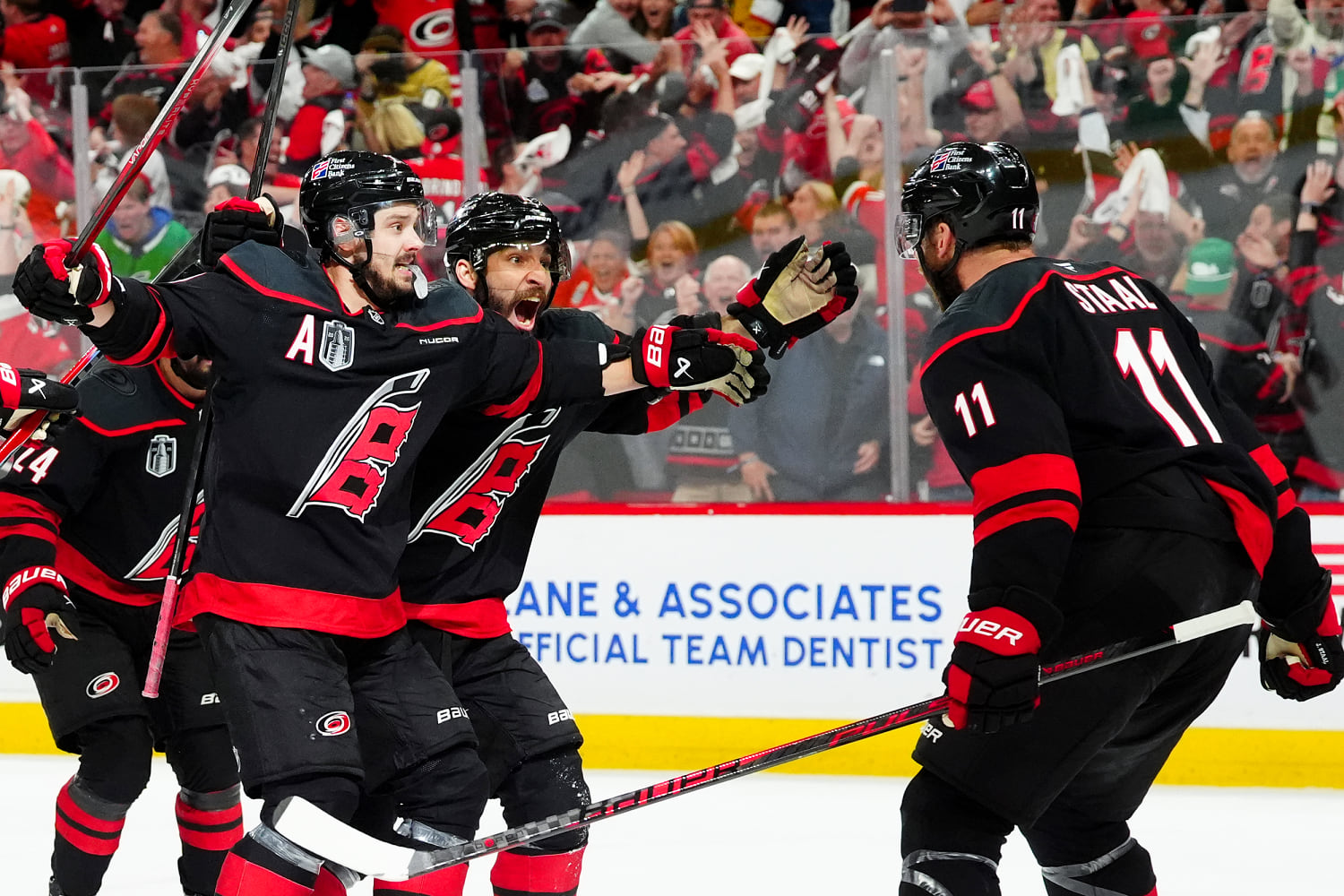
The mainstream hockey press is drunk on narrative.
Look no further than the breathless coverage of Carolina tying up the Stanley Cup Final against Vegas. The standard post-game wrap-ups are predictable. They call it a gritty gut-check. They talk about "momentum shifting" and "heart." They praise the adjustments made from the sports desk down to the ice.
It is a beautiful story. It is also completely wrong.
Chasing a series from behind and burning your tactical reserves just to pull even is not a triumph. It is a trap. The media celebrates the emotional high of a comeback because it sells jerseys and drives clicks, but the underlying numbers tell a much darker story for Carolina.
I have watched front offices and coaching staffs buy into their own hype during deep playoff runs, only to watch their season evaporate because they mistook desperation for a sustainable strategy. Carolina did not find a secret blueprint to beat Vegas. They emptied their tank just to get back to the starting line.
The Momentum Myth and the Exhaustion Penalty
Sports pundits love to treat momentum like a tangible force. They write about it as if winning Game 2 or Game 3 gives a team a mystical velocity that carries into the next matchup.
It does not. Momentum in the Stanley Cup Final is an illusion.
What actually exists is physiological fatigue and tactical exposure. To overcome a deficit against a heavy, structured team like Vegas, Carolina had to play at an unsustainable physical deficit. They shortened their bench. They ran their top defensive pairing into the ground, pushing their ice time well past the twenty-five-minute mark.
When you force your elite players to redline just to scratch out a win, you are borrowing execution from the future. You are paying a high interest rate on today’s victory, and that bill always comes due in the third period of Game 5 or Game 6.
The Tactical Trap of Playing Catch-Up
When a team falls behind early in a series, the coaching staff is forced to show their hand. They cannot afford to be patient. They have to deploy their adjustments immediately to save their season.
Carolina adjusted their forecheck. They altered their neutral zone tracking to choke off Vegas’s transition game. It worked for one night.
But here is the catch: Vegas now has the film.
By forcing your strategic adjustments early in a series out of sheer necessity, you lose the element of surprise. The team that holds the series lead can afford to drop a game while maintaining their core system, gathering data on your new wrinkles. Vegas did not lose because their system broke; they lost because Carolina played a high-variance, high-risk style that happened to hit the jackpot for sixty minutes.
Now Vegas adapts. Carolina, having already played their best hand, has nowhere left to go.
Dismantling the Mainstream Narrative
People always ask: "Doesn't a comeback victory prove a team has the mental toughness to win it all?"
No. It proves they were inefficient enough to get into a hole in the first place.
The belief that falling behind and roaring back builds character is a loser's consolation prize. The teams that win championships do not rely on dramatic turnarounds. They stifle games. They suffocate opponents. They win ugly, boring, wire-to-wire victories that leave no room for drama.
If you analyze the historical data of the modern salary cap era, teams that spend excessive energy fighting back from series deficits suffer a massive drop-off in shot quality and defensive zone coverage in the twilight games of the final. The human body has limits, even when fueled by adrenaline and Stanley Cup ambitions.
The Brutal Reality of the Vegas Matchup
Vegas is built like a meat grinder. Their roster is optimized for a long, grueling war of attrition. They do not care about individual star power; they care about rolling four lines that wear down an opponent's top four defensemen.
By celebrating Carolina's frantic push to even the series, analysts ignore how Vegas actually operates. Vegas wants you to run. They want you to stretch the ice. They want you to expend every ounce of energy chasing hits and forcing plays through the middle.
Carolina fell right into the trap. They won the game, but they validated Vegas’s long-term physical strategy.
The downside to this contrarian view is obvious: it looks cynical. It ignores the genuine skill and spectacular goaltending that allowed Carolina to secure the win. If Carolina's netminder continues to put up an unsustainable save percentage above .940, they can absolutely defy the metrics and lift the cup. Goaltending can break any analytical model. But betting on a goaltender to remain hot while your skaters are running on fumes is a terrible hedge.
Stop looking at the series score and calling it a brand-new series. The scoreboard says it is tied, but the structural reality says Vegas is exactly where they want to be. Carolina used their best ammunition just to survive the week.
Stop buying the fairy tale. The comeback is not the start of a legendary run; it is the final gasp of a dying campaign.