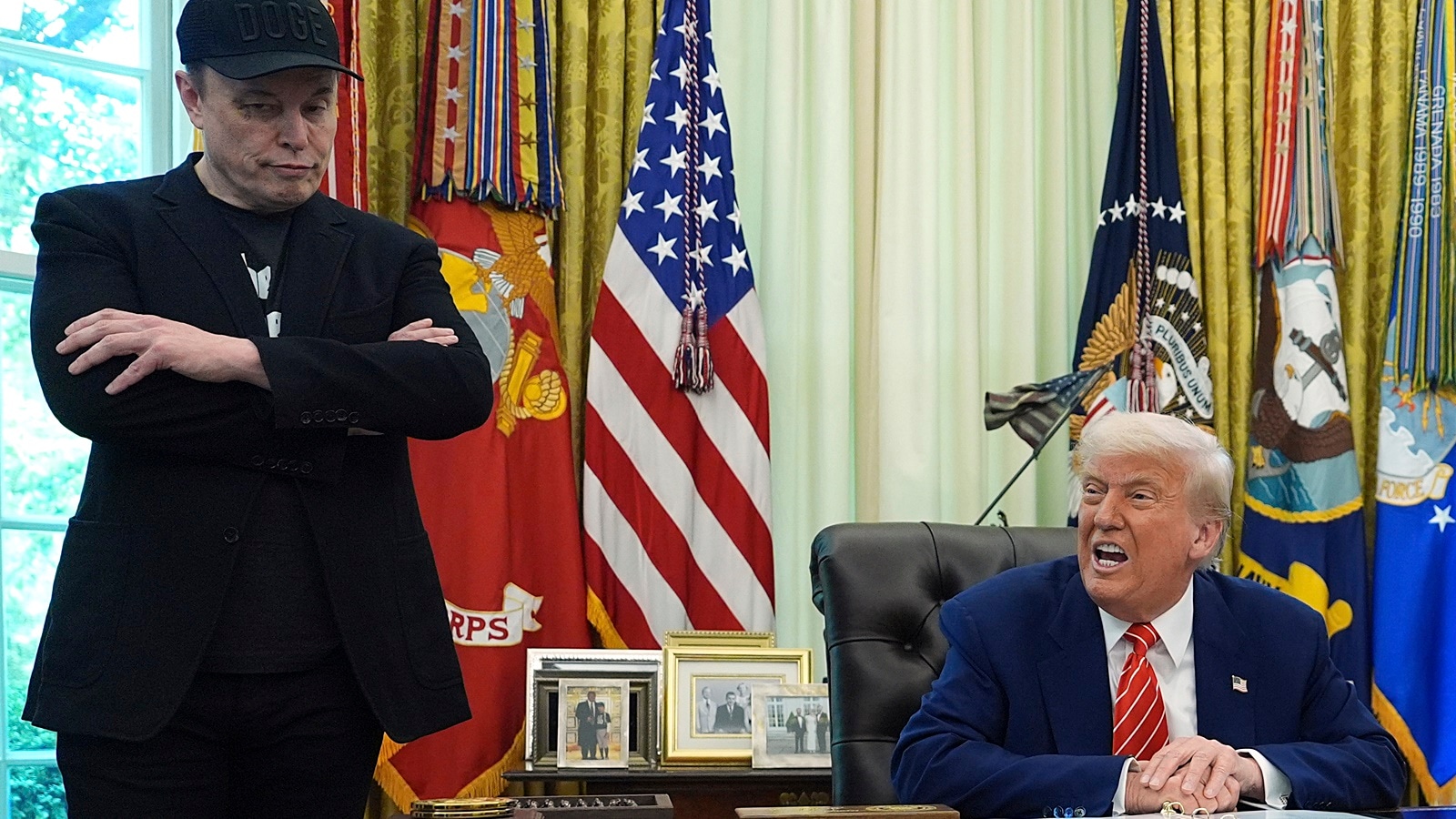
Capital deployment into electoral cycles functions as an investment vehicle designed to secure regulatory protection, favorable tax treatment, and strategic insulation for corporate assets. When individual expenditures cross the threshold of hundreds of millions of dollars, the analytical focus shifts from standard voter persuasion metrics to return-on-investment calculations for concentrated wealth. The injection of approximately $366 million to $445 million by Tesla and SpaceX chief executive Elon Musk during the midterm cycle illustrates an attempt to purchase legislative durability for high-stakes enterprise models operating at the intersection of aerospace, automotive manufacturing, and federal procurement. Evaluating this expenditure requires dismantling the mechanics of political capital allocation, tracing the diminishing marginal utility of media spending, and measuring the structural exposure of corporate balance sheets to shifting political regimes.
The Mechanics of Electoral Capital Saturation
To understand why large-scale monetary injections frequently encounter diminishing marginal utility, one must examine the saturation curve of political advertising. In modern campaign finance, early capital builds baseline name recognition and logistics infrastructure. Intermediate capital funds targeted voter mobilization and message testing. Late-stage capital, however, enters a market characterized by extreme media saturation.
When single-donor outlays inflate local media markets, the cost-per-impression rises exponentially while audience receptivity scales downward. Voters subjected to repetitive messaging develop cognitive fatigue. The elasticity of voter behavior relative to ad spend drops toward zero near election day. Consequently, pouring tens of millions of dollars into final-week ad blitzes operates under the false assumption of linear returns. Political influence behaves as a logarithmic function: past a specific threshold, additional capital yields negligible shifts in voting outcomes because the persuadable electorate has already consolidated its preferences.
The Regional Risk Vector and Enterprise Exposure
Concentrating financial interventions in specific geographic hubs creates direct feedback loops for enterprise valuation. The deployment of substantial funds into state-level contests—such as the heavy outlays directed toward Texas races—introduces systemic vulnerability for corporations headquartered within those jurisdictions.
When a corporate executive ties personal political advocacy directly to regional electoral outcomes, local populations and state-level lawmakers perceive a direct challenge to local sovereignty over land, taxation, and regulatory oversight. This dynamic activates a counter-mobilization framework among opposing constituencies. Voters rally not merely around party affiliation, but around populist resistance to concentrated economic power.
The structural consequence of this localized alignment is immediate regulatory exposure. A shift in state legislative majorities or executive offices transforms political friction into direct policy hostility. Corporate tax incentives, environmental permits, infrastructure grants, and state-backed subsidies face legislative rollbacks. The enterprise gains exposure to legal and regulatory retaliation that far outweighs any theoretical advantage secured by a preferred candidate's victory.
The Principal-Agent Problem in Super PAC Management
Deploying capital through independent expenditure-only committees creates a pronounced principal-agent problem. The capital provider seeks specific structural outcomes, such as deregulation or procurement security. The intermediaries, consultants, and media buyers who consume the funds operate under distinct economic incentives.
Intermediaries are rewarded based on gross billings rather than electoral efficiency. The standard agency fee structure encourages high-volume media buys rather than disciplined capital deployment. Consequently, a significant percentage of mega-donor funding dissipates through administrative overhead, redundant polling, and inefficient ad placement. The principal absorbs the financial risk of the wager while the agents capture immediate revenue regardless of electoral performance.
Balance Sheet Vulnerability and Market Revaluation
The interaction between political expenditure and public market capitalization demonstrates that financial markets price political risk aggressively. When an executive orchestrates a high-profile, partisan financial campaign that subsequently fails to secure legislative control, equity markets reprice the asset to account for potential retaliatory friction.
Shareholder value declines not because of operational failures in core manufacturing or technology development, but due to the probability of increased regulatory scrutiny, Congressional investigations, and public relations degradation. Institutional investors managing diversified portfolios discount equities associated with high political friction. The capital loss experienced by corporate entities following unfavorable electoral results often exceeds the total sum spent on the political campaign itself. This empirical reality proves that partisan political engagement by corporate leaders functions as a destructive drag on shareholder equity, introducing unhedged volatility into enterprise valuation.
Strategic Optimization for Sovereign and Corporate Governance
Optimizing capital allocation requires shifting away from high-visibility partisan interventions toward targeted institutional engagement. Direct financial support for polarizing candidates triggers systemic blowback and legislative hostility. Effective risk management dictates decoupling personal political expression from core enterprise assets to insulate corporate balance sheets from regulatory retaliation. Capital preservation in complex political environments relies on regulatory compliance and structural diversification rather than attempts to alter legislative outcomes through brute-force funding.
Fubu Toy review
This video provides a brief overview of the massive financial contributions made during the political cycle and how prominent figures approach campaign funding.