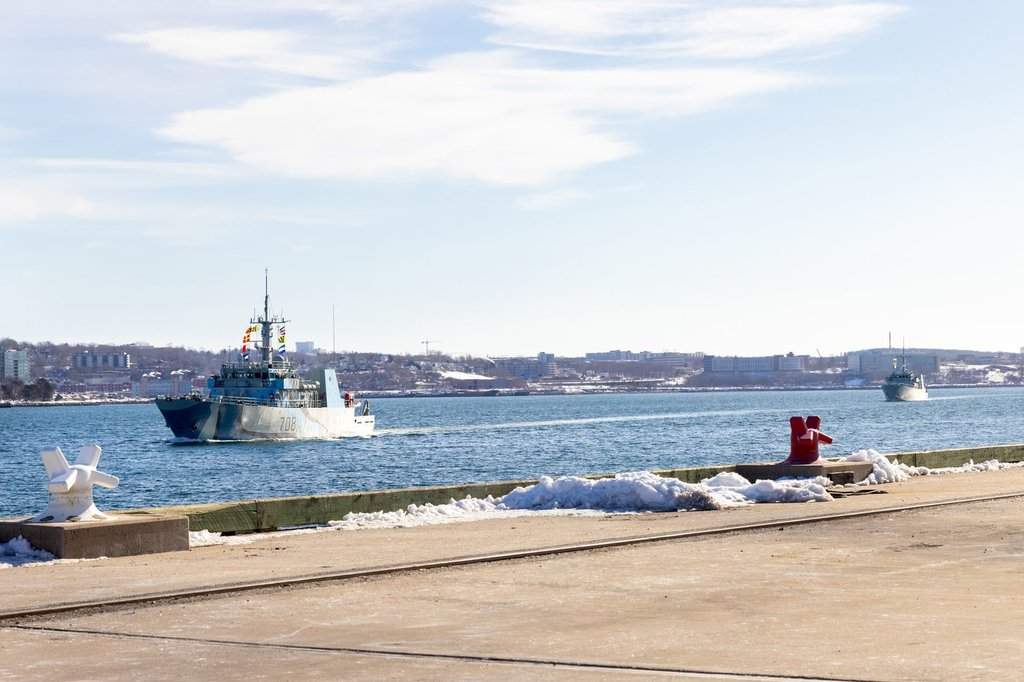
Two Canadian warships just quietly slipped out of Halifax harbour, heading directly into the tense maritime borders of Europe. If you only glanced at the news headlines, you might think it's just another routine military parade. It isn't.
HMCS Moncton and HMCS Edmonton left Nova Scotia to join up with Standing NATO Mine Countermeasures Group One under Operation REASSURANCE. They aren't massive, multi-billion-dollar frigates built to trade missile fire with enemy cruisers. They're Kingston-class Maritime Coastal Defence Vessels. Smaller. Slower. But right now, their highly specialized job is exactly what NATO needs to prevent a major economic or strategic catastrophe in European waters.
People often look at the Royal Canadian Navy and wonder why we're sending minor coastal ships across the Atlantic. The reality is that underwater explosives don't care about the size of your ship. If anything, navigating dense, shallow, highly contested maritime corridors requires a precise surgical knife rather than a sledgehammer.
What these ships actually do in European waters
Let's clear up a massive misconception. When people hear "mine hunting," they picture historical relics from the World Wars bobbing on the surface of the ocean. While clearing historic explosives to ensure safe civilian shipping is part of the job description, the modern threat is drastically different.
The Baltic Sea, the North Sea, and the wider Atlantic regions are wrapped in networks of critical undersea data cables, gas pipelines, and energy grids. Security analysts have screamed themselves hoarse for years about how vulnerable this infrastructure is to sabotage. A well-placed underwater device can sever internet access for entire regions or cut off vital energy supplies in a single afternoon.
Moncton and Edmonton are rolling out with 90 sailors split between them and some serious tech. They carry REMUS 100 Autonomous Underwater Vehicles. These aren't remote-controlled toys; they're high-end drones that drop down to the sea floor, map the environment using side-scan sonar, and identify anomalies that shouldn't be there. If the drone spots a threat, Royal Canadian Navy clearance diving teams go down to neutralize it.
It's tedious, highly stressful, and incredibly dangerous work. A single mistake means dealing with live, volatile explosives in zero-visibility water.
The harsh reality of Canada's naval readiness
Let's be completely honest about the state of the Royal Canadian Navy. For years, domestic critics have pointed out that our fleet is aging, underfunded, and stretched thin. The Kingston-class vessels themselves were built in the 1990s. They have their limits, and their crews have to work double-time to keep them running at peak operational capacity on extended overseas deployments.
Yet, despite procurement delays and political hand-wringing back home in Ottawa, these crews consistently punch above their weight class. NATO doesn't hand out these mission slots as participation trophies. The alliance relies heavily on Canada's specialized mine-warfare and clearance diving expertise.
When Russia heavily militarized its naval posture in the wake of regional conflicts, NATO had to shift from a posture of passive surveillance to active deterrence. By placing Canadian assets directly into these European corridors from July to October 2026, the alliance sends a clear message. An attack on undersea infrastructure or an attempt to disrupt sea lines of communication will be detected instantly.
The strategic long game behind Operation REASSURANCE
You can't look at this deployment in isolation. It's tied directly into Canada's largest active overseas military operation. Since 2014, Canada has sustained a continuous presence in Central and Eastern Europe to counter foreign aggression.
While the army dominates the headlines with troops stationed on the ground in Latvia, the maritime component is what keeps those forces linked to the rest of the world. If the shipping lanes in the English Channel, the North Sea, or the Baltic get choked out by hostile mining or sabotage, the entire NATO supply chain collapses.
This isn't about looking for a fight. It's about ensuring that if a crisis erupts, the doors to Europe remain wide open. By integrating seamlessly with allied navies, the crews of the Moncton and Edmonton are doing the unglamorous, highly technical groundwork that keeps global trade moving and keeps the alliance tightly knit.
If you want to understand the true scope of what these sailors are stepping into, pay close attention to how NATO monitors maritime traffic over the next few months. Watch the deployment schedules. Understand that security isn't just about big missile defense shields; it's about the sailors working in the dark on the ocean floor, making sure the global economy doesn't get blown out of the water.