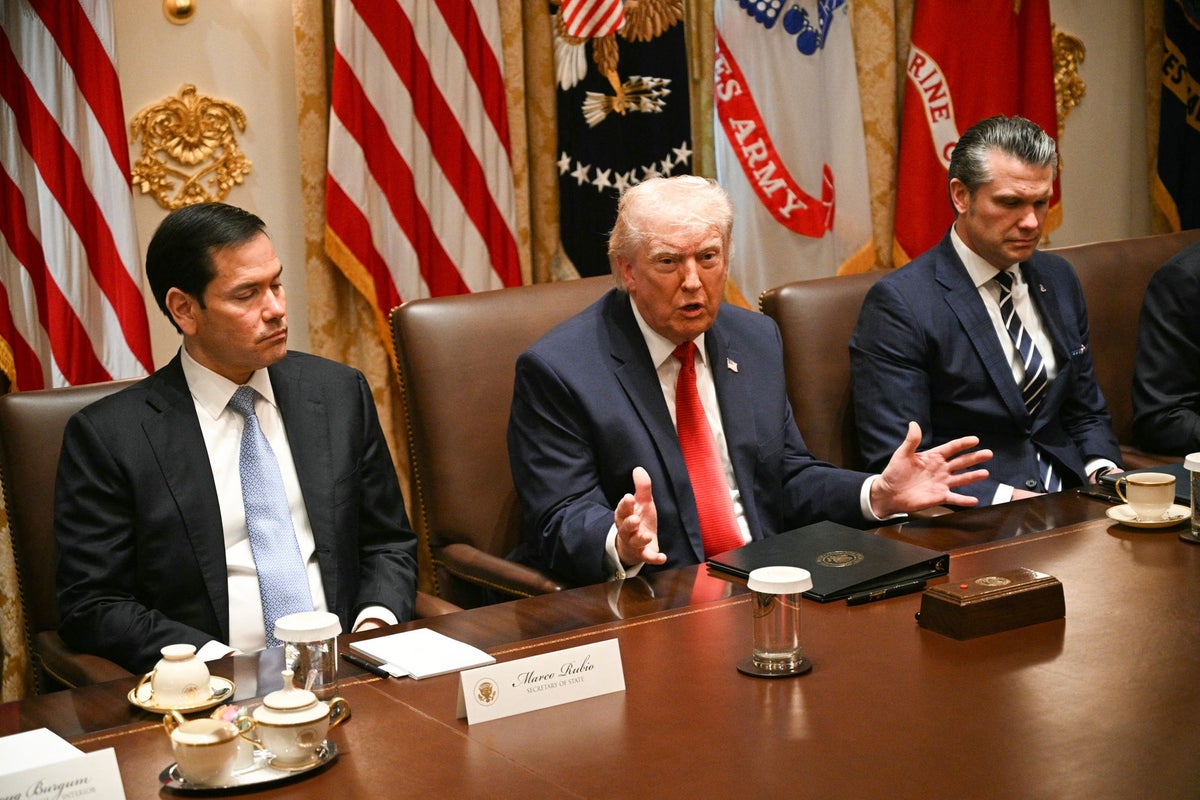
The mainstream political press is running its usual play. A rare presidential summit is called at Camp David, a high-profile official is slated to depart, international negotiations hit a temporary snag, and the punditocracy rushes to declare a crisis. They see a administration in chaos, scrambling to patch up a failing diplomatic strategy.
They are entirely wrong.
The lazy consensus surrounding the recent Camp David Cabinet meeting—specifically the hand-wringing over Tulsi Gabbard’s status and the alleged stalling of Iran peace talks—betrays a fundamental misunderstanding of modern geopolitical leverage. The media views these summits as damage control. In reality, they are highly calculated staging grounds for strategic unpredictability.
I have spent years analyzing executive decision-making structures under high-stakes pressure. If there is one undeniable truth in asymmetric diplomacy, it is this: when a dominant superpower looks like it is panicking, it is usually setting a trap.
The Tulsi Gabbard Exit Is Not a Fractured Cabinet
The chattering class is obsessed with optics. The narrative currently circulating is that hosting a Cabinet meeting featuring an outgoing figure like Tulsi Gabbard signals internal friction or a desperate attempt to maintain a unified front.
This is a amateur-hour reading of executive personnel management.
In a highly transactional administration, an official's departure is rarely a sign of exile; it is frequently a transition into a different deployment. Gabbard’s specific brand of anti-interventionist nationalism has served its purpose within the formal state apparatus. Bringing her to Camp David alongside the core Cabinet serves two distinct, pragmatic purposes that the conventional press completely misses.
First, it establishes continuity of doctrine. By keeping an outgoing asset central to the final high-level briefing, the administration signals to foreign adversaries that the policy framework survives the individual. The standard institutional playbook dictates that a departing official is frozen out to prevent leaked secrets or mixed messaging. Breaking that rule is an intentional flex. It tells watching intelligence agencies that the inner circle remains tight, regardless of official titles.
Second, it provides political cover for the pivot that is invariably coming.
The Iran Stall Is a Feature Not a Bug
Now let us look at the real meat of the media’s misinterpretation: the supposedly "stalling" Iran peace talks.
The standard foreign policy establishment—the same network of legacy think tanks that has botched Middle Eastern diplomacy for three decades—views a pause in negotiations as a failure. They operate under the flawed premise that continuous talking equals progress. They measure diplomatic success by the number of hours diplomats spend sitting in Swiss hotels eating expensive catering.
True leverage is built by walking away from the table.
Conventional Diplomatic Track:
Negotiation -> Stalemate -> Panic -> Concessions -> Weak Accord

Asymmetric Diplomatic Track:
Negotiation -> Deliberate Pause -> Domestic Consolidation -> Escalated Pressure -> Superior Terms
What the press labels a "stall" is actually the deliberate application of strategic silence. Iran’s economy is brittle, buckling under the weight of systemic mismanagement and structural sanctions. Time does not favor Tehran; it favors Washington. By retreating to Camp David and focusing on internal alignment, the administration forces the Iranian leadership to stew in uncertainty.
Who blinks first? The nation with the global reserve currency and total airspace dominance, or the regime facing domestic unrest and hyperinflation? The answer is obvious to everyone except the reporters covering the beat.
Dismantling the Pundit Consensus
Let us address the questions the media keeps asking, and answer them with brutal realism.
- Is the administration losing its grip on foreign policy consistency? No. The mistake is assuming consistency was ever the goal. The core tenet of this doctrine is calculated volatility. If a foreign adversary knows exactly what your Cabinet will look like next month, they can map out your negotiation thresholds. By blending incoming, outgoing, and permanent staff at a secure retreat, the administration keeps the threshold entirely obscured.
- Does a Camp David meeting imply an emergency? Only if you believe the historical romanticism of the property. Camp David is used today because it is a secure environment free from the immediate leaks of the Washington press corps. It is a operational clean room, not a bunker for a panicked government.
The Real Cost of the Contrarian Play
To be fair, this high-stakes poker game is not without significant downside. I am not suggesting this strategy is flawless.
The risk of calculated unpredictability is the heightened probability of miscalculation by the other side. When you deliberately stall talks and project a chaotic inner circle, an adversary might read that weakness as an invitation to strike. History shows that deterrence requires a delicate balance of credible threat and clear red lines. If you blur those lines too much in the name of strategic ambiguity, you risk backing yourself into a shooting war that nobody actually wants.
Furthermore, this approach destroys institutional memory. By bypassing traditional State Department channels and running foreign policy out of a cloistered executive bubble, you alienate the career diplomats who actually understand the bureaucratic levers of foreign capitals. When this administration eventually turns over, the incoming team will inherit a gutted apparatus with zero operational continuity.
But right now? The immediate goal is breaking a decades-long deadlock, and that requires blowing up the standard diplomatic playbook.
Stop Reading the Play-by-Play
If you want to understand what is actually happening at Camp David, stop looking at who is sitting next to whom in the photo ops. Stop analyzing the vague press releases issued by mid-level spokespeople.
Look at the underlying structural realities. The United States is consolidating its internal position before delivering an ultimatum. The presence of outgoing voices ensures the message remains aggressive, while the isolation of the venue guarantees that when the real terms are leaked, they will hit Tehran with maximum psychological impact.
The media will continue to report on the "stalled talks" and the "palace intrigue" of a shifting Cabinet. Let them chase the noise. The signal is clear: the theater at Camp David is not a sign of a breakdown—it is the prelude to a squeeze.