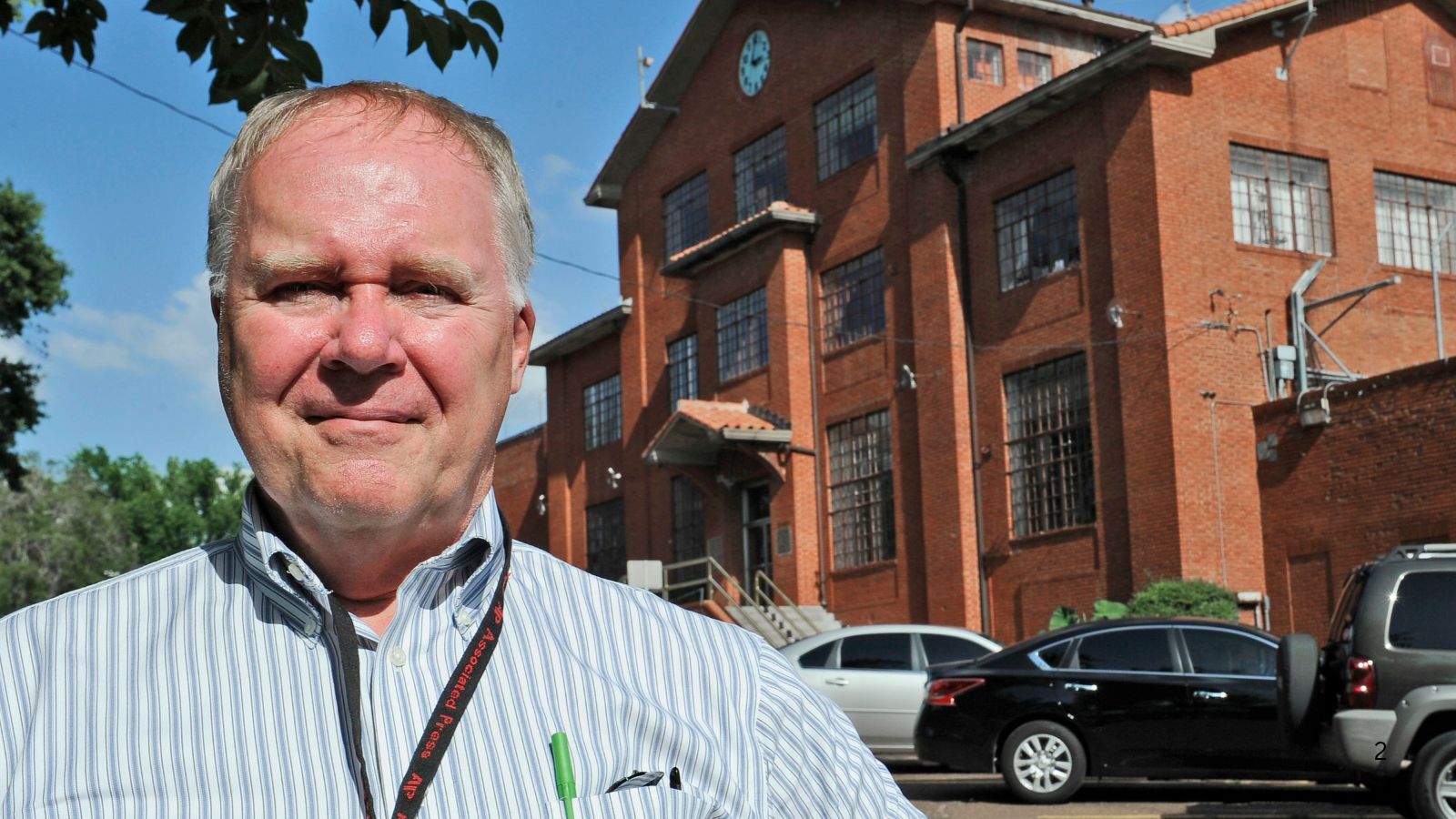
Five hundred executions. That is the staggering number attached to a veteran prison reporter whose recent retrospective on a Texas lethal injection dubbed the event the most bizarre of his career.
The mainstream press loves this framing. When something goes sideways in a death chamber—a missed vein, a last-minute stay, an unusual final statement, or a lingering pause behind the glass—journalists reach for adjectives like surreal, chaotic, or bizarre. It makes for gripping copy. It turns state-sanctioned homicide into a Gothic theater of the absurd.
That framing is a comforting lie.
Calling a botched or erratic Texas execution "bizarre" implies that the other 499 executions were normal. It suggests that when the gurney rolls out on schedule, the midazolam or pentobarbital flows without a hitch, and the heart monitor flatlines in fourteen minutes, the system is functioning as an orderly, clinical, and rational enterprise.
It is not. The anomaly is not the chaotic execution. The anomaly is the illusion of medical normality we wrap around the entire apparatus.
The Lie of the Clinical Execution
To understand why media accounts of execution witnesses get the story backward, you have to look at the origin of lethal injection itself. It was never designed by physicians to be humane. It was designed by politicians to look like a hospital procedure so that witnesses, jurors, and appellate courts wouldn't lose their stomachs.
In 1977, Oklahoma State Senator Bill Dawson wanted a cheaper, more palatable alternative to the electric chair. He turned to Dr. Jay Chapman, the state’s chief medical examiner, who had zero background in anesthesia or pharmacology. Chapman scribbled down a three-drug protocol on a legal pad: sodium thiopental to induce unconsciousness, pancuronium bromide to paralyze the muscles, and potassium chloride to stop the heart.
Notice the second drug. Pancuronium bromide—later replaced in many jurisdictions by vecuronium or rocuronium—does nothing to hasten death. It does nothing to relieve pain. Its sole function is cosmetic. It paralyzes the diaphragm and skeletal muscles so the condemned person cannot thrash, grimace, or cry out if the first drug fails to anesthetize them.
It is a chemical curtain drawn for the benefit of the people sitting behind the observation glass.
When a reporter who has watched 500 executions singles out one Texas case as "bizarre," they are reacting to a moment when that curtain slipped. Maybe the IV team spent forty minutes digging for a collapsed vein in a former drug user's groin. Maybe a federal judge issued a stay while the needle was already taped to the inmate's arm, forcing guards to unstrap a man who had already said his goodbyes. Maybe the condemned prisoner locked eyes with the press pool and cracked a joke.
Those moments feel jarring because the state works overtime to scrub human friction from the room. Texas, having executed more people than any other state in the modern era—nearly 600 since 1982—runs the tightest, most assembly-line operation in the country. At the Walls Unit in Huntsville, the choreography is practiced down to the second. The wardens speak in low, bureaucratic murmurs. The straps are leather, wide, and tightened with practiced efficiency. The microphone drops from the ceiling on a cord like a boxing announcer's mic, gets switched off the instant the final statement ends, and retracts.
When you witness that routine hundreds of times, your baseline shifts. You begin to mistake bureaucratic polish for sanity. Then, when reality intrudes—when a body refuses to die on cue or the legal machinery jams mid-cycle—you call it bizarre.
In truth, the Huntsville assembly line is the bizarre part. A room full of state employees wearing ties and tactical boots, calmly injecting a paralytic into a strapped-down human being while journalists take notes on legal pads, is an utterly unnatural tableau. Calling one specific glitch "weird" is like watching a tightrope walker cross Niagara Falls five hundred times and only remarking on the wind when he sneezes.
Why Execution Witnesses Develop Tunnel Vision
I have spent years dissecting death penalty litigation, autopsy toxicology reports, and eyewitness press pool transcripts from Huntsville to Terre Haute. If you read enough official witness accounts, a distinct psychological pattern emerges.
Reporters who cover executions repeatedly—and a handful of veteran wire journalists in Texas have witnessed hundreds—undergo a predictable form of institutional habituation. You have to. Nobody can watch five hundred human beings get strapped to a gurney and retain raw emotional shock on number 412. Your brain builds scar tissue. You start noticing micro-details instead of the macro-reality.
- You notice whether the warden took off his glasses before reading the death warrant.
- You time the interval between the start of the saline drip and the final exhale.
- You compare the inmate's demeanor to the guy from three weeks ago.
This hyper-focus on procedural minutiae is a survival mechanism for the observer, and it produces sharp, granular journalism. Organizations like the Death Penalty Information Center and legal scholars like Austin Sarat at Amherst College have long noted how heavily the public relies on these pool reporters, because cameras are banned from execution chambers nationwide. Those journalists are the public’s only eyes inside the room.
Yet that exact habituation creates a massive blind spot. When your job is to chronicle variations within a closed system, you stop questioning the premise of the room itself. You begin treating the execution protocol like a sporting event or a court docket—something with an expected rhythm, where deviations from the script are the story.
Look at the language used in press pool dispatches whenever an execution drags past the thirty-minute mark:
- "The inmate appeared restless."
- "Medical staff struggled to establish an IV line."
- "An unusual delay occurred before the curtain was drawn."
Compare that clinical restraint to what is actually happening on the table. In 2014, during the execution of Clayton Lockett in Oklahoma, a phlebotomist placed an IV line into Lockett’s femoral vein in the groin, covered the area with a sheet so the tape wouldn't show, and failed to notice the vein had blown. The drugs pumped into surrounding muscle tissue instead of his bloodstream. Lockett writhed, groaned, and tried to lift his head off the gurney before the warden closed the blinds. He died of a heart attack forty-three minutes after the first drug was administered.
In Alabama in 2022, executioners spent nearly three hours poking Kenneth Eugene Smith with needles while he was inverted on a tilted gurney, trying to find a central line before the death warrant expired at midnight.
Neither of those events was "bizarre." They were predictable mechanical failures of a procedure invented by non-physicians and carried out by technicians who are barred by medical ethics from participating in the first place. The American Medical Association, the American Nurses Association, and the American Society of Anesthesiologists explicitly prohibit their members from taking part in executions. As a result, state departments of correction rely on anonymous contractors, EMTs, or prison staff working in dim rooms behind one-way mirrors, pushing syringes through long tubes threaded through holes in concrete walls.
When you hand complex vascular access and high-dose pharmacology to concealed amateurs operating through a cinderblock wall, the surprise isn't that things go wrong. The surprise is that anyone ever calls the smooth ones "medical."
Dismantling the Myths Behind the Glass
If you want to understand what really happens inside a Texas death chamber, stop asking why a particular execution went off-script. Start dismantling the assumptions built into the questions people ask about lethal injection.
Is lethal injection actually painless?
We have no proof that it is, and substantial forensic evidence that it often is not. Because states shroud their drug suppliers in secrecy laws and shield execution teams behind anonymity statutes, independent researchers rarely get clean data. However, when investigative journalists and defense attorneys have subpoenaed post-mortem blood levels and lung weights from executed inmates, the results have been damning.
In 2020, an investigation by NPR examining more than 200 autopsies of executed prisoners found signs of pulmonary edema—fluid filling the lungs, producing the sensation of drowning or suffocating—in roughly 84 percent of the cases reviewed. When an inmate is given a paralytic alongside an inadequate sedative, they experience acute air hunger and burning chemical pain while appearing completely serene to the reporters watching through the window.
The appearance of peace is engineered by pharmacology, not mercy.
Why does Texas execute people so much faster than California or Ohio?
It isn't because Texas has superior legal craftsmanship or fewer wrongful convictions. Texas has exonerated more than a dozen people from its death row since 1973. The difference is structural and political.
In the 1990s, Texas streamlined its post-conviction habeas corpus procedures, forcing state and federal appeals to run on tight, parallel tracks rather than sequentially. Coupled with the conservative Fifth Circuit Court of Appeals in New Orleans—which rarely grants stays of execution—and a Board of Pardons and Paroles that almost never recommends clemency, the Texas pipeline clears cases with ruthless speed.
Between 1982 and 2024, Texas carried out nearly 600 executions. In the single year of 2000, Texas executed 40 people—more than one every ten days. When a state processes death warrants at that volume, death becomes administrative routine. The state doesn't get better at killing; it simply gets numb to it.
Do last-minute stays make the process more humane?
Ask anyone who has been strapped to a gurney, had needles inserted into both arms, listened to the warden read the execution order, and then been unstrapped because Justice Samuel Alito or the Fifth Circuit issued a temporary stay twenty minutes before midnight.
In legal circles, this is known as a "mock execution" in everything but intent. The psychological trauma of preparing to die on a precise minute, enduring the physical prep, and then being wheeled back to a holding cell to await a rescheduled date three months later is profound. Yet in press coverage, these whipsaw moments are routinely framed as dramatic procedural twists—"bizarre" legal cliffhangers—rather than what they actually are: state-inflicted psychological torture born of a broken appellate timeline.
The Uncomfortable Truth About the Abolitionist Critique
Here is where the standard anti-death penalty narrative also falls short, and where an honest insider has to admit the flaw in attacking execution mechanics.
Critics of capital punishment spend enormous energy litigation-testing lethal injection protocols under the Eighth Amendment's ban on cruel and unusual punishment. They argue over whether midazolam induces deep unconsciousness, whether compounded pentobarbital degrades in storage, and whether nitrogen hypoxia in Alabama constitutes human experimentation.
There is a trap in that strategy.
Every time lawyers and journalists spotlight a "botched" or "bizarre" execution, they inadvertently validate the premise that a clean execution is acceptable. By treating the messy, erratic, or drawn-out death as a scandal, we reinforce the fantasy that if only the state could find the right drug cocktail, the right vein, and the right technician, capital punishment would be tidy and civilized.
It won't. You cannot sanitize the deliberate termination of a healthy human life.
Even if you stripped away the secrecy laws, hired board-certified anesthesiologists, used pharmaceutical-grade drugs, and eliminated every procedural delay, the core act remains unchanged. A group of citizens, acting under the color of law, binds a defenseless human being to a piece of furniture and stops their heart while strangers watch through a pane of glass.
The Texas prison system isn't broken when an execution goes sideways. It is operating at peak efficiency when everything goes according to plan—and that efficiency is the real scandal.
Stop Looking for the Anomaly
If you read a story about a veteran witness recounting the weirdest execution out of five hundred, recognize what you are actually looking at. You are reading the confession of someone who stayed in the room so long that the horror became wallpaper, until one day a crack in the plaster reminded them where they were sitting.
The real story in Huntsville, or Holman, or Terre Haute is never the day the needle missed, the day the stay came down at 11:58 p.m., or the day the condemned man said something unexpected into the overhead mic.
The real story is the other 499 times, when everyone walked out of the witness room, checked their watches, filed their copy on deadline, and called it a normal Tuesday.