Federal export controls were supposed to keep America's best AI processors out of Beijing's hands. They didn't work. Now California Attorney General Rob Bonta has stepped into the breach with an investigative subpoena aimed directly at Santa Clara's crown jewel.
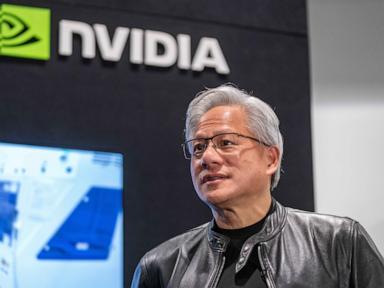
If you've followed the circus around Nvidia this month, it's easy to get distracted by the tabloid headlines. Yes, co-founder Jensen Huang resigned on November 12 after revelations of extramarital affairs, only to be reinstated by the board eleven days later following heavy pressure from President Donald Trump. Strip away the soap opera, though, and you find a massive legal and structural problem. California is investigating whether Nvidia's advanced chips or confidential information leaked to China, and whether executives misled investors about those risks. In other news, take a look at: Stop Blaming Silicon Valley Scandal Gossip for the Real Crisis Facing Asian American Women.
Why State Prosecutors Entered a Federal Fight
Most people assume export controls are strictly Washington's turf. Usually, they're right. The U.S. Commerce Department's Bureau of Industry and Security writes the rules on which GPUs can cross borders.
Here's the catch. Federal enforcement hit a political wall in 2026. While intelligence agencies and lawmakers sounded alarms, senior officials in Washington dragged their feet on blacklisting key intermediaries. By November 24, reports surfaced that Trump assured Nvidia's board the Justice Department wasn't targeting Huang or the company in order to secure his return. TechCrunch has provided coverage on this critical subject in extensive detail.
State attorneys general don't answer to the White House. Bonta, a Democrat operating in Nvidia's home state, isn't trying to enforce federal export statutes directly. He's using California corporate and securities law.
When a publicly traded company tells shareholders its compliance controls are airtight while billions of dollars in restricted hardware slip through shell companies, that becomes a securities fraud question. Shareholders and pension funds lost huge sums when Nvidia's stock plunged roughly 20% during the November turmoil. Bonta's subpoena targets that exact gap between what Nvidia told the public and what was actually happening in its supply chain.
How Restricted GPUs Actually Reach China
You don't smuggle thousands of liquid-cooled server racks in a suitcase. The real diversion networks rely on corporate paperwork, shell entities, and geographic loopholes.
The Megaspeed Pipeline and the Spy Allegations
At the center of the California probe sits a Singapore-based cloud firm called Megaspeed. In 2023, Megaspeed held around $33 million in assets. By the end of 2024, that figure exploded to $3 billion.
Over two years, Megaspeed bought roughly $4.8 billion in Nvidia hardware, becoming the chipmaker's largest customer in Southeast Asia. Short-sellers and trade analysts tracked roughly $4 billion of equipment flowing through its Malaysian subsidiary, Speedmatrix. Meanwhile, U.S. intelligence flagged Megaspeed executive Alice Huang—with whom Jensen Huang admitted having an affair—for maintaining contact with an officer from China's Ministry of State Security between spring 2025 and fall 2026.
Singapore expelled Alice Huang in February 2026. Yet Megaspeed kept operating until the Bureau of Industry and Security finally added seven Megaspeed-linked entities across Malaysia, Singapore, and Thailand to the Entity List in late November. Days later, loan filings in Shanghai revealed an Nvidia Blackwell GB300 rack sitting inside a data center tied to Megaspeed's founder.
The California Front Doors
Even closer to home, investigators and journalists uncovered domestic loopholes that make border checks look pointless. You don't need to ship a chip overseas if a Chinese-owned company buys it inside California.
Look at two examples sitting right on Nvidia's own partner lists:
- RiCloud AI incorporated in San Jose and became a preferred Nvidia cloud partner just ten weeks later. On paper, sales to RiCloud count as domestic U.S. revenue. Its parent company, Yuxing InfoTech, is based in Shenzhen and led by a graduate of a People's Liberation Army command college. RiCloud subsequently signed a $120 million deal to lease 300 Nvidia B300 servers to a Taiwanese firm that, until recently, sold whisky.
- Aivres operates out of California as an elite Nvidia computing partner. Before 2023, it went by Inspur—the exact name of its Chinese parent company, which Washington blacklisted over military ties. Changing the nameplate kept Aivres off the blacklist. Between April 2024 and February 2026, Aivres exported $5.6 billion in tech to Southeast Asia, including $3 billion in servers packed with restricted Blackwell chips.
What Most Coverage Misses About Cloud Loopholes
Hardware smuggling gets all the press, mostly because finding contraband servers makes for a great headline. Honestly, physical possession isn't even required anymore.
Chinese AI labs don't need to park Blackwell GPUs in Beijing to train frontier models. They just rent compute remotely. A shell company buys chips in Malaysia or California, wires them into a local data center, and sells cloud access over fiber-optic cables to engineers in Shanghai or Shenzhen.
Washington tried to plug this hole on November 19, 2026—the exact same day Bonta announced his subpoena. The Commerce Department issued an interim final rule restricting remote cloud access to advanced semiconductors. It's a step forward, sure, though enforcing software-level access controls across dozens of third-party "neocloud" providers is a nightmare. Verification relies heavily on the cloud operators themselves—the very companies profiting from opaque leases.
Why Investors Face Real Exposure Here
If you hold Nvidia stock or manage tech exposure, treating this as mere political theater is a mistake. Even with Jensen Huang back in the CEO chair and federal prosecutors reportedly standing down, three concrete risks remain active.
First, state securities investigations carry teeth. California doesn't need to prove Jensen Huang personally handed schematics to a foreign agent. Proving that Nvidia failed to disclose material compliance failures while touting record data center growth is enough to trigger massive fines and fuel pending shareholder class-action lawsuits.
Second, Nvidia's own board hasn't closed its internal probe. Despite political claims that Huang was exonerated, the company officially confirmed its independent investigation into misconduct and national security vulnerabilities is still running.
Third, revenue concentration in Southeast Asia is under a microscope. When a single regional startup goes from $33 million in assets to $4.8 billion in chip orders overnight, somebody in sales knows where the demand comes from. Tighter Know-Your-Customer rules will slow down fulfillment and could shave billions off quarterly guidance if gray-market buyers get cut off.
Practical Steps for Tracking the Fallout
If you're watching this unfold as an investor, compliance officer, or tech buyer, ignore the daily political spin and track four specific milestones instead:
- Watch the December 1 congressional testimony. Huang is scheduled to face lawmakers over these exact national security lapses. Pay attention to how he explains Nvidia's vetting process for newly formed cloud partners like RiCloud AI.
- Monitor quarterly geographic revenue breakdowns. Look closely at Nvidia's upcoming 10-Q filings for sudden drops in Singapore, Malaysia, and Taiwan billing—historically the primary transit hubs for gray-market shipments.
- Audit your own cloud and hardware vendors. If your enterprise buys compute from smaller tier-two neoclouds, verify their upstream hardware provenance. Entities added to the BIS Entity List can have their software support and replacement parts frozen overnight, leaving downstream tenants stranded.
- Track California's subpoena enforcement. State probes move slower than news cycles, so watch for motions to compel documents in California Superior Court over the next 60 to 90 days—that's where internal emails about Megaspeed and Aivres will surface.