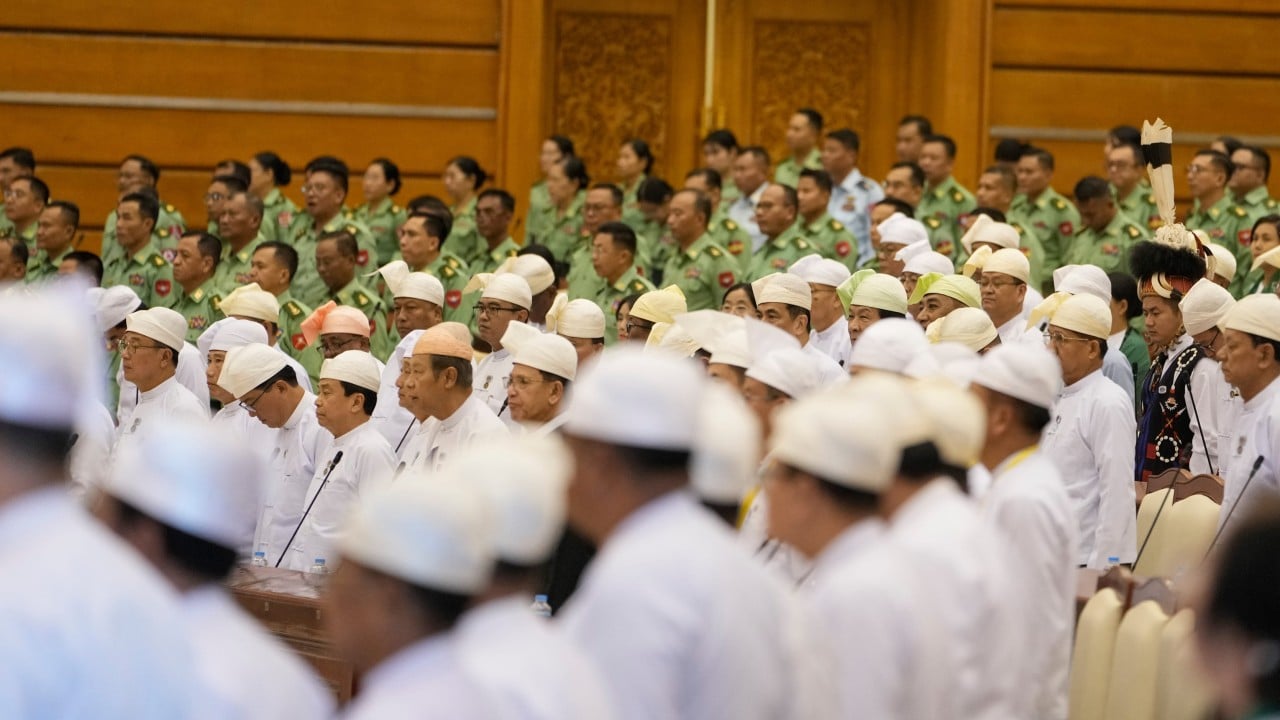
ASEAN does not hold a credible threat of permanent exclusion over Myanmar's military leadership, and Nay Pyi Taw knows it. When Southeast Asian leaders adopted "calibrated engagement" at the 49th ASEAN Summit in Manila on November 15, 2026, they paired continued non-political representation at summit and foreign minister levels with a phased path toward restoring full political representation. That compromise exposes a structural asymmetry: Myanmar's ruling apparatus optimizes for survival and sovereign recognition over time, while ASEAN optimizes for consensus, border stability, and institutional relevance.
Evaluating whether Myanmar can call ASEAN's bluff requires separating diplomatic posture from strategic leverage. The core analytical task is to map the incentives of both sides, replace loose commentary on "normalisation" with concrete bargaining mechanisms, and identify where ASEAN's phased approach actually creates pressure versus where it hands Nay Pyi Taw time. You might also find this related article interesting: Three Men in a Room and the Ghost of 1945.
Deconstructing the Bluff Narrative
Commentary framing Myanmar-ASEAN diplomacy around a single "bluff" usually treats the regional bloc as a unified actor issuing a binary ultimatum: comply with the Five-Point Consensus (5PC) or stay locked out. That framing misses how ASEAN operates and how Myanmar's military regime calculates risk.
A bluff in international bargaining requires two conditions: an asymmetric cost to the target if the threat is carried out, and a willingness by the sender to absorb the cost of enforcement. Both conditions weaken inside ASEAN. First, ASEAN decision-making relies on consensus and non-interference, producing internal divergence between member states pushing for strict accountability and neighbors—such as Thailand—prioritizing bilateral border trade, security coordination, and pragmatic engagement with Myanmar's post-election administration. Second, exclusion from high-level summits imposes reputational and diplomatic friction on Nay Pyi Taw, yet it does not stop unilateral bilateral contacts, cross-border commerce, or military operations on the ground. As highlighted in recent coverage by Associated Press, the implications are notable.
When a coalition's enforcement threat depends on unanimous patience while its members face unequal cross-border costs, the target treats deadlines as negotiable rather than binding.
Calling a bluff therefore looks less like a dramatic walkout and more like slow attrition. Myanmar's leadership does not need an immediate seat at the summit table to test ASEAN's resolve; it only needs to outlast internal bloc fatigue while claiming domestic legitimacy through post-coup elections and administrative restructuring.
The Three Pillars of Calibrated Engagement
ASEAN's November 15, 2026 review decision on the 5PC rests on three operational pillars that define how "calibrated engagement" works in practice:
- Tiered Representation: ASEAN maintained non-political representation for Myanmar at ASEAN Summits and ASEAN Foreign Ministers' Meetings until meaningful progress occurs on the 5PC, while keeping participation in other sectoral ministerial bodies or mechanisms unrestricted at all levels.
- Progress-Contingent Phasing: Leaders tied any gradual restoration of full political representation to sustained, concrete progress on the 5PC alongside ground developments, backed by special envoy diplomacy—including Philippine Foreign Secretary Ma. Theresa P. Lazaro's visits to Nay Pyi Taw in January and October 2026—and coordination with the UN Secretary-General's Special Envoy.
- Humanitarian Channeling: ASEAN reiterated deep concern over insufficient overall 5PC progress while noting limited humanitarian delivery progress through the ASEAN Coordinating Centre for Humanitarian Assistance on disaster management (AHA Centre), keeping aid logistics inside the diplomatic track.
Cause-and-Effect Gaps in Standard Commentary
Standard coverage often assumes that keeping top junta figures out of summit photos automatically translates into bargaining leverage. That link breaks down across three causal chains.
First, separating summit representation from unrestricted sectoral participation creates a diplomatic workaround. Technical and sectoral engagements keep bureaucratic channels open, which helps coordinate regional issues like transnational crime, migration, and trade, but it also normalizes routine working-level interaction before core political or violence-reduction benchmarks are met.
Second, linking "calibrated engagement" to "progress-based" restoration creates an incentive ambiguity. As critics such as ASEAN Parliamentarians for Human Rights have warned, engagement without strict, verifiable benchmarks can look to Nay Pyi Taw like a concession on legitimacy—especially when official statements note elections or reconciliation intent while armed conflict continues and political prisoners remain detained. If the threshold for "meaningful progress" is left vague, each side can interpret the same ground reality differently: ASEAN sees cautious movement or humanitarian access, while the military sees a pathway back to full status without halting airstrikes or conceding political power.
Third, humanitarian delivery through state-linked or official channels faces a structural access dilemma. Aid coordination that depends on regime consent or approval risks bottlenecks in conflict-affected areas and resistance from anti-junta actors or local civil society, limiting how much civilian relief actually reaches contested zones.
The Cost Function of Normalisation
To evaluate whether Myanmar will test or defy ASEAN's terms, treat normalisation not as a single event but as a continuous cost function for both sides.
For Myanmar's military leadership, the perceived benefits of normalisation include reduced diplomatic isolation, smoother border management and trade with neighboring states, and incremental international acceptance of its post-coup political order. Its perceived costs of complying with the 5PC—ending violence, enabling inclusive dialogue, and allowing unhindered humanitarian access—are existential if those steps weaken military command cohesion or hand leverage to armed resistance groups. Whenever the perceived cost of compliance exceeds the marginal diplomatic payoff of a summit seat, rational actors under existential pressure prioritize regime security over external approval.
For ASEAN, the cost function runs in reverse. High-cost enforcement—such as suspending membership rights or imposing hard collective sanctions—carries the risk of fracturing bloc unity, alienating a neighboring state whose instability spills across borders via refugees, narcotics, and cyber-scam networks, and pushing Nay Pyi Taw even further into bilateral reliance on non-ASEAN powers like China. Low-cost containment—keeping the top political slot restricted while talking about calibration—preserves surface unity, but risks eroding ASEAN's credibility if no tangible milestones are enforced.
Illustrative Bargaining Scenarios
Consider how two different enforcement designs alter the regime's calculus without inventing unverified metrics:
- Open-Ended Phasing: If ASEAN offers gradual re-entry in exchange for incremental gestures—such as a temporary humanitarian pause or limited envoy access—without irreversible de-escalation, Nay Pyi Taw can pocket diplomatic breathing room and reverse course later at low cost.
- Conditional, Reversible Milestones: If each step of engagement is strictly gated behind verifiable actions—such as documented reductions in attacks on civilians, independent humanitarian access corridors, and concrete release tranches of detainees—and automatically freezes or reverses on non-compliance, the regime faces a clearer price for stalling.
Factual Baseline vs. Analytical Hypotheses
Separating established facts from strategic inference keeps the assessment grounded:
- Established Facts: Myanmar remains an ASEAN member state while facing persistent exclusion from high-level political representation at ASEAN Summits and Foreign Ministers' Meetings. At the November 15, 2026 summit in Manila, ASEAN leaders adopted a review decision reaffirming the 5PC, noting insufficient overall progress alongside limited AHA Centre humanitarian progress, keeping sectoral participation unrestricted, and endorsing "calibrated engagement" through a phased, progress-based approach.
- Educated Hypotheses: Myanmar's leadership is likely to probe the boundaries of "calibrated engagement" to extract bilateral economic and security accommodation—especially along border corridors—while resisting concessions that dilute military control. Meanwhile, ASEAN's ability to prevent normalisation from turning into de facto legitimation depends on whether member states enforce consistent standards rather than letting bilateral interests dictate the pace.
Limitations of Pure Diplomatic Leverage
No diplomatic framework from ASEAN alone can resolve a multi-sided civil conflict inside Myanmar. ASEAN lacks coercive military enforcement power, its internal consensus rule slows rapid policy shifts, and key external actors shape Myanmar's strategic environment independently of regional diplomacy. Over-promising what "calibrated engagement" or summit exclusion can achieve on the battlefield sets up recurring disappointment.
Strategic Play for ASEAN
To keep Myanmar from calling ASEAN's bluff at zero cost, ASEAN should convert "calibrated engagement" from a flexible label into a strict ledger of verifiable, reversible actions. First, publish explicit, observable indicators for what constitutes "sustained and concrete progress" under each point of the 5PC before any upgrade in political representation occurs. Second, pair sectoral engagement with clear guardrails so technical cooperation on border security and transnational crime does not substitute for civilian protection or humanitarian access. Third, require member states conducting bilateral outreach to align their messaging with the collective 5PC baseline so Nay Pyi Taw cannot play bilateral pragmatism against regional accountability. Without hard conditionality, time favors the incumbent force holding the guns; with clear, enforced gates, engagement becomes a test of actual behavior rather than a free pass.