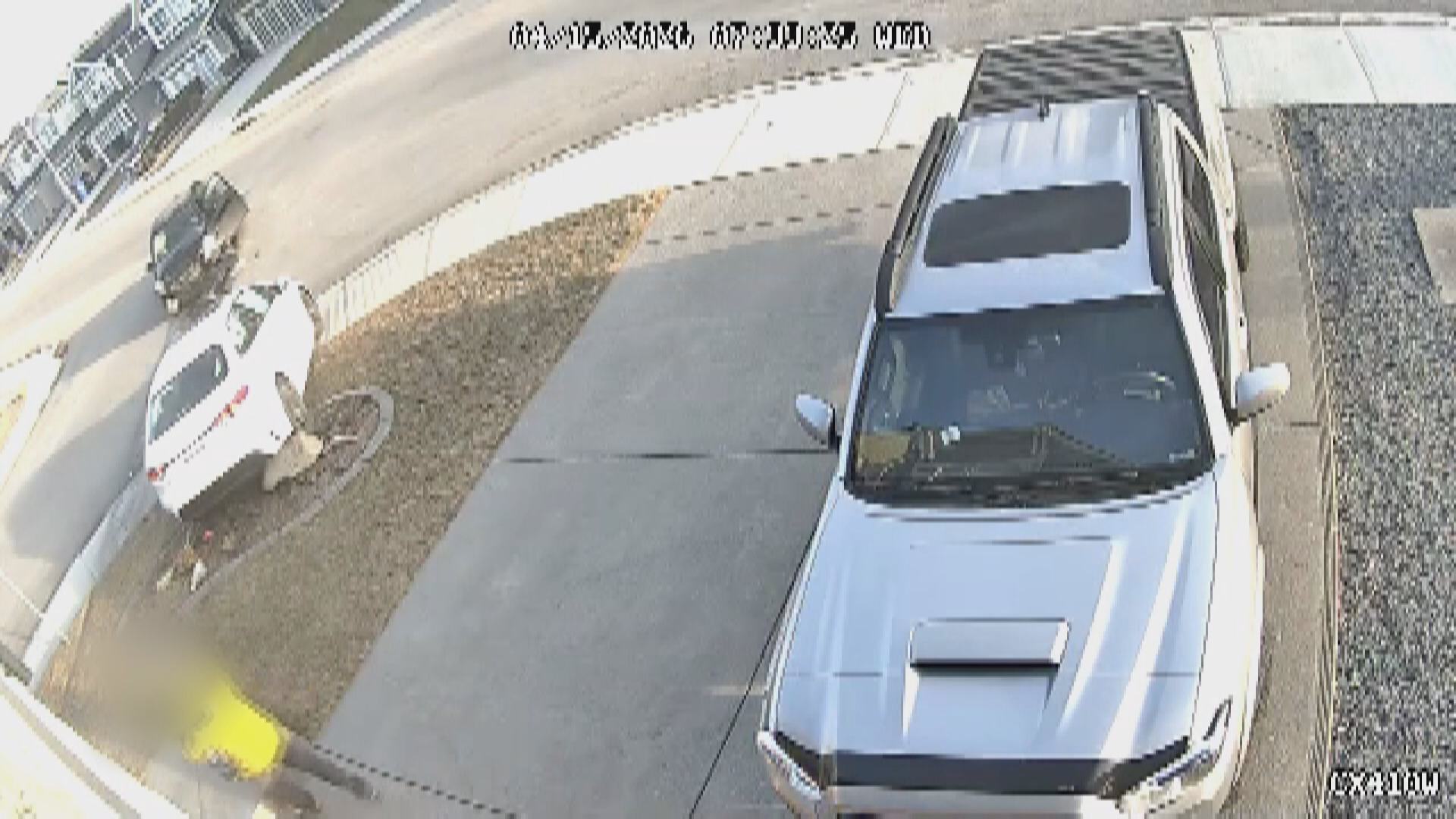
A father and son standing on the edge of their own driveway in a quiet Calgary neighborhood should be the picture of domestic safety. Instead, they became the latest data points in a disturbing trend of residential traffic violence that the city’s current infrastructure is failing to curb. When a driver blew through a stop sign, missing the pair by a hair’s breadth, it wasn't just a momentary lapse in judgment. It was a symptom of a systemic breakdown in how we police our side streets and design the roads that lead to our front doors.
This isn't an isolated incident of bad luck. It is the predictable outcome of a city built for speed, where "neighborhood" streets often function as high-volume bypasses for impatient commuters. While the Calgary Police Service often categorizes these events as individual driver error, a deeper look into urban planning and enforcement gaps suggests the blame is far more diffuse. We are witnessing a collision between antiquated road design and a modern culture of distracted, high-velocity driving.
The Illusion of the Stop Sign
For decades, we have treated the red octagon as a magical barrier. We plant a piece of sheet metal on a post and assume it creates a zone of protection. It doesn’t. In the Calgary incident, the driver didn't just roll through the intersection; they ignored the directive entirely, nearly turning a residential street into a crime scene.
Traffic engineers have known for years that stop signs are often the least effective way to slow down cars. When drivers feel a road is wide, straight, and clear, they naturally accelerate. Their brain tells them the environment is safe for speed, regardless of what the sign says. This is "environmental cueing," and Calgary’s suburban layouts are rife with the wrong cues. Wide lanes and long sightlines encourage 60 km/h behavior in 40 km/h zones. By the time a driver realizes a pedestrian is in their path, the physics of kinetic energy make a tragedy almost inevitable.
The "why" behind the near-miss outside that Calgary home isn't just a distracted driver. It’s a road that told the driver they didn't need to pay attention. Until we stop relying on the honesty of strangers and start designing streets that physically force slower speeds, these close calls will continue to escalate into fatalities.
Beyond the Ticket
Current enforcement models are reactive. A police cruiser sits in a hidden nook, catches one speeder, and issues a fine. This does nothing for the thousands of other vehicles passing through the area when the cruiser is gone. It is a game of whack-a-mole played with human lives.
Automated enforcement, like photo radar, is often decried as a "cash cow," but the data tells a different story. In jurisdictions where speed cameras are permanent and highly visible, speeds drop. Yet, there remains a political hesitation to flood residential zones with these tools. We prioritize the "right" to drive quickly over the right of a child to stand on their driveway without fearing for their life.
The Calgary Police Service is stretched thin. Expecting a constable to be at every four-way stop in the suburbs is a fantasy. This leaves a vacuum where local drivers realize that the odds of being caught running a stop sign are statistically near zero. When the threat of consequence vanishes, behavior degrades. The father and son in this recent incident didn't survive because of the law; they survived because of a fraction of a second and a few inches of asphalt.
The Psychology of the Residential Shortcut
Waze and Google Maps have fundamentally altered the safety profile of our neighborhoods. Apps designed to shave two minutes off a commute funnel hundreds of frustrated drivers through residential shortcuts. These drivers are not locals. They have no "social capital" in the neighborhood. They aren't looking out for the neighbor's kid or the man walking his dog. They are looking at a glowing screen, chasing a faster arrival time.
This "commuter creep" turns quiet cul-de-sacs into unofficial arteries. When a driver is frustrated by main-road congestion, they bring that aggression into the school zones. They aren't driving through a community; they are driving through an obstacle course. This shift in driver intent is something our current traffic laws are not equipped to handle. We treat every driver the same, but the psychological state of a person "cutting through" is far more dangerous than that of someone arriving home.
Hard Infrastructure as the Only Solution
If we want to stop people from running stop signs, we have to make it physically uncomfortable to do so. This is where "road diets" and traffic calming measures come into play.
- Bump-outs and Curb Extensions: By narrowing the intersection, you force the driver to slow down to navigate the turn. It also reduces the distance a pedestrian has to spend in the "danger zone" of the street.
- Raised Intersections: If the entire intersection is elevated to the level of the sidewalk, it acts as a massive speed table. You can't blow through it at 50 km/h without damaging your suspension.
- Chicanes: Adding artificial curves to a straight residential street breaks the line of sight and naturally lowers the cruising speed.
These solutions are often met with complaints about snow removal or the "inconvenience" to emergency vehicles. These are excuses. European cities have proven for decades that you can have narrow, safe streets that still accommodate ambulances and plows. The real hurdle is a North American obsession with the "unimpeded flow" of private vehicles. We have decided, collectively and quietly, that a certain number of near-misses and deaths are an acceptable price to pay for not having to slow down on our way to the grocery store.
The Failure of "Awareness" Campaigns
Every year, municipal governments spend millions on "Slow Down" signs and public service announcements. These are largely a waste of resources. The type of person who is going to be swayed by a polite lawn sign is already the type of person who drives safely. The person who runs a stop sign at high speed isn't looking at the lawn; they are looking at their phone or the bumper of the car they are trying to overtake.
We need to move past the era of "reminding" people to be good citizens. Law and order on our streets should be built into the pavement. In the Calgary case, the shock of the father and son is palpable. They followed the rules. They stayed on their property. But the "social contract" of the road was broken by a driver who faced no immediate physical barrier to their negligence.
The Data Gap
We also suffer from a lack of granular data. Police reports usually only occur when there is "contact"—meaning a crash or an injury. "Near-misses," like the one in Calgary, are rarely tracked with the same rigor. This means urban planners are working with incomplete maps. If we tracked near-misses with the same intensity we track fender-benders, we would likely find that certain intersections are "hot zones" for potential fatalities long before a body is actually recovered from the pavement.
Technological solutions exist. Smart sensors can detect "conflict events" where a vehicle and pedestrian come within a certain distance of each other. Using this data, cities could prioritize infrastructure spending based on where the danger is highest, rather than waiting for a tragedy to trigger a "safety review."
A Call for Accountability
The driver in the Calgary incident will likely face a fine and some demerit points. In the eyes of the law, that is justice. But for the family who watched a ton of steel hurtle toward them, the trauma doesn't end with a ticket. There is a profound loss of the sense of safety that a home is supposed to provide.
We must demand more than just "increased patrols" from the Calgary Police or "reminders to stay safe" from the city council. We need a fundamental re-engineering of the residential street. If a car can physically reach 60 km/h on a street where children play, the street is designed incorrectly. If a driver can ignore a stop sign without feeling a jarring thump of a speed table, the intersection is a failure.
The father and son in Calgary were lucky. But luck is a terrible strategy for urban planning. We are currently relying on the split-second reflexes of pedestrians to compensate for the gross negligence of drivers and the passive design of our cities.
Stop asking drivers to be better. Start building streets that make it impossible for them to be dangerous.