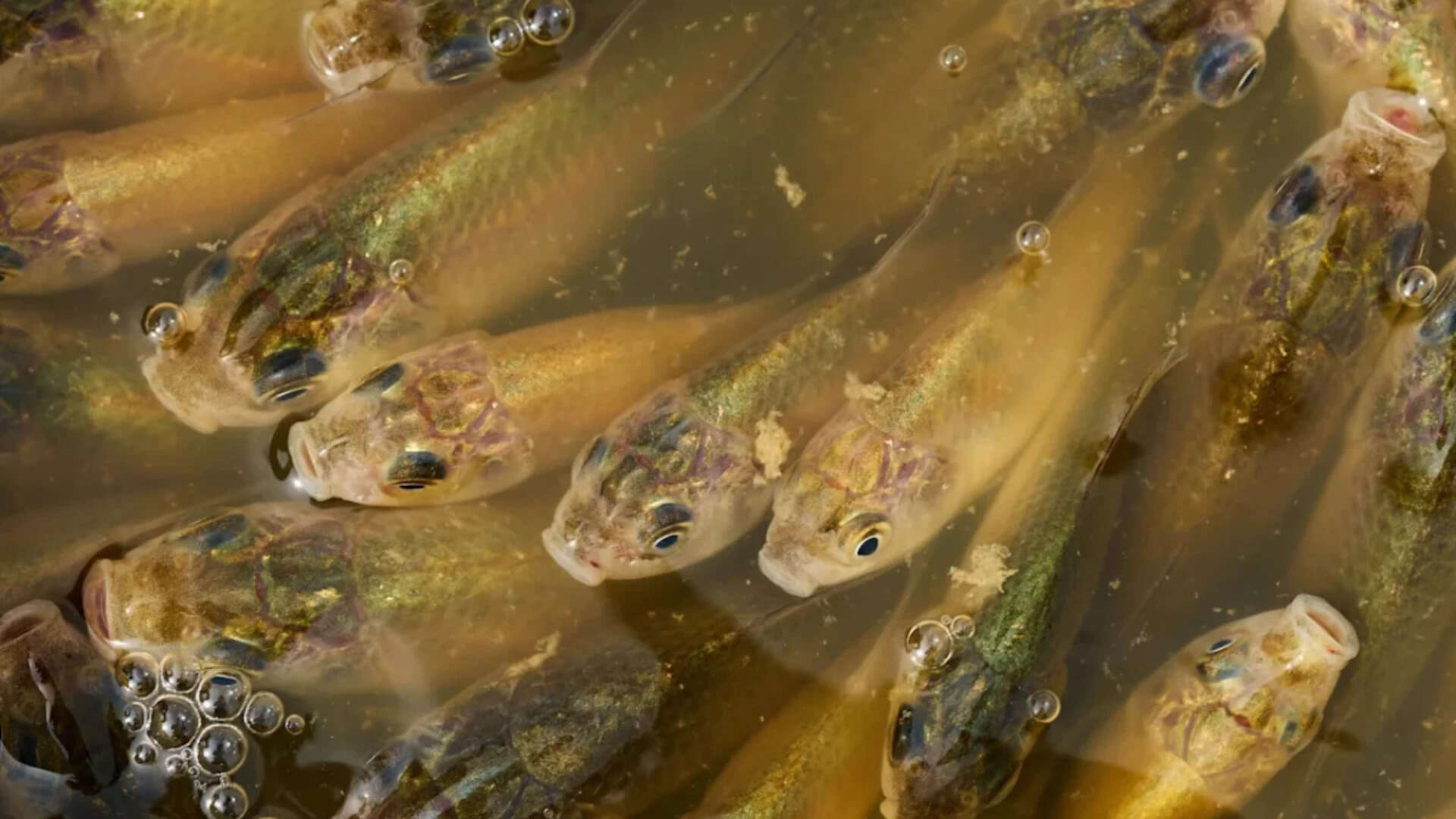
Every time a stormwater pond in Calgary turns up choked with Prussian carp, the local panic machine kicks into overdrive. Environmental reporters dust off the same tired scripts. Conservation committees issue emergency warnings. Municipal boards clutch their clipboards and talk about total eradication, biological controls, and mass poisoning events.
It is a complete waste of taxpayer money and a fundamental misunderstanding of basic biology. If you found value in this article, you should read: this related article.
I have watched municipalities burn millions of dollars chasing phantom ecological purity while ignoring how natural systems actually operate. Prussian carp are not an aberration. They are a symptom of a radically altered urban watershed. Trying to vacuum them out of a concrete drainage ditch with electrofishing gear is like trying to bail out the Titanic with a teaspoon while ignoring the gaping hole in the hull.
Stop treating an invincible survivor like a temporary guest. For another perspective on this event, refer to the recent coverage from Al Jazeera.
The Flawed Logic of Urban Biosecurity
The standard narrative around Carassius gibelio goes like this: these fish are voracious, they reproduce through gynogenesis—meaning they can clone themselves without needing males by hijacking the sperm of other fish species—and therefore they will inevitably overrun every river, lake, and puddle in Western Canada until native game fish are extinct.
It sounds terrifying. It also ignores how ecosystems actually absorb shock.
Gynogenesis sounds like a sci-fi superpower, but it is an evolutionary response to extreme environmental degradation. Prussian carp thrive in warm, shallow, oxygen-depleted, nutrient-rich environments. Guess what a modern Calgary stormwater management pond is? It is a giant concrete bathtub filled with warm urban runoff, heavy metals, road salt, and excessive lawn fertilizers.
We built the ultimate luxury resort for Prussian carp, and then we acted shocked when they checked in.
When municipalities talk about culling these fish, they are treating the organism instead of the habitat. You can seine a stormwater pond until your arms fall off. You can rotenone the entire basin. Within three years, birds will drop viable eggs on their feet, or a high-water event will wash survivors down from upstream networks, and the population will bounce right back to carrying capacity.
Nature abhors a vacuum. If you clear out the carp without changing the chemistry, temperature, and structure of the waterbody, you are simply subsidizing the next wave of colonizers.
The Gynogenesis Panic is Misplaced
Let us look at the reproduction mechanism that keeps municipal biologists awake at night. Prussian carp populations in North America are often heavily female-dominated because they rely on gynogenesis. They use the milt of related species like goldfish, common carp, or fathead minnows to trigger egg development without incorporating the male's DNA.
Conservationists point to this as an unfair biological cheat code.
I call it an evolutionary trap disguised as an advantage. Because these fish are genetically stagnant clones of one another, they possess zero phenotypic plasticity when faced with a rapid environmental shift. They are hyper-optimized for survival in stagnant, degraded ditches. But that exact lack of genetic recombination means they are dangerously vulnerable to novel pathogens or systemic shifts in water quality that affect the entire cohort simultaneously.
We are terrified of a fish that is essentially a biological photocopy machine, while our native species struggle against concrete banks, thermal pollution, and chronic dewatering. The carp aren't destroying our rivers. Our urban planning is destroying our rivers, and the carp are just the only ones tough enough to survive the wreckage.
What Real Urban Ecology Looks Like
If you want to manage invasive species in a municipal setting, you have to abandon the fantasy of pristine restoration. Calgary is never going back to pre-settlement prairie streams. We paved over the watershed, channeled the creeks, and turned drainage basins into chemical soup bowls.
Instead of throwing public funds at endless, futile culls, cities need to pivot to structural redesign.
- Shade the water: Deepening stormwater ponds and planting heavy riparian canopy drops water temperatures. Prussian carp metabolic rates drop sharply when water stays cold and well-oxygenated, giving cold-water native species a competitive edge.
- Fix the nutrient loading: Stop letting lawn runoff pour straight into retention ponds unchecked. High phosphorus and nitrogen create the turbid, algal-choked water columns where carp thrive and native sight-feeders starve.
- Embrace functional resilience: If a fish can survive low oxygen, high salinity, and chemical pollution, it is telling you something vital about your water quality. Listen to the fish. When the water gets clean enough, the carp lose their competitive advantage naturally.
The Cost of Institutional Denial
I have seen agencies blow entire annual budgets on eradication programs that achieve nothing besides looking good in an end-of-year public relations report. It makes citizens feel like someone is doing something. It creates the comforting illusion of control.
Meanwhile, the real work of watershed management—holding developers accountable for stormwater runoff, restoring natural wetlands instead of digging concrete detention bowls, and accepting that urban water is a novel ecosystem—gets ignored because it is politically difficult and expensive.
Prussian carp are here. They are in the Bow River basin, they are in the irrigation canals, and they are in the city retention ponds. They are not going away because a city councilman signed a strongly worded resolution or authorized another weekend netting event.
Stop trying to sanitize the Anthropocene. Fix the water, and let the biology sort itself out.


