Political survival under structural shock requires an immediate reconfiguration of elite coalitions rather than ideological continuity. When external military intervention abruptly removes a long-standing head of state, the successor administration faces a harsh optimization problem: balancing the survival demands of the entrenched party apparatus against the external pressures of a foreign hegemon and the internal expectations of a fractured populace. Delcy Rodríguez stepping into executive authority in Caracas following the removal of Nicolás Maduro illustrates a masterclass in autocratic adaptation under extreme duress. Rather than precipitating immediate system collapse, the transitional cabinet deployed a calculated sequence of concessions, institutional restructuring, and strategic ambiguity to preserve the core machinery of the state while appeasing external energy demands.
The Structural Mechanics of Post-Maduro Governance
Analyzing the current trajectory of the Venezuelan state demands moving past simplistic narratives of sudden democratization or terminal regime failure. Instead, the administration operates through a dual-track framework designed to decouple economic rehabilitation from immediate political liberalization. The cost function of this strategy centers on minimizing friction with Washington while insulating the inner circle of the party from prosecution or asset forfeiture.
The primary vector of this insulation involves selective institutional purges masked as administrative modernization. By dismantling or reorganizing several legacy social foundations and missions established under previous administrations, the transitional leadership signaled a pragmatic willingness to discard inefficient patronage networks. These cuts target redundant expenditure without threatening the core security apparatus. The military high command, whose loyalty remains the ultimate arbiter of executive tenure, receives continuous transactional assurances through joint control over key economic sectors, particularly the hydrocarbons industry.
This dynamic creates a rigid operational boundary. The ruling apparatus accepts foreign technical supervision and intelligence cooperation regarding counter-narcotics and energy infrastructure stabilization, yet fiercely guards its legislative and judicial prerogatives. Setting an indeterminate timeline for future national elections functions as a deliberate buffer. A fixed electoral calendar would prematurely force the regime into a high-risk contest before its internal security architecture is fully consolidated.
Economic Pragmatism Versus Ideological Inertia
The macroeconomic reality facing Caracas leaves zero room for orthodox dogma. Years of hyperinflation, severe capital flight, and crippling sanctions created an economic vacuum that only direct engagement with Western capital markets and energy conglomerates could temporarily fill. The Rodríguez administration recognized that physical survival hinges on foreign exchange inflows derived from oil field rehabilitation.
Rebuilding the national petroleum sector requires billions in upfront capital expenditure and advanced technical expertise that regional partners cannot supply. By opening direct channels with United States energy officials and facilitating high-level intelligence exchanges, the administration executed a high-stakes trade-off. Sovereignty over domestic policy was partially bartered for sanctions relief and operational breathing room.
This transactional diplomacy introduces severe internal contradictions. Ideological hardliners within the party base view normalization with Washington as an existential betrayal. To mitigate backlash from militant factions, the state maintains strict control over public rhetoric, frequently invoking anti-imperialist themes while executing pragmatic, pro-market adjustments behind closed doors. The tension between ideological rhetoric and functional alignment defines the primary vulnerability of the current administration.
The Strategic Function of the Amnesty Law
Releasing political prisoners and enacting the amnesty framework served as a masterstroke of political signaling. In political economy terms, this legislative maneuver lowered the transaction costs of international diplomatic re-engagement. Western governments needed a tangible concession to justify rolling back sanctions without appearing politically naive.
However, examining the mechanics of the amnesty reveals a carefully bounded scope. The law targets political offenses and past civil unrest, but it intentionally avoids creating independent judicial accountability mechanisms that could threaten current military and political elites. By controlling the judiciary and the pace of releases, the administration treats human rights concessions as a liquidity mechanism. Prisoners are released in tranches in exchange for specific diplomatic or economic easing from the United States and regional bodies.
This approach prevents the opposition from claiming a total victory. A genuine democratic transition would require independent oversight bodies, transparent voter registries, and impartial electoral councils. By retaining monopoly control over the institutional machinery governing the vote, the transitional government ensures that any future electoral exercise remains managed rather than competitive.
The Intelligence and Security Architecture
Maintaining order in the wake of leadership decapitation requires absolute fidelity from the internal security apparatus. The intelligence services and specialized police units form an intricate surveillance web designed to preempt both popular uprisings and military coups.
The transitional leadership utilized its longstanding relationships within the intelligence community to secure immediate buy-in. By assuring intelligence chiefs that their operational autonomy and jurisdictional boundaries would remain untouched, the executive prevented internal fracturing. Counter-intelligence operations were redirected outward toward managing foreign intelligence liaisons rather than suppressing domestic rivals internally, creating a stable buffer zone around the presidential palace.
Concurrently, the state manages civil unrest through calibrated deterrence rather than indiscriminate violence. The deployment of armed civilian groups is restricted during high-stakes diplomatic moments to project an image of normalization, yet these networks remain fully intact as a reserve deterrent. This dual-use security strategy allows the state to project institutional legitimacy to foreign observers while retaining coercive readiness.
The Tripartite Matrix of Power
Political authority in contemporary Caracas rests upon an unstable equilibrium among three distinct power centers: the executive cabinet, the armed forces, and external corporate-state actors.
The executive cabinet, dominated by technocratic loyalists, provides administrative competence. These actors understand international finance, bureaucratic procedures, and the granular details of state administration. They manage the day-to-day operations of government and serve as the primary interlocutors for foreign diplomats.
The armed forces operate as the ultimate coercive guarantor. Their institutional cohesion depends on economic privilege and immunity from prosecution. As long as the transitional leadership ensures that military leadership retains control over lucrative supply chains, smuggling routes, and industrial contracts, the generals will suppress internal dissent and maintain public order.
External actors, particularly Washington and global energy firms, supply the financial oxygen. Their calculus is straightforward: secure stable oil supplies, stem migratory pressures, and neutralize perceived security threats without getting bogged down in nation-building or protracted military occupation.
Forecasting the Trajectory of State Consolidation
Predicting the outcome of this transitional phase requires analyzing structural incentives rather than diplomatic declarations. The incentive structure strongly favors protracted ambiguity. A rushed election risks an unpredictable outcome that could fracture the ruling coalition and trigger renewed civil conflict. Conversely, perpetual postponement risks exhausting the patience of external powers who demand visible governance metrics.
The administration will likely pursue a controlled liberalization model. This entails permitting localized municipal elections or gradual legislative reforms while keeping the presidency firmly under party control. Such a strategy allows the government to claim progress toward democracy while preserving its structural dominance.
External actors will tolerate this gradualism as long as oil production targets are met and regional stability is maintained. The ultimate risk to this equilibrium does not stem from opposition pressure or foreign intervention, but from internal resource scarcity. If state revenues fail to cover the patronage requirements of the security apparatus, the coalition will fracture from within.
Strategic actors navigating this theater must abandon assumptions of rapid democratic restoration. The political architecture of Caracas is undergoing managed mutation, not dissolution. Resource allocation, security guarantees, and institutional gatekeeping will dictate the boundaries of reform for the foreseeable future.
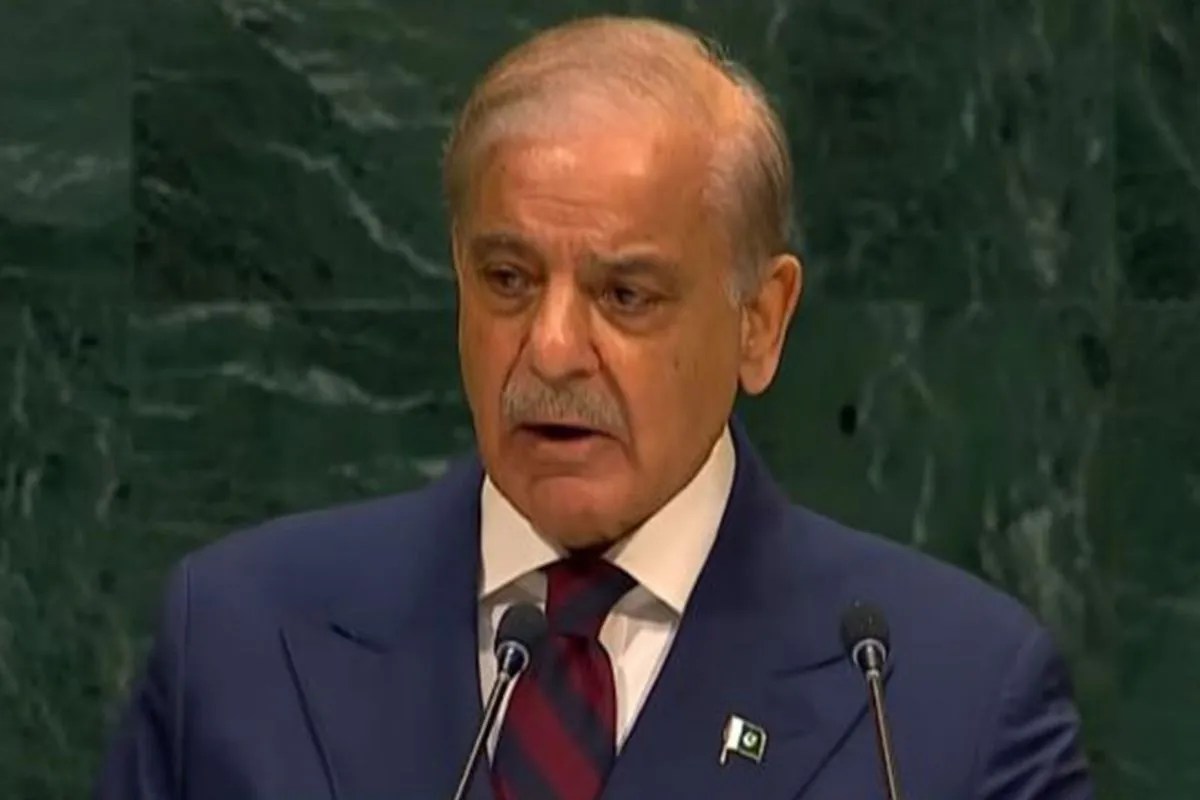
For further visual context on these diplomatic developments, consult the Venezuela Interim President Rodríguez Pledges Elections at UN. This broadcast provides primary documentation of Delcy Rodríguez addressing the international community at the United Nations regarding the political transition in Caracas.