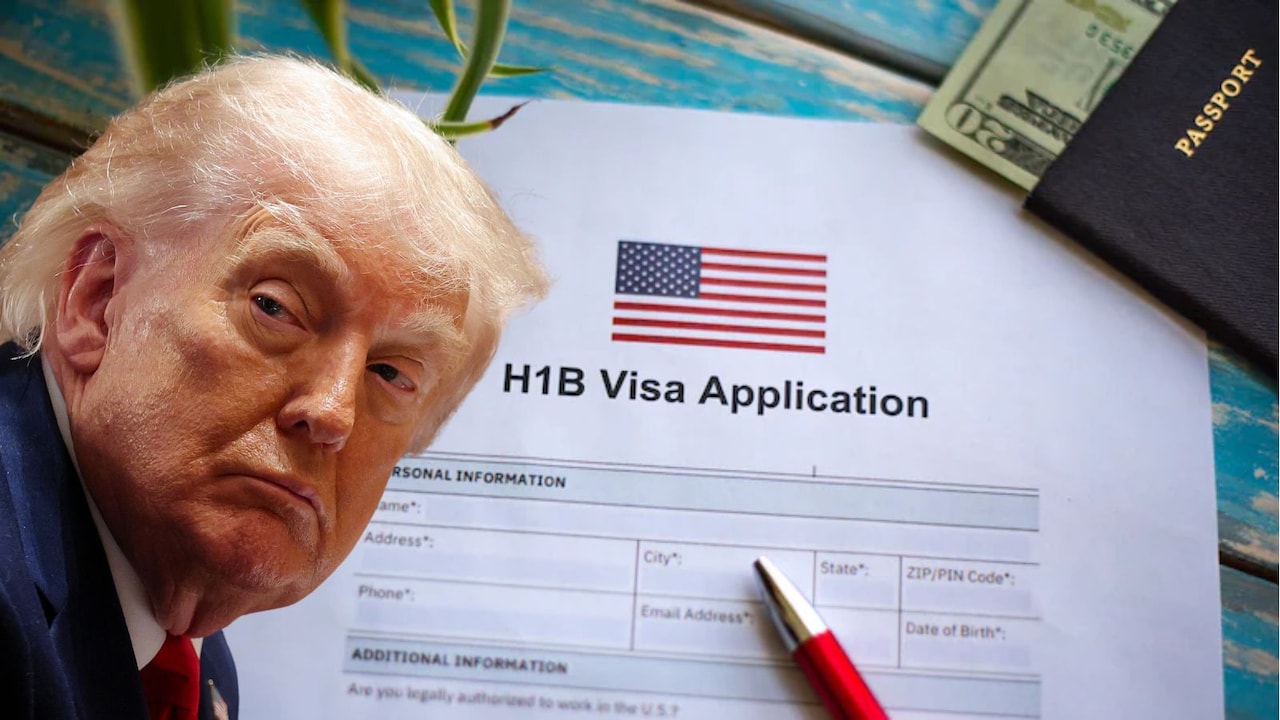
The narrative surrounding the US government’s plan to automate visa processing with machine learning is dangerously naive. Optimistic press releases promise that injecting automation into consular offices will magically vaporize backlogs, streamline immigration, and secure borders. It sounds like progress.
It is a trap. For a different perspective, see: this related article.
The tech community and policy pundits are falling into a classic trap: assuming that processing speed equals system efficiency. When you automate a fundamentally broken, hyper-bureaucratic pipeline, you do not fix the pipeline. You just clog the drain faster.
For over a decade, I have watched federal agencies and enterprise monoliths dump tens of millions of dollars into automated triage systems. The result is almost always the same. They build a high-speed engine, hook it up to a rusted chassis, and wonder why the wheels fly off. The current US visa architecture is not bogged down because humans read too slowly; it is bogged down because the underlying legal framework is a contradictory maze of legacy statutes, security directives, and shifting geopolitical mandates. Related reporting on this matter has been shared by Engadget.
Replacing human eyeballs with algorithmic pattern matching will not solve the immigration crisis. It will simply shift the bottleneck, create unprecedented legal liabilities, and lock out the exact high-skilled talent the country desperately needs.
The High-Speed Bottleneck Illusion
Proponents of automated visa screening argue that machine learning models can scan applications, verify documentation, and flag anomalies in a fraction of the time it takes a consular officer. This is technically true, but contextually irrelevant.
In any complex workflow, speeding up the input stage without expanding the capacity of the decision-making stage creates a massive, volatile bottleneck downstream.
Imagine a scenario where a machine learning tool screens 500,000 international student applications in an afternoon. It approves 70% of them based on basic data points and flags 30% for manual review due to minor inconsistencies—say, a misspelled employer name or a gap in residency history.
What happens to that 30%? It gets dumped into the exact same queue of overworked consular officers who were already drowning in paperwork. Except now, their backlog is populated entirely by edge cases, complex legal anomalies, and false positives generated by a machine that does not understand nuance.
[Legacy System] ----> Human Review (Slow) ----> Resolution (Steady Flow)

[AI-Infused System] --> Mega-Triage (Instant) --> Human Review Edge Cases (Total Gridlock)
By accelerating the initial sort, you have not saved human labor; you have concentrated the difficulty of that labor. The backlog does not disappear. It just mutates into a denser, more frustrating administrative knot.
The Flawed Premise of "Predictive Risk"
The most alarming aspect of the automated visa push is the reliance on risk-scoring algorithms. The goal is to train models on historical immigration data to predict which applicants are likely to overstay their visas, violate status, or pose security risks.
This premise is deeply flawed for two distinct reasons:
1. Data Feedback Loops
Historical visa data is not an objective record of human behavior. It is a record of past bureaucratic decisions, systemic biases, and historical geopolitical priorities. If consular offices historically denied visas to applicants from specific regions or demographic profiles at higher rates, an algorithm trained on that data will codify those patterns as objective risk factors. The machine does not discover truth; it automates history.
2. The Nuance Blindspot
Immigration is an inherently human variable. A tech founder from an emerging market might not fit the traditional profile of a stable applicant. They might lack a 10-year history of steady corporate employment, or their funding might come from unconventional cross-border networks. A human interviewer can probe these details, evaluate the credibility of the founder, and make a qualitative judgment. A statistical model operating on rigid vector weights will see a high-risk anomaly and issue an immediate rejection or trigger an indefinite administrative delay.
By relying on automated triage, the US risks turning away the precise demographic it should be court-importing: non-traditional innovators, researchers, and builders who do not fit neatly into an algorithmic bucket.
The Reality of Algorithmic Bureaucracy
Let us address a question that dominates policy circles: Can automation make immigration processing entirely objective and free from human bias?
The short answer is no. Anyone who answers yes fundamentally misunderstands how software is built.
Automation does not eliminate bias; it centralizes it. When an individual consular officer harbors a bias, that bias affects the applicants sitting across from their specific desk. It is a localized, tragic failure. When an engineer or a policy director builds a bias—intentional or accidental—into the weighting metrics of a screening model, that bias is scaled across every embassy on the planet instantly.
Local Bias = One Broken Desk
Algorithmic Bias = An Automated Global Iron Curtain
Furthermore, the implementation of these tools introduces a massive accountability vacuum. When a human officer denies a visa, there is a paper trail of notes, statutory justifications, and specific grounds for refusal. When an algorithm flags an applicant as a high-risk anomaly, the underlying decision mechanics are often obscured behind proprietary code or complex neural network layers.
I have consulted for organizations that implemented these exact types of black-box risk scoring tools. Within months, staff stop questioning the machine. "The system flagged it" becomes the ultimate, unchallengeable justification. It breeds an culture of defensive bureaucracy where human workers abdicate their judgment to avoid liability.
The Unconventional Fix: Drastically Simplify the Code, Not the Input
If the goal is truly to speed up visa processing without compromising integrity, the solution is not to slap a layer of machine learning over a broken framework. The solution is to dismantle the administrative friction points that necessitate the tech in the first place.
Instead of funding complex prediction engines, the state department should focus on building immutable, interoperable data verification pipelines.
- Ditch the Predictive Analysis: Stop trying to predict human behavior via algorithms. It fails in finance, it fails in criminal justice, and it will fail in immigration.
- Automate Pure Verification, Nothing Else: Use basic, deterministic software to verify objective truths—such as whether a university acceptance letter matches a school's digital registry, or if bank balances meet statutory minimums via direct secure APIs. Leave the evaluation of intent, character, and risk entirely to humans.
- Expand the Human Footprint: Take the hundreds of millions earmarked for enterprise tech contracts and deploy it to hire, train, and properly compensate human consular officers in high-volume regions.
The downside to this contrarian approach is obvious: it requires political willpower, structural reform, and an admission that tech cannot solve a human policy problem. It is far easier for politicians to write a check to a defense contractor for an "AI solution" than it is to rewrite archaic immigration codes.
The tech push is not about efficiency. It is about optics. It allows agencies to claim they are modernizing while maintaining the exact same exclusionary, broken infrastructure underneath.
Stop buying the myth of the frictionless, automated border. Speeding up a broken machine only creates a bigger pile of wreckage at the end of the line.