The death toll from the latest Ebola outbreak in the Democratic Republic of the Congo has surpassed 500, a grim milestone driven not just by a rare viral strain, but by a systemic breakdown in funding, logistics, and labor relations. As confirmed infections climb past 1,500, the frontline health workers tasked with containing the virus in the eastern province of Ituri have issued a 24-hour strike notice. They are protesting months of unpaid benefits, hazardous working conditions, and structural neglect from the central government in Kinshasa.
Without these local doctors, nurses, and contact tracers, the international containment strategy will collapse.
The current crisis centers on the Bundibugyo ebolavirus species, a variant that lacks the widely deployed medical countermeasures used against the more common Zaire strain. Because the virus spread undetected for weeks in remote mining areas like Mongbwalu before being identified in mid-May, response teams have been playing catch-up against aggressive community transmission. The looming labor strike threatens to halt what little progress has been made, creating a dangerous vacuum that could pull the entire region into a catastrophic health emergency.
The Kinshasa Disconnect and the Threat of a Frontline Strike
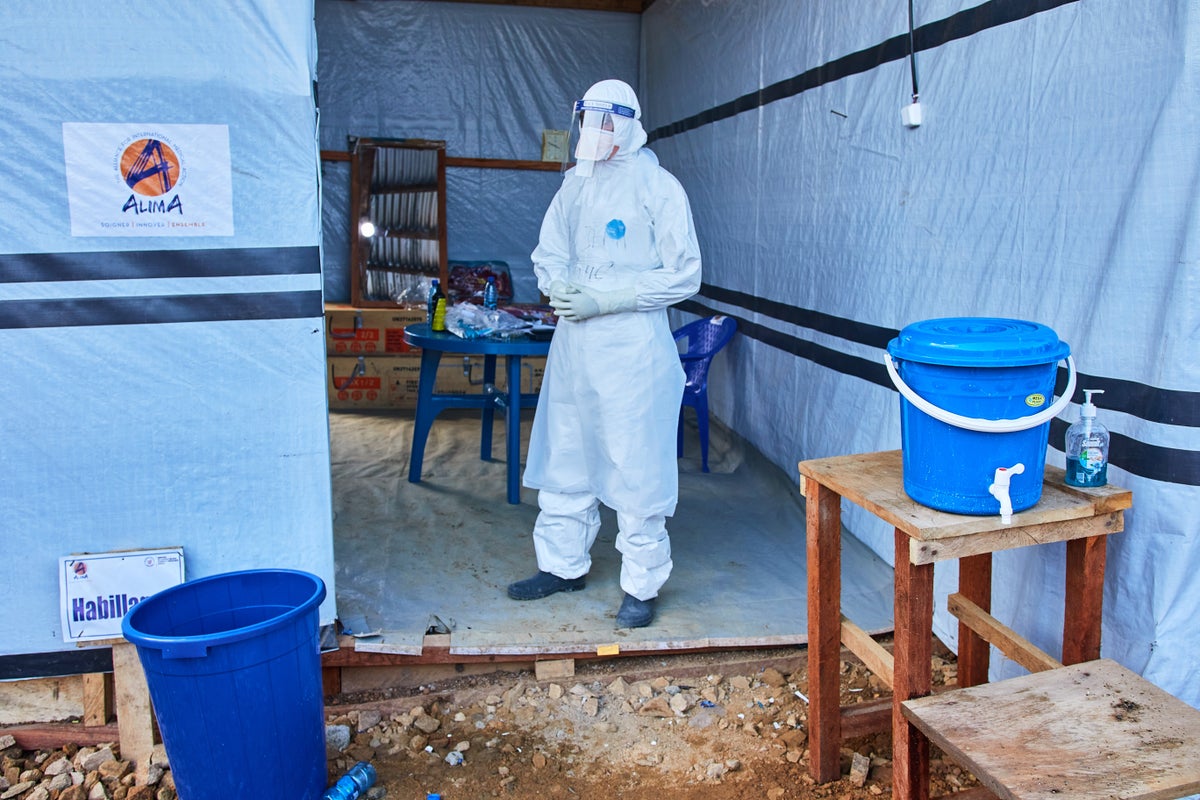
International health responses often assume that field personnel are a fully funded, highly motivated army ready to deploy at a moment's notice. The reality in Ituri province is far messier. Local medical professionals have been working without their promised hazard allowances since the beginning of the outbreak. Many are working double shifts in isolation centers with insufficient personal protective equipment, exposed directly to one of the world's most lethal pathogens.
The strike notice exposes a deep rift between local workers and the political elite. Local medical staff point to the sudden arrival of high-level delegations from Kinshasa, who consume significant administrative budgets while displaying what local syndicates call an arrogant disregard for local expertise. Furthermore, the health ministry has consistently bypassed local medical graduates in favor of bringing in labor from other provinces, fueling resentment in a region already strained by decades of marginalization and ethnic conflict.
When a government fails to pay its medical workforce during an epidemic, it is not merely a labor dispute. It is an epidemiological failure.
Contact tracing requires an extraordinary amount of community trust. When local health workers walk off the job, tracking networks break down completely. If an infected individual goes unmonitored, the virus can spread exponentially through families and neighborhoods before health authorities even realize a new cluster has formed.
Understanding the Hidden Threat of the Bundibugyo Strain
Public health agencies initially misjudged the outbreak because they were looking for the wrong enemy. For years, global health organizations focused heavily on the Zaire ebolavirus, developing highly effective tools like the Ervebo vaccine and specific monoclonal antibody treatments. These tools do not work against the Bundibugyo species.
The Bundibugyo strain has historically appeared less frequently, meaning diagnostics were not widely distributed in eastern Congo when the first patients began exhibiting symptoms. For weeks, individuals showing signs of hemorrhagic fever tested negative on standard rapid tests optimized for the Zaire strain. By the time genetic sequencing identified the true culprit, the virus had already established deep roots in the crowded, transient mining camps of Ituri.
+------------------------------------------------------------------------+
|                      BUNDIBUGYO OUTBREAK DYNAMICS                      |
+------------------------------------------------------------------------+
|  [Undetected Weeks] -> [Rapid Mining Camp Spread] -> [Urban Seeding]   |
|         │                        │                        │            |
|  Initial diagnostic    Crowded, informal camps;     Cases reach Bunia  |
|  failures give virus    muddy gold pits facilitate   and cross borders  |
|  a massive head start  close fluid transmission     into Uganda        |
+------------------------------------------------------------------------+
In places like Mongbwalu, thousands of informal laborers live in densely packed settlements with minimal sanitation. They work in narrow, muddy gold pits where close physical contact is unavoidable. When a miner falls ill, the transmission pathways multiply rapidly. The virus spreads through sweat, vomit, and blood, quickly jumping from the mines into the broader community.
Regional Ramifications and the Border Problem
The geographic reality of eastern Congo makes containment an international issue. Ituri and North Kivu provinces share highly porous borders with Uganda and Rwanda. Trade routes are vibrant, and hundreds of people cross these borders daily for commerce, family obligations, or to flee local militia violence.
The World Health Organization has already noted that the virus has traveled beyond the initial epicenters. Cases have emerged in major urban hubs like Bunia and Goma, and Uganda has already confirmed infections and deaths linked to individuals traveling from the DRC. This cross-border movement transforms a localized outbreak into a regional security threat.
International funding agencies have pledged millions to the response, but those funds take weeks to clear bureaucratic hurdles and reach the ground. Meanwhile, the actual mechanics of containment rely on small, decentralized teams driving motorbikes down broken dirt roads to find people who may have interacted with a patient. If those teams cannot buy fuel or feed their families because their salaries are withheld, the entire international apparatus becomes useless.
Moving Past Top-Down Medicine
The current strategy relies heavily on an outdated, top-down model of disease intervention. Large international organizations arrive with significant infrastructure, set up isolated treatment units, and attempt to direct operations from capital cities or regional hubs. This approach fails to account for the deep-seated skepticism held by local populations who have seen decades of humanitarian intervention yield little long-term improvement in their daily lives.
To break the cycle of transmission, the response must prioritize medical sovereignty and local compensation.
- Immediate direct disbursement of hazard pay directly to local bank accounts, bypassing the bureaucratic bottlenecks in Kinshasa.
- Rapid decentralization of laboratory testing capacity to rural health zones so that suspected cases can be confirmed within hours rather than days.
- Prioritization of local recruitment for contact tracing and community outreach to counter misinformation and build long-term trust.
The clinical trials currently starting in Ituri for potential Bundibugyo therapeutics are a necessary step for the future, but they offer little comfort to the families burying relatives today. Therapeutics and potential vaccines take months to validate and distribute. Classic, aggressive public health intervention remains the only viable defense right now.
The strike must be averted through immediate financial equity. If the frontline workers put down their equipment, the virus will write the next chapter of this crisis unchecked.