The fluorescent bulb in the corner of the newsroom always buzzed just before midnight.
I remember the smell of cold espresso, wet wool, and cheap printer toner clinging to my clothes after seventeen hours of chasing a local zoning scandal that nobody in city hall wanted printed. You sit at your desk, eyes stinging from the glare of a spreadsheet detailing vanished public funds, and you feel a strange, electric conviction that the ink itself acts as a shield. You believe that because your name is on the byline, because the public is watching, the people in the dark will hesitate before crossing the line.
That belief is a lie we tell ourselves so we can keep typing.
For more than a decade, international watchdogs clung to a fragile, comforting narrative about global press freedom. Yes, reporters were dying in crossfires and targeted ambushes, yet the slow, grinding wheels of justice appeared to be gaining fractionally more traction each year. Then came the latest biennial report from UNESCO, landing on desks around the world with the quiet thud of a heavy dossier. For the first time since 2012, the global rate of impunity for the murders of journalists has climbed back up, hitting a staggering 86 percent.
Pause on that number. Eighty-six percent.
It means that nearly nine times out of ten, when someone puts a bullet in a reporter to kill a story, they walk away to eat dinner with their family, collect their profits, and plan their next move without ever seeing the inside of a courtroom.
The Architecture of Silence
To understand what an 86 percent impunity rate actually feels like on the ground, step away from the sterile charts of Paris-based United Nations agencies and picture a hypothetical composite of the dozens of provincial reporters lost over the last twenty-four months. Let us call him Mateo.
Mateo works in a mid-sized coastal city where illegal sand mining is hollowing out the riverbeds, enriching a local syndicate while leaving downstream villages defenseless against seasonal floods. He does not wear a flak jacket. He drives a twelve-year-old hatchback with a rusted muffler and files his stories from a cramped apartment above a bakery. He spends six months matching shell companies to municipal permits, cross-referencing truck license plates photographed at dusk with campaign donations made to the regional governor.
When Mateo publishes his investigation, nothing explodes immediately. No sirens wail outside his window. Instead, the intimidation arrives as a slow leak in the floorboards. His editor receives a polite phone call suggesting that advertising revenue from state-owned utilities might dry up. A week later, two men on a motorcycle idle outside the school where Mateo’s daughter takes piano lessons.
Consider what happens next.
Mateo is shot three times outside his apartment building on a Tuesday morning while carrying a bag of groceries. The local police chief expresses profound sorrow on the evening news, promising a swift, exhaustive investigation. Six months pass. The lead detective is reassigned to traffic duty. The security camera footage from the street corner is conveniently corrupted during a routine server upgrade. Within a year, the file is buried in a basement archive, gathering gray dust beneath a stack of unpaid parking tickets.
This is not an aberration. According to UNESCO’s Observatory of Killed Journalists, this exact sequence of institutional paralysis defines the overwhelming majority of cases worldwide. Between 2022 and 2023 alone, 162 journalists were killed simply for doing their jobs, with a sharp surge occurring in conflict zones alongside persistent, methodical assassinations in countries nominally at peace. When the state refuses—or lacks the spine—to prosecute the killers, the murder ceases to be an isolated crime. It transforms into a public policy announcement written in blood.
Why Impunity Multiplies Like a Virus
Think of a justice system as an immune response. When a foreign pathogen enters a healthy body, white blood cells swarm the threat, neutralize it, and record its signature so the body can defend itself faster the next time. Prosecuting the murder of a journalist works the exact same way for a democracy. A conviction sends an unmistakable signal to warlords, corrupt mayors, and cartel bosses: the cost of silencing a witness is higher than the cost of enduring their reporting.
When that immune response fails, the infection spreads unchecked.
In my own years covering municipal corruption, I watched how fear actually operates inside a newsroom. Nobody stands up and announces they are surrendering to censorship. Censorship is far quieter and much more insidious than that. It happens during the morning pitch meeting when a sharp young reporter looks at a stack of leaked documents about police extortion, remembers the unsolved murder of a colleague two provinces over, and quietly slips the folder back into her messenger bag.
"Maybe we should focus on the new library funding instead," she says.
Everyone at the table nods. Nobody meets anyone else’s eyes.
Economists call this a negative externality, though journalists simply call it self-censorship. When 86 percent of journalist killings go unpunished, every surviving reporter is forced to perform a grim mental calculus before publishing a single word. Is this zoning variance worth my life? Is this polluted river worth leaving my children without a father? When the answer inevitably becomes no, entire regions turn into what media researchers term "news deserts"—black holes of information where power operates without witnesses, public money vanishes into thin air, and citizens lose the basic facts required to govern themselves.
The reverse upward tick since 2012 is particularly chilling because it shatters the illusion of linear progress. Between 2012 and 2021, the global impunity rate had slowly, painstakingly declined from 95 percent down to 85 percent. Human rights lawyers pointed to new international mechanisms, specialized prosecutors in Latin America, and growing diplomatic pressure as proof that the tide was turning. Yet the latest data reveals that those gains were built on sand. The moment geopolitical crises intensified and authoritarian strongmen realized that international outrage had a short attention span, the restraint evaporated.
The Invisible Targets
If you ask the average person on the street to picture a murdered journalist, they usually conjure an image of a seasoned war correspondent wearing a blue helmet in a bombed-out plaza. That image is partially true, especially given the staggering loss of life among Palestinian, Ukrainian, and Sudanese media workers covering active war zones over the past two years. The sheer scale of casualties in modern conflicts has pushed wartime reporting into territory unseen in generations.
Yet focusing exclusively on the front lines misses half the tragedy.
Look closely at the UNESCO breakdown and a far more intimate pattern emerges. Nearly half of all journalists killed globally are murdered outside of active war zones. They are assassinated in democracies, emerging economies, and quiet provincial towns while investigating environmental crimes, human trafficking, judicial bribery, and local elections.
Even more troubling is the shifting target profile. Digital media workers—bloggers, independent podcasters, citizen journalists streaming live on social media—now account for a growing share of the casualties. Unlike staff reporters at major legacy newspapers, these independent voices rarely have corporate legal teams, security detail budgets, or international diplomatic networks ready to raise hell if they disappear. They work alone, armed with a smartphone and a stubborn refusal to look away.
Women journalists face an even sharper, dual-edged blade. Before physical violence ever reaches their doorstep, they are subjected to relentless, coordinated campaigns of online harassment, deepfake defamation, and threats of sexual violence designed to break their psychological resilience. UNESCO’s own research has demonstrated a direct, chilling correlation between digital threats against female reporters and subsequent physical attacks in the real world. The internet has become the scouting ground where perpetrators test how much abuse a target can endure before the authorities bother to intervene. Usually, the answer is all of it.
I Used to Think Sunlight Was Enough
I will admit something that still makes my stomach tighten when I think about it: for the first ten years of my career, I was arrogant about the power of exposure.
We loved quoting Louis Brandeis in the newsroom—that sunlight is the best of disinfectants. We genuinely believed that if we just documented the rot clearly enough, if we laid out the receipts with surgical precision, the public would rise up and the institutions would self-correct. We treated journalism like an automatic vending machine: insert truth at the top, receive justice at the bottom.
Then I watched a source disappear.
He was a mid-level logistics clerk who had handed over shipping manifests proving that medical supplies meant for rural clinics were being diverted to private pharmacies. We ran the story on a Sunday morning. By Wednesday, he had vanished from his apartment. His family refused to speak to us when we knocked on their door, their eyes wide with a terror that needed no translation. We published follow-up articles demanding an investigation. We petitioned the prosecutor's office. We called every contact we had in the capital.
Nothing happened. The officials involved in the diversion were promoted six months later. The clerk never came home.
That experience strips away every ounce of romanticism you might have about the press. You realize that sunlight does not disinfect a room if the people holding the mop are on the payroll of the men tracking mud across the floor. Truth does not enforce itself. Without the muscle of independent courts, protected witnesses, and political will, journalism is just a flare fired into an empty sky—bright for a second, illuminating the dark, before burning out completely.
Breaking the Cycle of Impunity
If the reversal of a twelve-year trend teaches us anything, it is that polite expressions of concern from foreign ministries do not stop bullets. Reversing an 86 percent impunity rate requires dismantling the incentives that make killing a journalist a low-risk, high-reward transaction.
First, investigations into crimes against media workers must be stripped away from local jurisdictions. In almost every case where a provincial reporter is murdered, the very officials suspected of ordering or enabling the hit are the ones supervising the local police force. Asking a corrupt municipal police department to investigate the murder of the journalist who exposed them is theater, not law enforcement. Countries that have made genuine progress—such as specialized federal prosecutor units established in parts of Latin America—demonstrate that moving jurisdiction to independent, national-level investigators immediately increases the likelihood of arrests.
Second, accountability must follow the money, not just the trigger. In the overwhelming majority of unsolved cases, even when a low-level hitman is eventually caught, the intellectual authors—the politicians, cartel financiers, and corporate executives who paid for the murder—remain completely untouched. International financial sanctions, asset freezes, and visa bans targeted specifically at officials who obstruct justice in journalist murder cases hit perpetrators where they actually feel pain: their bank accounts and their ability to move freely.
Third, news organizations and international funds must treat freelancer and local reporter safety as a structural obligation rather than an afterthought. When major outlets buy dramatic footage or investigative tips from local stringers in high-risk zones without providing digital security training, encrypted communications, emergency extraction funds, or legal defense, they are outsourcing the risk of death while keeping the prestige of the byline.
Finally, there is the role of the person reading the story.
Perpetrators murder journalists because they bet on public amnesia. They count on the outrage lasting forty-eight hours before the news cycle moves on to a celebrity divorce or a sports scandal. When a reporter is killed and the public stops asking questions about the story they were working on, the killers win twice: they silence the witness, and they bury the crime.
When journalists in countries like Slovakia, Malta, or Mexico have been assassinated in recent years, the most powerful act of defiance has not been a candlelight vigil. It has been the creation of cross-border investigative consortiums—dozens of rival reporters uniting under initiatives like Forbidden Stories to pick up the murdered journalist’s notebook, finish the investigation, and publish it simultaneously across forty major outlets worldwide. You can kill one reporter in a dark alley. You cannot kill sixty newsrooms publishing the same proof at dawn.
The Empty Chair
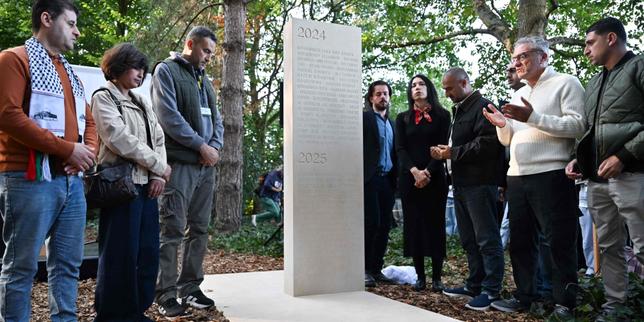
Walk past any memorial wall for fallen journalists—whether in Washington, London, or a quiet courtyard in Beirut—and the sheer volume of engraved names eventually blurs into an abstraction. Dates, outlets, countries. Your mind naturally tries to protect itself from the weight of so many extinguished lives by turning them into statistics.
Resist that urge.
Think instead of an ordinary wooden chair pushed back from a cluttered desk at two in the morning. A half-drunk mug of coffee gone cold beside a keyboard. A notebook lying open with three names underlined in blue ink, waiting for one final phone call to verify a bank transfer before the morning edition goes to press.
Every time a killer walks free, that chair stays empty a little longer, and the circle of silence grows a little wider around the rest of us.