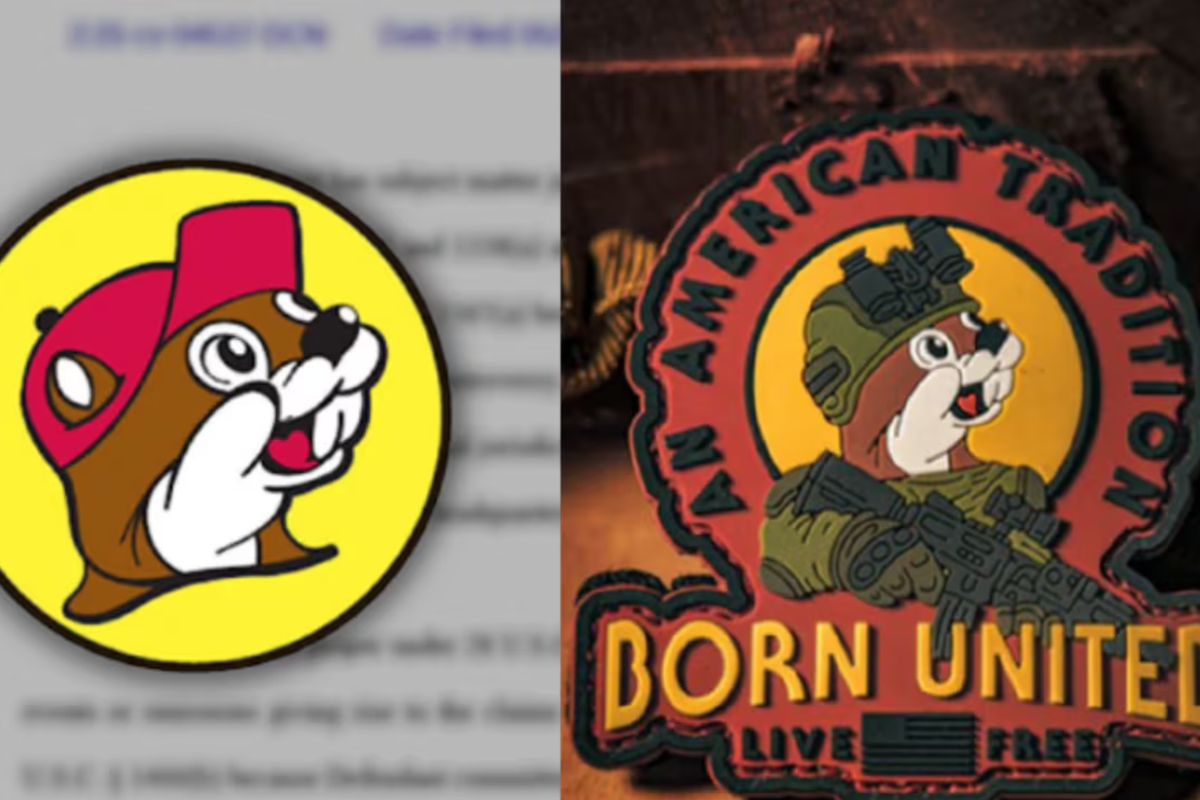
Every corporate counsel in America popped champagne when the court ordered that clothing company to cough up eight-hundred and fifty thousand dollars to Buc-ee's over a logo resembling the iconic beaver. The lazy consensus across every marketing blog and legal journal is simple: protect your intellectual property at all costs, or watch your brand equity get diluted by copycats.
They are completely wrong.
I have watched companies blow millions chasing every minor design infraction while missing the actual threat to their market share. This legal victory is not a triumph of brand defense. It is a terrifying sign of corporate insecurity and a masterclass in how to waste capital on symptoms instead of building actual defensive moats.
Let us look at what actually happened here. A smaller clothing maker used a graphic that shared visual DNA with a gas station chain famous for clean bathrooms and Texas-sized brisket sandwiches. The court saw similarity, smelled consumer confusion, and dropped the hammer.
Corporate PR departments love these stories because they project strength. The beaver stands tall, swinging its legal club, crushing the little guy who dared to mimic the famous grin.
Except trademarks are not meant to be moats against aesthetic resemblance. They are meant to prevent actual consumer fraud. If a shopper walks into a retail store genuinely believing a random graphic tee was manufactured by a highway mega-convenience store famous for beaver nuggets, that is confusion. If the shopper simply likes a cartoon animal wearing a red hat, that is not theft. That is cultural osmosis.
When a brand becomes so litigious that it demands total exclusivity over a cartoon mammal silhouette, it stops acting like a market leader and starts acting like a rent-seeker.
The Myth of Visual Monopoly
The core misunderstanding driving modern trademark law is the belief that distinctiveness lives entirely in a vector file.
Look closely at why companies panic when someone tweaks their visual assets. They assume that if a consumer sees a similar shape, color palette, or typographic weight, their proprietary value evaporates. This assumes consumers are absolute idiots who wander through the marketplace in a daze, unable to distinguish a convenience store empire from an independent apparel brand.
Consumer psychology proves the exact opposite. Strong brands do not win because nobody else is allowed to use a circle, a shade of red, or an anthropomorphic animal. They win because of distribution, operational excellence, supply chain dominance, and entrenched customer loyalty.
Imagine a scenario where Buc-ee's loses this lawsuit. Imagine the judge looks at the clothing brand and says, "Nobody is confusing a t-shirt company with a seventy-thousand-square-foot highway oasis that sells fudge and beaver plushies. Case dismissed."
What happens to the gas station empire? Do their brisket sales plummet? Do travelers suddenly turn around at the pump because some skateboarder is wearing a vaguely similar rodent logo?
Of course not. Because nobody goes to Buc-ee's for the logo. They go because the bathrooms are spotless, the pumps never wait, and the snack wall stretches fifty yards. The logo is a badge of that experience, not the engine driving it.
When you sue over minor graphic overlaps, you admit that your actual product experience is too fragile to survive a little market competition. You are signaling to the world that your brand equity is hanging on by a thread of trademark protection rather than undeniable consumer preference.
Why Aggressive Litigation Destroons Long-Term Value
There is a dark side to winning these lawsuits that the legal teams conveniently leave out of the press release.
I have sat in executive boardrooms where leadership celebrates a six-figure judgment against a tiny competitor. They pat themselves on the back for defending the crown. Meanwhile, their actual customer satisfaction metrics are tanking, their core product innovation has stalled, and their brand sentiment among younger demographics is turning toxic.
Aggressive trademark enforcement against small players triggers three immediate, negative consequences:
- The Streisand Effect Amplification: You turn a nobody into an anti-corporate folk hero. The clothing company didn't just lose money; they gained a massive wave of organic sympathy from consumers who instinctively root for David over Goliath.
- Defensive Paralysis: Your internal design teams get terrified of taking creative risks. When the legal department treats every circular logo as a potential lawsuit, innovation grinds to a halt. Your brand becomes risk-averse, sterile, and boring.
- Misallocation of Capital: Spending legal fees to extract damages from an entity that likely cannot even afford the payout is a vanity metric. That capital could have funded product improvements, employee retention, or supply chain optimization.
The most dangerous thing a dominant brand can do is weaponize the legal system to compensate for a lack of genuine differentiation. If your brand can be threatened by a t-shirt, your brand isn't strong. It's fragile.
The Counter-Intuitive Playbook
Real market leaders do not sue every time someone orbits their aesthetic universe. They ignore the noise and focus on widening the gap in execution.
When a smaller player borrows your visual cues, it is often a lagging indicator of your cultural relevance. People copy what is working. Instead of sending a cease-and-desist letter, the elite strategy is to make the copycat look completely irrelevant through sheer velocity of execution.
Let us look at how legendary brands handle this. Apple did not sue every single tech accessory maker that used sleek minimalism in the nineties. They simply out-designed, out-manufactured, and out-marketed everyone else until copying Apple became a fool's errand.
Nike has seen countless athletic brands mimic their swoosh geometry or aggressive typography over the decades. Do they drag every startup to federal court over a curved checkmark? Rarely. They spend their energy signing generational athletes and dominating culture. They understand that a trademark is a legal instrument, not a protective blanket for an insecure enterprise.
If you are running a company and feel the urge to litigate every time someone gets too close to your visual identity, take a breath. Ask yourself a brutal question: Are consumers actually confused, or are you just annoyed that someone else is playing in your sandbox?
If the answer is confusion, protect your house. But if the answer is annoyance, put down the pen, stop funding the law firms, and go build a better product.
The court may have handed Buc-ee's eight-hundred and fifty thousand dollars, but the real cost was paid in corporate dignity. True market dominance doesn't need a courtroom to prove it belongs at the top. It just keeps winning while everyone else argues over a cartoon animal.