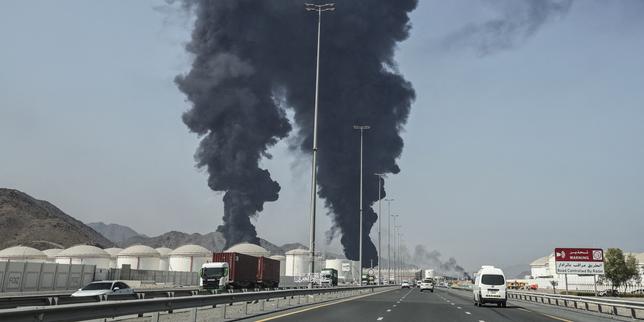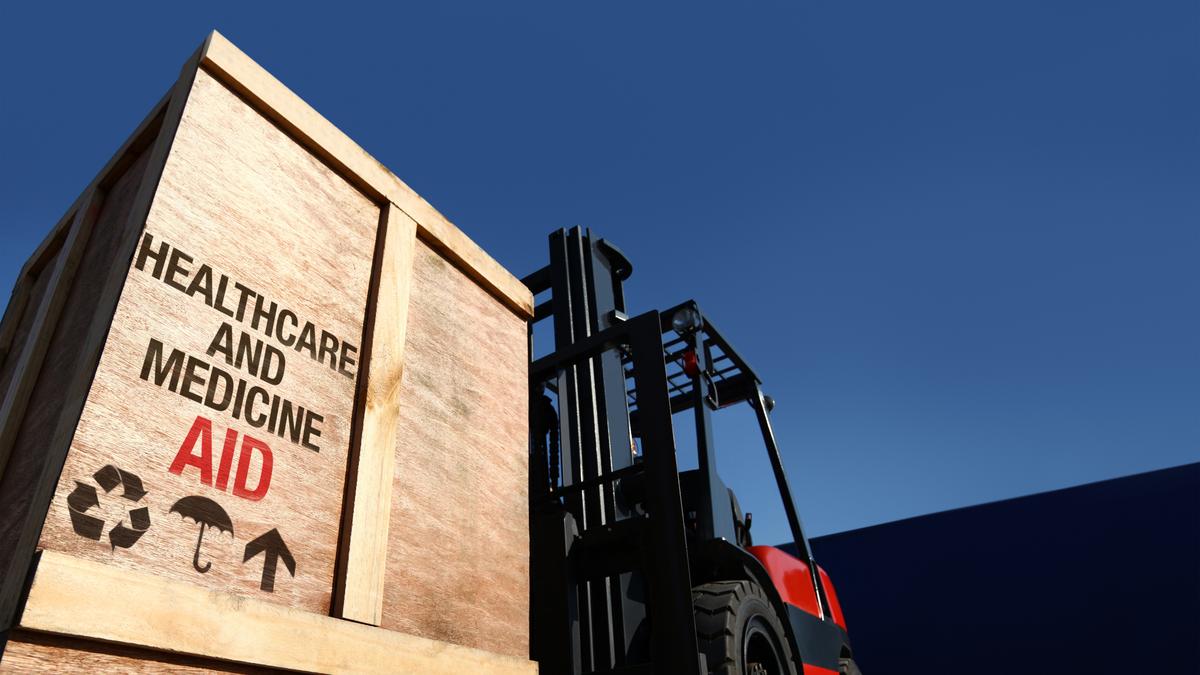
The global pharmaceutical supply chain is currently facing a cold, mechanical reality that has nothing to do with medical breakthroughs and everything to do with geography. As conflict intensifies across West Asia, the air corridors that serve as the primary arteries for high-value, temperature-sensitive medicines are constricting. This is not a temporary logistical hiccup. It is a fundamental breakdown in how the world moves its most fragile cargo. Oncology treatments, particularly biologics and specialized cell therapies, are the primary victims of this geographic chokehold. These drugs cannot sit in a warehouse for a week, and they cannot be rerouted via slow-moving cargo ships. When the sky closes, the clock starts ticking toward a zero-sum outcome for patients.
The crisis stems from a convergence of physics and finance. Most of the world’s oncology medications are manufactured in European hubs like Ireland, Germany, and Switzerland, while a massive and growing patient base resides in the Asia-Pacific region. To get from Point A to Point B, cargo planes historically fly over the Middle East. When airspace over major transit zones becomes a "no-fly" area due to missile threats or kinetic warfare, pilots must take the long way around. This adds thousands of miles, tens of thousands of dollars in fuel costs, and, most critically, hours or days of transit time that many cancer drugs simply cannot survive. Building on this theme, you can also read: The Childcare Safety Myth and the Bureaucratic Death Spiral.
The Fragility of Cold Chain Logistics
To understand why a missile in one region stops a chemotherapy session in another, you have to look at the "Cold Chain." Most modern cancer drugs are not stable chemicals like aspirin. They are complex biological products that must be kept within a strict temperature range, often between 2°C and 8°C. Some require cryopreservation at temperatures lower than -150°C.
When a flight from Frankfurt to Singapore is forced to bypass West Asian airspace, it often adds five to eight hours of flight time. For a standard refrigerated shipping container, those extra hours are the difference between a viable medicine and an expensive pile of hazardous waste. These containers have battery-powered cooling systems or dry ice reserves. They are designed for a specific window of time. If a plane is diverted or held on a tarmac in a secondary hub that lacks specialized pharma-handling infrastructure, the internal temperature spikes. Once the temperature deviates for a set period, the batch is legally and medically unusable. Analysts at Harvard Business Review have shared their thoughts on this matter.
We are seeing a surge in "excursion events"—the industry term for when a drug’s temperature goes out of range. In a stable world, these events are rare. In the current climate, they are becoming a daily risk factor that insurance companies are increasingly unwilling to cover.
The Middle East Hub Problem
For the last two decades, the global logistics industry bet everything on the "hub-and-spoke" model, with Dubai, Doha, and Abu Dhabi serving as the world’s central nodes. These airports are some of the most sophisticated pharmaceutical handling centers on earth. They invested billions in "Cool Chain" facilities that allow pallets of medicine to move from one plane to another without ever leaving a temperature-controlled environment.
The conflict has turned this strength into a single point of failure. As airlines pull out of these hubs or reduce frequencies to avoid risk, the capacity to move pharma cargo vanishes. Shipping companies are forced to look at alternative routes through Central Asia or Africa. The problem? Those routes don't have the infrastructure. A diverted plane landing in a country without high-end refrigerated warehouses means the cargo is essentially doomed. We are watching a decade of logistical optimization unravel in real-time.
The Hidden Cost of Fuel and Risk
Air freight rates are not static. They are a reflection of fuel prices, insurance premiums, and demand. When a flight path is lengthened, the fuel burn increases exponentially. But the bigger hit comes from "war risk" surcharges. Insurance providers have hiked premiums for any cargo passing near the conflict zone.
For a pharmaceutical giant, the cost of moving a kilogram of oncology medication has tripled in some corridors over the last six months. While a high-margin drug might be able to absorb that cost, the secondary effect is a reduction in available "belly space" on commercial flights. Because many airlines have suspended passenger service to certain regions, the total number of planes in the sky has dropped. Less space means higher competition, and life-saving drugs are now competing for room against consumer electronics and luxury goods.
Why Generic Manufacturers Are Getting Hit Hardest
While the major Western pharmaceutical players have the capital to negotiate dedicated charter flights, the generic drug industry—which provides the bulk of chemotherapy agents to developing nations—is in a tailspin. Generic drugs operate on razor-thin margins. They cannot afford a 300% increase in freight costs.
In markets like India and Southeast Asia, where local production often relies on Active Pharmaceutical Ingredients (APIs) sourced from Europe, the disruption is creating a two-fold crisis. First, the raw materials are not arriving on time. Second, the finished products cannot be exported efficiently. We are beginning to see stockouts of basic, essential cancer medications in regional hospitals. These aren't the experimental, million-dollar therapies; these are the workhorse drugs that form the backbone of standard cancer care.
The Failure of Alternative Routes
There is a common misconception that rail or sea can pick up the slack. For the pharmaceutical industry, this is a fantasy. The "Iron Silk Road" rail link through Russia and Central Asia is politically compromised and physically jarring. More importantly, it takes weeks, not hours.
Sea freight is even less viable. Beyond the sheer length of time, the Red Sea crisis has forced maritime shipping to bypass the Suez Canal and go around the Cape of Good Hope. This adds 10 to 14 days to a journey. For a patient with an aggressive Stage IV diagnosis, a two-week delay in the arrival of a drug shipment is not a logistical statistic. It is a clinical disaster.
The Strategy of Regional Isolation
Forward-thinking companies are now scrambling to "regionalize" their supply chains, but this is a process that takes years, not months. You cannot simply build a sterile, FDA-compliant manufacturing plant overnight. The current crisis has exposed the danger of over-centralizing production in Europe and the US while relying on a single, vulnerable geographic corridor to reach the rest of the world.
Some firms are experimenting with "Virtual Stockpiling"—placing massive amounts of inventory in regional hubs like Singapore or South Korea to act as a buffer. But this ties up billions of dollars in capital and risks the drugs expiring before they are used. It is a desperate hedge against a world that is becoming increasingly fragmented.
The Regulatory Bottleneck
Even if a company finds a way to fly a new route, they face a wall of bureaucracy. Every time a shipping route or a storage method changes, it often requires new regulatory filings to prove the drug’s stability wasn't compromised. Regulatory agencies are not built for the speed of modern warfare. They move slowly, demanding data and validation that many companies are struggling to provide in the heat of a crisis. This creates a "shadow shortage" where the drug exists, but it cannot be legally administered because its journey through a conflict zone hasn't been "validated."
The Human Cost of Logistical Math
The spreadsheet version of this story is about fuel surcharges and TEU (Twenty-foot Equivalent Unit) capacities. The reality in the oncology ward is much grimmer. Doctors are being forced to make "proactive substitutions"—using second-line treatments because the preferred drug is stuck in a warehouse in Istanbul or diverted to a holding facility in Nairobi.
These substitutions often come with higher toxicity or lower efficacy. In some cases, treatment cycles are being stretched out, with patients receiving doses every four weeks instead of every three, simply to make the remaining supply last longer. This is a quiet erosion of the standard of care, driven entirely by the inability to move a box from one side of the planet to the other.
Breaking the Dependency
The only way out of this trap is a radical move away from the "just-in-time" delivery model that has dominated the industry for thirty years. For cancer drugs, "just-in-time" is a death sentence when the sky goes dark. The industry must move toward a distributed manufacturing model, where the final stages of drug production—the "fill and finish"—happen closer to the patient.
This requires a massive transfer of technology and a shift in how intellectual property is managed. It also requires governments to view pharmaceutical logistics as a matter of national security, similar to energy or food. Until the geography of production matches the geography of consumption, the global cancer drug supply will remain a hostage to whichever conflict happens to be erupting under the world's most crowded flight paths.
Check your current inventory's "Country of Origin" and transit history. If your supply chain relies on a single transit point in West Asia, you are already behind the curve.