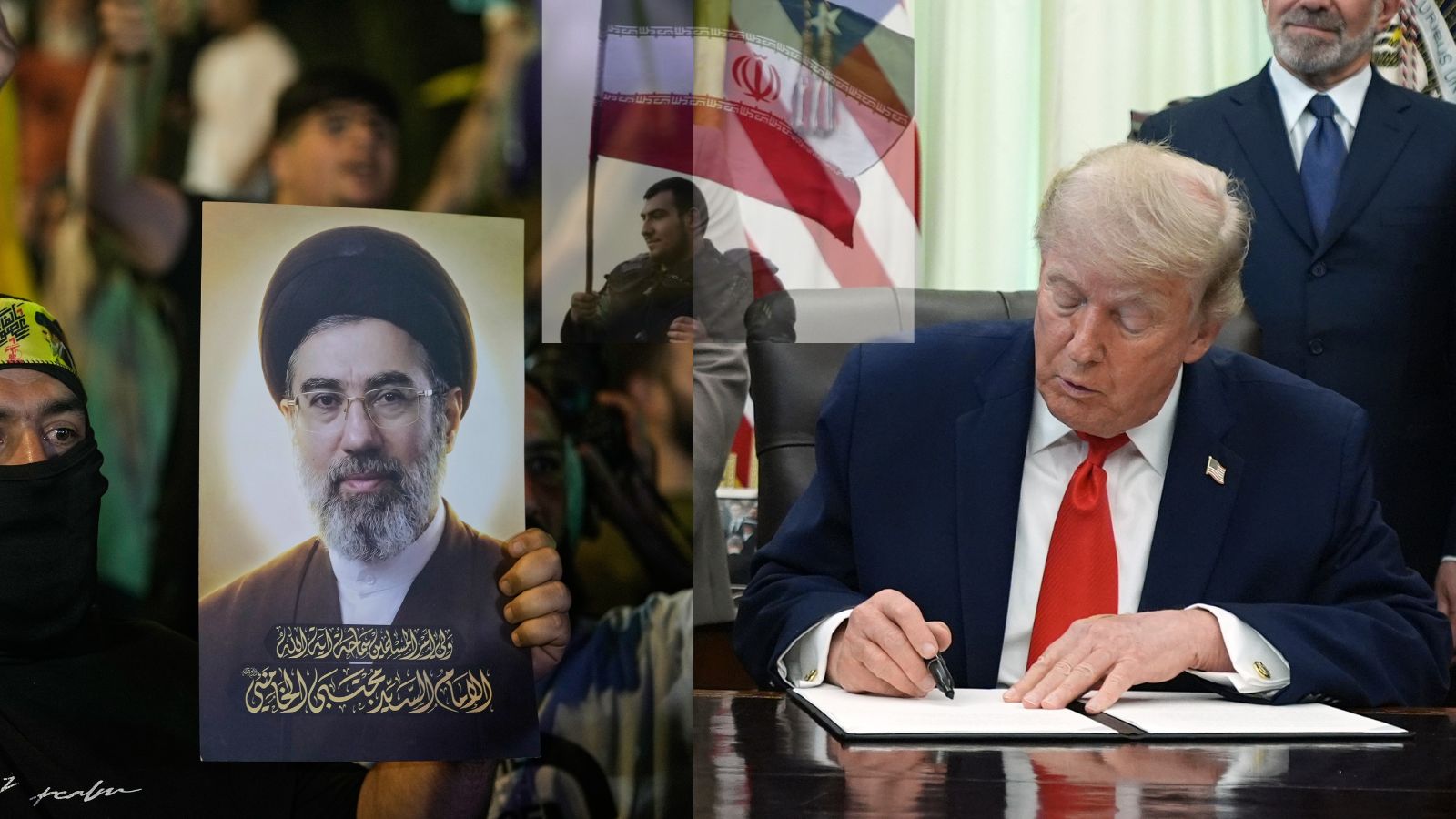
The international community is looking at the wrong numbers. While diplomatic circles whisper about a massive three hundred billion dollar fund anchoring the renewed Iran diplomatic framework, the reality on the ground is far more restrictive and volatile. Sources close to the negotiations reveal that more than half of this capital is already locked up, pre-committed to existing debts, bilateral trade mechanisms, and immediate structural stabilization. The public sees a massive windfall. The ledger shows a different story.
This is not a liquid war chest waiting to be deployed at the whim of Tehran. It is an accounting illusion designed to sell a complex diplomatic pill to skeptical domestic audiences on all sides. Understanding where this money is actually going exposes the fragile foundations of the entire geopolitical agreement.
The Hidden Ledger of Pre-Committed Capital
Money in international diplomacy is rarely free. Out of the estimated three hundred billion dollars tied up in this massive financial framework, well over one hundred fifty billion is functionally spent before it ever changes hands.
To understand why, one must look at the backlog of unserviced obligations accumulated over years of economic isolation. Beijing and New Delhi did not stop buying Iranian energy entirely; they altered how they paid for it. Billions of dollars sit in escrow accounts, legally bound to specific barter systems and outstanding industrial debts.
For years, barter arrangements kept the lights on. Iran traded oil for manufactured goods, consumer products, and agricultural commodities. A significant portion of the newly recognized fund represents the formalization of these existing pipelines. It is a balancing of accounts, not an influx of fresh, spendable currency.
Furthermore, domestic infrastructure has deteriorated to a critical breaking point. The energy sector alone requires immediate, massive capital injections just to maintain current production capacity. Refineries are failing. Pipelines need replacing. If the state does not direct tens of billions toward its own bleeding energy infrastructure immediately, the primary engine of its economy will stall. This is a survival cost, not discretionary spending.
Shifting Power Dynamics in the Middle East
Regional adversaries are watching this ledger with intense skepticism. Riyadh and Tel Aviv do not care about accounting distinctions. To them, a dollar unfrozen is a dollar that can be redirected toward regional proxy networks, regardless of which specific account it originates from.
The fungibility of money remains the central argument against the framework. If the Iranian state can use pre-committed funds to cover its basic domestic obligations and infrastructure needs, it frees up internal revenues that were previously trapped. That internal liquidity can then flow directly to regional operations.
The security architecture of the region will shift. Even if strict oversight mechanisms monitor every cent of the three hundred billion dollar fund, the domestic financial relief it provides creates breathing room. This breathing room alters the risk calculations of state actors across the Levant and the Persian Gulf.
The Enforcement Nightmare
Monitoring a financial package of this magnitude is functionally impossible over the long term. International oversight bodies are structured to audit official banking channels, but the global financial system has grown highly fragmented.
- Asymmetric Banking Systems: Alternative payment channels outside Western control have matured significantly over the last decade.
- Physical Commodity Trade: Gold, refined oil products, and petrochemical derivatives frequently move through networks that evade traditional accounting tracking.
- Dual-Use Procurement: Tracking whether a piece of industrial machinery was bought with "approved" infrastructure funds or "unapproved" state revenues is an administrative impossibility.
The Mirage of Economic Normalization
Global markets react to headlines, not structural realities. The initial announcement of the fund caused a temporary dip in global oil futures, driven by the expectation of an immediate flood of crude onto the market. That expectation is flawed.
Bringing sustained production back online takes years. The oil fields of southwestern Iran cannot simply be turned back on with a switch; they require specialized western technology that remains restricted under separate, non-monetary sanction regimes. The capital from the fund cannot buy what foreign companies are legally forbidden to sell.
International corporations are not rushing back to Tehran either. Compliance departments inside major European and Asian conglomerates remember the sudden snapback of penalties in previous years. They require long-term stability, not a volatile diplomatic experiment built on a foundation of pre-committed funds and disputed accounting.
The structural weaknesses of the domestic economy also run deeper than a lack of liquidity. Chronic inflation, a bloated state sector, and systemic banking inefficiencies cannot be solved by a one-time injection of capital, especially when more than half of that capital is already spoken for. The fund provides a temporary reprieve, not a cure.
The Legislative Battle in Washington
The domestic political theater in the United States ensures that this fund will remain a flashpoint. Opponents of the framework are already weaponizing the three hundred billion dollar figure, painting it as an outright payout to an adversarial regime.
The administration faces the grueling task of explaining the nuances of frozen assets versus liquid stimulus to an electorate that operates on soundbites. Congressional committees are preparing to launch investigations into the specific mechanisms of the fund, demanding guarantees that no Western-origin capital is included in the total.
This political pressure creates its own risk. If Washington signals that future administrations might unilaterally seize or freeze these assets again, the entire incentive structure for compliance collapses. The deal relies on a level of predictability that the current American political landscape simply cannot guarantee.
The Real Risk of Financial Contagion
There is a broader danger that economists are largely ignoring. By creating a massive, bespoke financial mechanism to handle this capital, international regulators are setting a precedent for sanctions evasion that other nations will inevitably study and replicate.
When you wall off a significant portion of the global economy, it creates a powerful incentive for alternative financial ecosystems to evolve. This fund represents the peak of that evolution. It is a hybrid system, partly integrated with global banking and partly insulated from traditional oversight.
Other sanctioned states are watching closely. The mechanisms designed to manage these pre-committed billions could easily become the blueprint for a parallel financial universe, one where Western regulatory dominance is severely diminished. The long-term cost of this framework may not be measured in regional instability, but in the gradual erosion of the global financial leverage that made the negotiations possible in the first place.
The diplomatic focus remains fixed on the grand total, a symbol of leverage and compromise. But symbols do not pay debts, rebuild refineries, or pacify regional rivals. As the implementation phase begins, the friction between the public narrative of a three hundred billion dollar jackpot and the rigid reality of a pre-committed balance sheet will test the endurance of this agreement to its absolute limit.