The international conservation complex has a brand-new target. A multimillion-dollar venture backed by the Global Environment Facility and the Food and Agriculture Organization aims to protect 700,000 hectares of critical highland ecosystems in Papua New Guinea by placing indigenous communities at the center of the strategy. It sounds flawless on paper. The funding mechanisms are approved, the carbon emission avoidance metrics are calculated, and the press releases celebrate a shift away from colonial, fortress-style environmentalism toward community empowerment.
But the reality on the ground in the rugged valleys of Enga, Chimbu, and Jiwaka provinces defies Western bureaucratic idealism.
Papua New Guinea is a legal anomaly that terrifies and fascinates global planners. Roughly 97 percent of the country’s land remains under customary ownership, meaning indigenous clans hold absolute constitutional sovereignty over their ancestral territories. You cannot buy this land. You cannot simply fence it off. Western conservation organizations cannot arrive with a checkbook and declare an area a national park without navigating an intricate web of tribal politics, shifting oral histories, and deep-seated economic desperation. By betting $23 million on indigenous-led conservation corridors, global institutions are not just trying to save tree kangaroos and birds of paradise. They are testing whether ancient tribal structures can withstand the aggressive economic pressures of mining, logging, and cash-crop agriculture.
The strategy is a desperate gamble. If it succeeds, it provides a blueprint for protecting the world’s third-largest tropical rainforest. If it fails, it will prove that financial incentives and international oversight are fundamentally incompatible with customary land tenure.
The Myth of the Untouched Wilderness
Western environmentalism has long suffered from a romantic delusion regarding indigenous stewardship. The assumption that tribal communities exist in a permanent, static state of ecological harmony ignores the modern financial pressures these communities face.
Highland populations in Papua New Guinea are growing rapidly. With that growth comes an immediate, desperate need for cash income, infrastructure, medical supplies, and education. For decades, the only entities willing to build roads or aid clinics in these remote valleys were foreign logging companies and multinational mining corporations. When a clan leader is forced to choose between preserving a sacred mountain peak or signing a timber concession that guarantees a functional road to the nearest hospital, the environmental choice is rarely the logical one.
The new initiative attempts to counter this by funding biodiversity-friendly livelihoods like certified coffee cultivation, organic farming, and ecotourism. But the economic math is heavily stacked against conservation.
+------------------------------------+-----------------------------------+
| Land Use Choice                    | Immediate Financial Reality       |
+------------------------------------+-----------------------------------+
| Industrial Logging / Mining Concess| Immediate cash payouts, roads,    |
|                                    | and infrastructure development.   |
+------------------------------------+-----------------------------------+
| Community Conservation Initiatives | Micro-revenues from niche coffee  |
|                                    | and highly unpredictable tourism. |
+------------------------------------+-----------------------------------+
A community-managed coffee cooperative cannot compete with the immediate, overwhelming capital injection offered by extractive industries. Expecting isolated clans to opt for long-term ecological benefits over immediate survival needs is an expectations mismatch born in boardroom meetings in Washington and Rome, not the mud of the Highlands.
When Conservation Sparks War
The most overlooked variable in the entire project is the volatile nature of highland tribal politics. Land is not just an asset in Papua New Guinea. It is identity, history, and the historical source of inter-clan warfare.
The project plans to establish 10 community-led conservation areas across interconnected landscapes. This requires drawing definitive lines on a map. However, mapping customary boundaries is an existential hazard. Centuries of oral traditions, tribal migrations, and past conflicts mean that boundaries are often fluid, contested, and overlapping. Forcing clans to codify these borders to satisfy international funding requirements can act as a catalyst for violence.
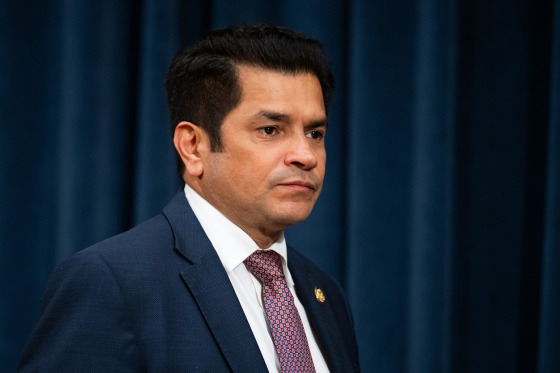
"The project is designed carefully to avoid making tensions, such as around natural resources, worse," claims Aaron Becker, the FAO-GEF Regional Coordinator for Asia and the Pacific.
That careful design will be tested by historical reality. In the Highlands, a single disputed boundary marker or an unequal distribution of conservation stipends can reignite multi-generational tribal conflicts. If Clan A receives international funding for conserving a particular ridge that Clan B claims as ancestral hunting territory, the result is not a biodiversity corridor. The result is a tribal war.
Previous initiatives, such as the Lukautim Graun Program, have utilized legally binding Conservation Deeds between clans to settle boundaries before funding flows. But these agreements require years of agonizing, localized diplomacy. The international funding cycle moves at a rapid pace, demanding quantifiable results, verified carbon reductions, and mid-term evaluations within strict multi-year windows. The slow, delicate process of tribal mediation does not adhere to a Western fiscal calendar.
The Phantom Carbon Economy
The financial backbone of the project relies on the development of landscape incentive mechanisms, including payments for ecosystem services, green bonds, and biodiversity offsets. It is an attempt to monetize the living forest, turning standing trees into a more lucrative asset than felled logs.
But Papua New Guinea’s history with the carbon economy is deeply troubled. The country has been plagued by carbon cowboys—unscrupulous foreign brokers who fly into remote villages, convince illiterate landowners to sign away their land rights with thumbprints, and promise billions of dollars from international carbon markets that never materialize. This predatory history has left a legacy of profound cynicism among indigenous landowners.
          [International Funding / GEF Grant]
                          │
                          ▼
             [UN Agencies & Bureaucracy]
                          │
                          ▼
            [National Government/CEPA]
                          │
                          ▼
          [Provincial/District Officials]
                          │
                          ▼
       [Indigenous Landowners (The Last Mile)]
When international agencies arrive talking about carbon credits and ecosystem services, communities do not see environmental salvation. They see another complex financial mechanism where the vast majority of the cash vanishes into the administrative overhead of international consultants, non-governmental organizations, and capital-city bureaucrats. By the time the money trickles down to the clans guarding the forest ridge, it is often reduced to a few solar panels, some farming tools, and empty promises.
The Governance Black Hole
For community-led conservation to succeed, it requires a functioning regulatory backstop from the state. Papua New Guinea’s Conservation and Environment Protection Authority is tasked with co-implementing this initiative. Yet the national government's record on enforcement is virtually non-existent in the interior.
The Highlands are geographically isolated and exceptionally difficult to access. There are few roads, fewer police officers, and no environmental inspectors monitoring remote logging concessions or illegal alluvial mining operations. If an indigenous community decides to break its conservation pledge and permit logging, the state lacks the logistical capacity or political will to intervene. The government in Port Moresby remains heavily dependent on mining and logging taxes to balance its national budget. This creates a permanent, structural conflict of interest. The state cannot effectively police the very extractive industries that keep its economy afloat.
True conservation in this environment cannot be achieved by top-down institutional decrees. It requires accepting that the traditional clan structure is the only functional administrative system that exists in the Highlands. If the international community wants to protect 700,000 hectares of forest, it must treat these clans not as beneficiaries of a project, but as independent sovereign entities with full veto power.
The success of this $23 million initiative depends entirely on whether international organizations can relinquish control. If they insist on imposing rigid, Western conservation metrics and bureaucratic timelines, the project will join a long history of failed development projects in the Pacific. The forest will only remain standing if the indigenous owners decide that a standing forest is vital to their own survival, entirely independent of foreign capital.