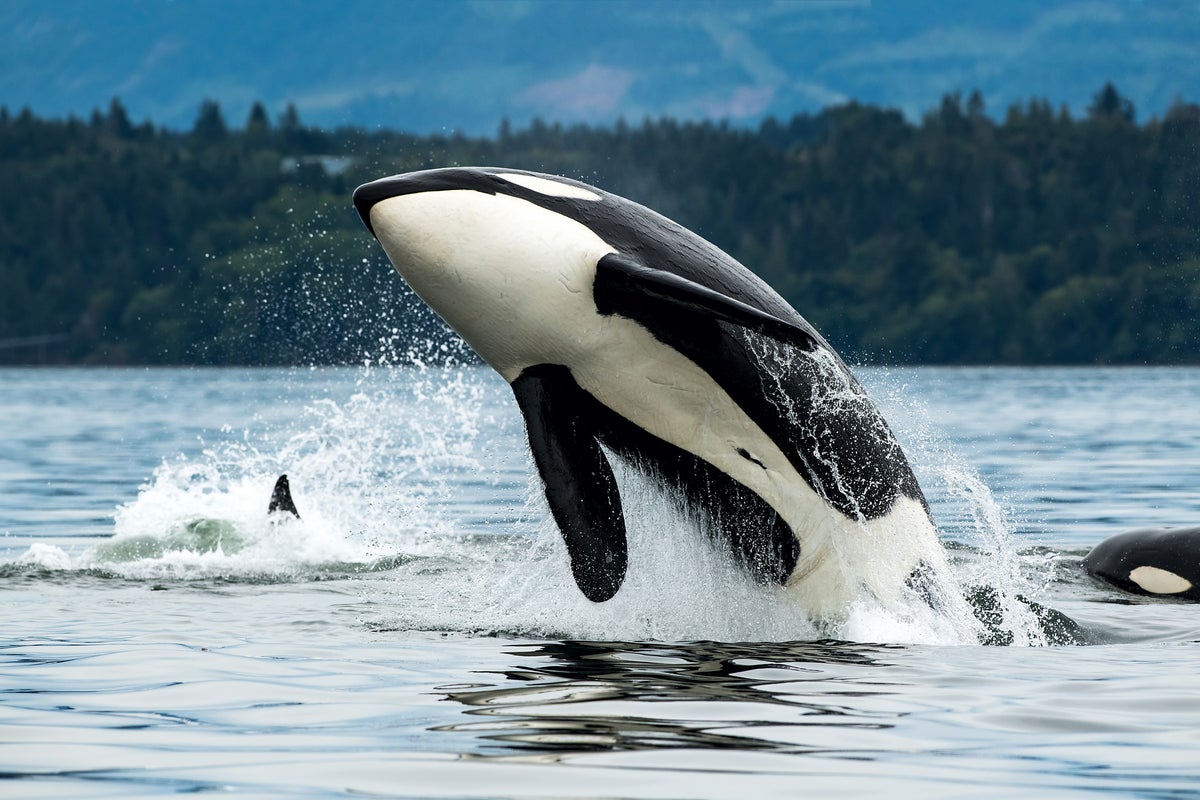
The maritime world is currently obsessed with a specific group of Iberic orcas that have developed a taste for fiberglass and chaos. Since 2020, a small sub-population of these apex predators has been systematically disabling yachts in the Strait of Gibraltar, leading to several sinkings and millions in damages. While mainstream reports often lean into the sensationalist "revenge" narrative or dismiss the behavior as simple teenage angst, the reality is far more complex and troubling. This is not a random act of nature. It is a behavioral shift born from a combination of generational trauma, a dwindling food supply, and the unintended consequences of high-density maritime traffic.
The attacks follow a surgical pattern. The orcas approach from the stern, focus their attention entirely on the rudder, and use their massive body weight to ram or bite the mechanism until it snaps. Once the vessel is dead in the water, the whales usually lose interest and swim away. This isn't the behavior of a predator looking for a meal; it is a learned skill being passed down through a specific social lineage. If you liked this post, you should read: this related article.
The Myth of the Abandoned Teenager
Early reports suggested these orcas were "abandoned" by their elders, left to roam the seas like rudderless delinquents. That is a fundamental misunderstanding of orca social structures. In orca society, matrilineal bonds are the strongest in the animal kingdom. Male orcas often stay with their mothers for their entire lives. They don't get "abandoned."
Instead, what we are witnessing is a cultural transmission. Researchers have identified a specific female, White Gladis, as the potential trendsetter. Whether she acted out of a past trauma—perhaps a painful collision with a boat or entanglement in a fishing net—is still debated. However, her "peers" and offspring are not acting out because they lack supervision. They are acting out because they are learning. In the orca world, fads exist just as they do in human high schools. Decades ago, a population in the Pacific Northwest spent a summer carrying dead salmon on their heads for no apparent reason. The rudder-smashing in the Gibraltar Strait is a much more destructive version of that same social mimicry. For another look on this event, see the latest update from Al Jazeera.
The Physics of a Rudder Strike
To understand why this is happening, you have to look at the boat from the orca's perspective. A yacht’s rudder is a moving, vibrating, and sensory-rich object. As a boat moves through the water, the rudder creates pressure waves that the orcas can feel through their echolocation.
When an orca rams a rudder, it isn't just a physical impact. It is a sensory engagement. For a young, highly intelligent, and bored predator, the resistance of the steering system provides a unique tactile feedback. It is "heavy" play.
The danger lies in the weight. An adult orca weighs roughly six tons. When that mass hits a carbon-fiber or stainless steel rudder at fifteen knots, the torque exerted on the steering stock is immense. It doesn't just break the blade; it often cracks the hull where the rudder post enters the vessel. That is how boats sink. The orcas aren't trying to drown the sailors. They are trying to "kill" the toy that provides the most interesting physical resistance.
The Bluefin Tuna Factor and the Hunger Trap
We cannot talk about orca behavior without talking about their primary food source: the Atlantic bluefin tuna. The Iberian orcas are a critically endangered sub-population, with fewer than 40 individuals remaining. They are specialists. They don't eat seals or other whales; they eat tuna.
For decades, overfishing in the Mediterranean and the Atlantic decimated tuna stocks. While conservation efforts have led to a recent rebound, the competition remains fierce. The orcas have learned to follow fishing boats, "stealing" tuna off longlines. This brings them into constant, high-stress proximity to humans and heavy machinery.
Hunger breeds innovation. It also breeds frustration. When a population is stressed by nutritional deficits and noise pollution, their behavioral patterns shift. The "play" we see with rudders might be a displacement behavior—a way to vent energy or practice motor skills in an environment where their natural hunting grounds have been turned into a congested industrial highway.
Why Current Deterrents are Failing
Skippers have tried everything to stop the interactions. They throw sand in the water to confuse the orcas' sonar. They blast heavy metal music through underwater speakers. They reverse in circles. None of it works consistently. In fact, some evidence suggests that these "deterrents" actually attract the whales by making the boat more interesting.
The official advice from authorities has been to stop the engine and drop the sails, hoping the orcas will get bored with a stationary object. But for the "Gladis" group, a stationary boat is just a stable target. They have already learned that the rudder is the "prize."
The Failure of the Pinger
Acoustic deterrent devices, or "pingers," were designed to keep porpoises out of fishing nets. When used against orcas, they often act as a "dinner bell." The whales associate the sound with the presence of a vessel, and since they are curious by nature, they swim toward the noise rather than away from it. We are effectively training them to find us.
The Economic Fallout for Mediterranean Sailing
This isn't just a niche issue for wealthy yacht owners. The Strait of Gibraltar is the gateway to the Mediterranean, a crucial corridor for global maritime tourism and delivery. Insurance companies are already reacting.
- Premiums are skyrocketing for vessels planning to transit the "Orca Alley" between Barbate and Tarifa.
- Coverage exclusions are being written into new policies, specifically naming "cetacean interaction" as a non-reimbursable event.
- Delivery skippers are refusing to move boats through the region during the peak tuna migration months (May to August).
The economic impact trickles down to local marinas and repair yards in southern Spain and Portugal, which are currently backed up with rudder repairs. It is a slow-motion blockade of one of the world's most important waterways, enforced by a dozen determined whales.
The Ethics of Intervention
The conversation is turning dark. As more boats sink and more sailors feel threatened, the calls for "lethal deterrents" are growing in quiet corners of the sailing community. This is a dangerous path. The Iberian orcas are protected under international law, and their loss would be a catastrophic blow to marine biodiversity.
However, the current "wait and see" approach from marine biologists is failing the people on the water. We are witnessing a clear conflict between human leisure/commerce and wildlife survival. If we don't find a non-lethal way to make rudders unappealing—perhaps through structural changes to boat design or specific electrical masking—the situation will inevitably end in a violent confrontation.
How to Navigate the New Reality
If you are a sailor planning to transit the Strait, you have to stop thinking of the orcas as "aggressive" and start thinking of them as "attracted."
- Monitor the Orca Maps: Use crowdsourced apps like GT Orcas to see real-time sightings. If a cluster of attacks is happening off Cape Trafalgar, stay in shallow water. The orcas tend to stay in depths of 20 meters or more where they have room to dive and maneuver.
- Reinforce the Steering: Some long-distance cruisers are now carrying "emergency rudders" or reinforcing their rudder posts with heavy-duty sleeves. It won't stop the whale, but it might keep the boat afloat long enough for a tow.
- The Sand and Noise Fallacy: Stop relying on gimmicks. If you are approached, the most effective (though not guaranteed) tactic is to minimize the "reward" for the whale. This means no movement, no vibration, and no reaction.
The orcas aren't "broken" and they haven't been "abandoned." They have adapted to a world that is increasingly crowded, noisy, and depleted of their natural prey. They are using their intelligence to interact with the most prominent objects in their environment. We are the ones who haven't yet figured out how to share the water.
The next time a rudder snaps in the dark waters off the coast of Spain, remember that it isn't an act of war. It's a high-stakes game played by a species that has been watching us long before we started watching them. The only way to win is to change the way we build and move, because the orcas aren't going to change for us.