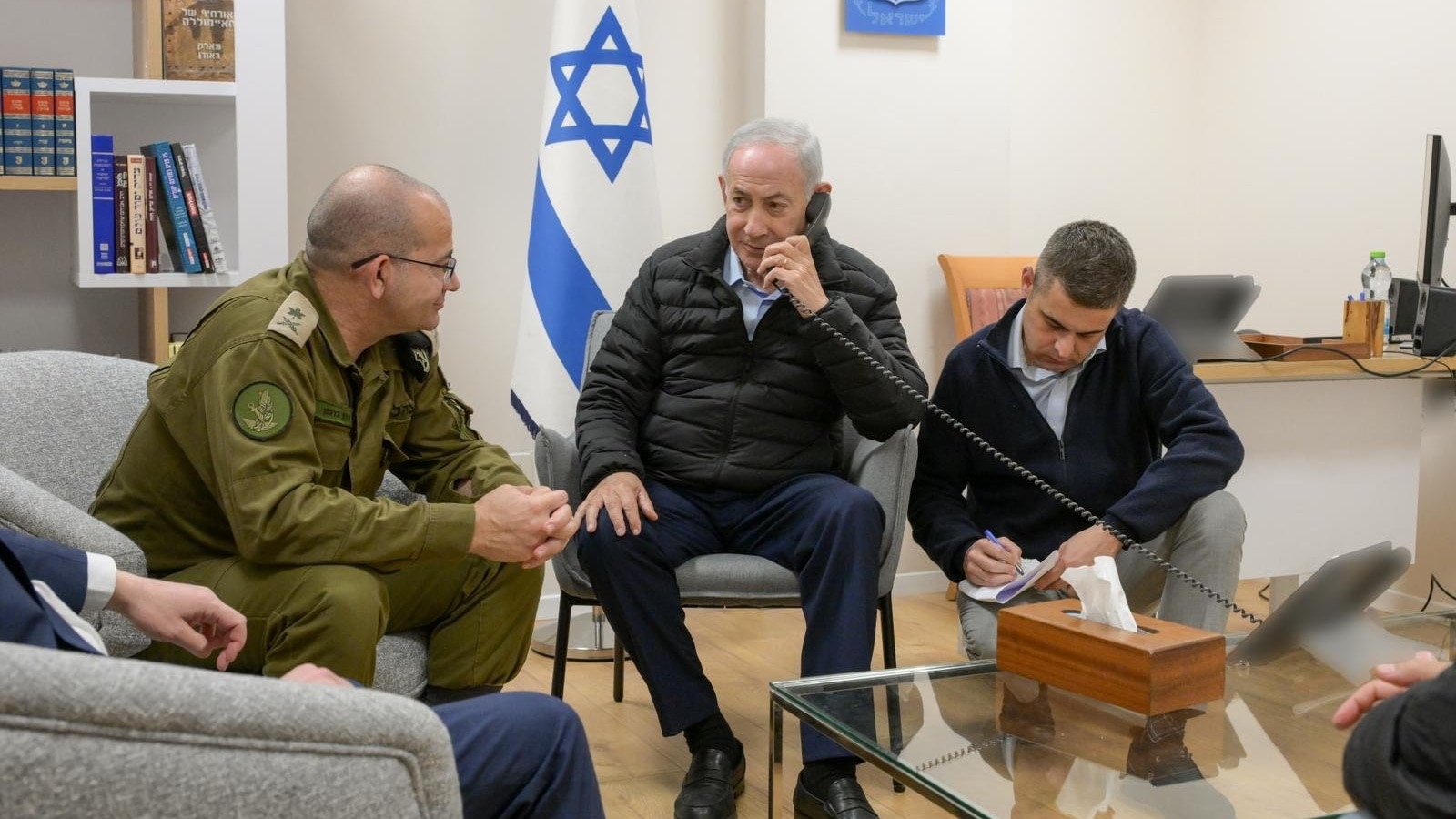
Israel is currently fighting a war on two fronts: one involving ballistic missiles and the other involving pixels. On Tuesday, the Prime Minister’s Office released a high-resolution photograph of Benjamin Netanyahu reportedly "ordering the elimination of senior Iranian regime officials." This was not just a routine wartime update. It was a calculated strike against a viral campaign claiming the Prime Minister had been killed or incapacitated. In the theater of modern conflict, a leader’s pulse is now a matter of national security, and proving it exists has become a daily operational requirement.
The rumors did not emerge from a vacuum. They were the result of a sophisticated digital pincer movement. For nearly a week, Iranian state media and social media accounts across the Middle East flooded the internet with claims that Netanyahu had died in a retaliatory strike. This culminated in a bizarre obsession with "the sixth finger."
The Anatomy of a Deepfake Panic
The chaos began with a legitimate press conference on March 12. Sleuths on social media—some genuinely curious, others professionally malicious—began circulating grainy screenshots of Netanyahu’s hand. They claimed he had an extra digit, a common "tell" for AI-generated imagery. This sparked a wildfire of speculation. If the video was AI, where was the real Netanyahu?
Anti-Israel influencers and Iranian-aligned accounts seized the moment. They shared AI-generated images of Netanyahu being pulled from rubble, his face covered in dust, looking decidedly dead. The "sixth finger" theory became the foundation of a narrative that the Israeli government was using a digital ghost to maintain public order while the country burned.
To counter this, Netanyahu took a gamble on relatability. He appeared in a video at a cafe in the Jerusalem Hills, casually ordering coffee and joking with staff. "I am dying… for a coffee," he quipped, holding his hands up to the lens to show exactly five fingers on each.
Why the Coffee Shop Strategy Failed
In an era of deep distrust, even a cup of coffee is scrutinized. Instead of silencing the critics, the cafe video gave them more ammunition. Amateur analysts pointed to the "physics of the coffee" and "vanishing rings" on his fingers, claiming the video was yet another deepfake. Even X’s own AI chatbot, Grok, reportedly flagged early versions of the footage as suspicious, though later official sources and fact-checkers verified the Prime Minister’s presence.
This highlights the core problem of the current conflict. When everything can be faked, nothing can be proven. Israel’s attempt to use "human" moments to debunk rumors backfired because it didn't match the gravity of the war. People didn't want to see a Prime Minister at a bistro; they wanted to see a Commander-in-Chief.
The Shift to the Command Center
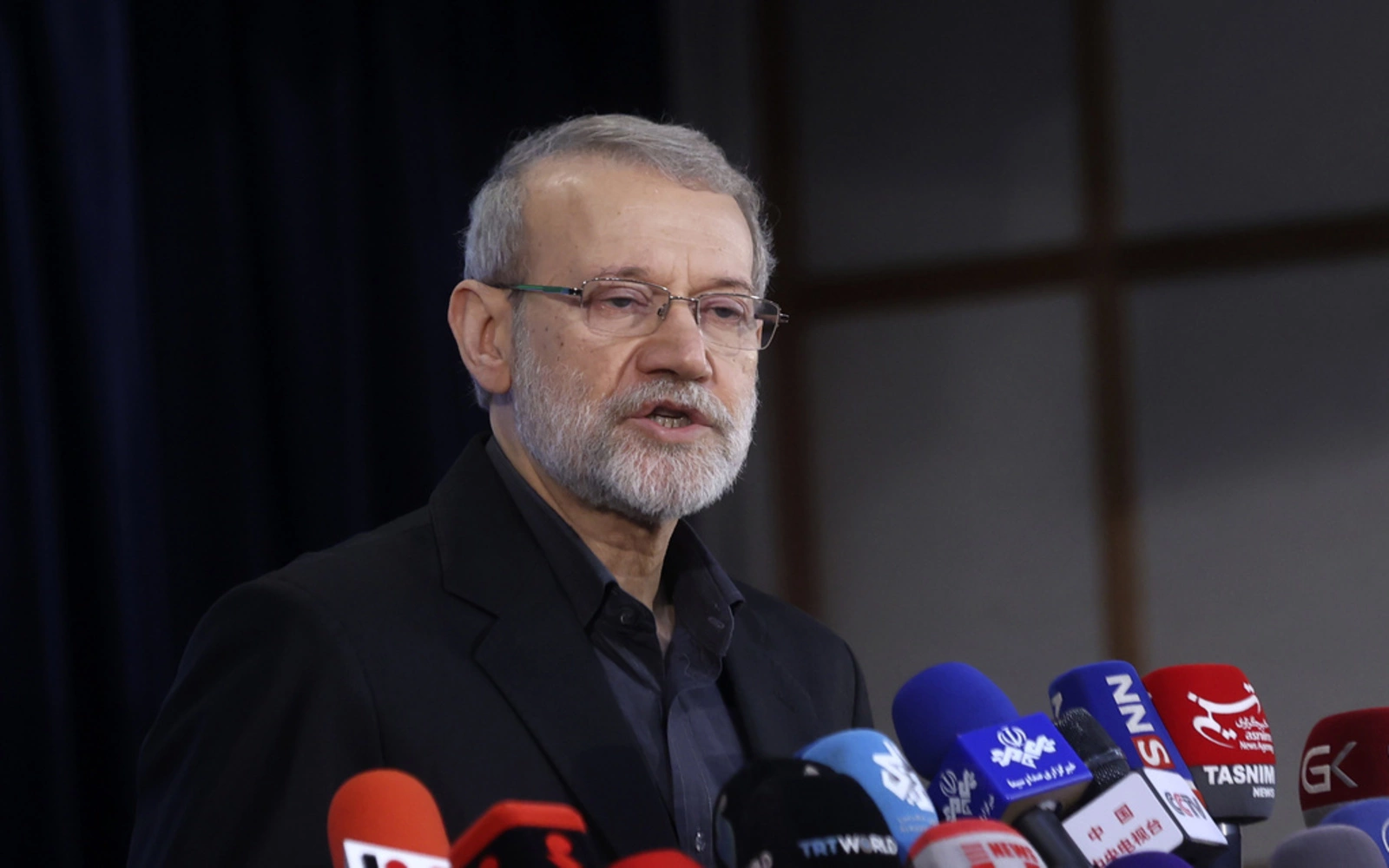
The photo released on Tuesday represents a total shift in communications strategy. It abandons the "casual Bibi" persona for a return to the "Security Mr." image. By showing Netanyahu in a command setting, purportedly authorizing the elimination of high-level Iranian targets like security chief Ali Larijani, the Prime Minister’s Office is attempting to kill two birds with one stone.
First, it establishes that he is physically capable of making life-and-death decisions. Second, it shifts the narrative from "Is he alive?" to "Who is he killing next?"
This is a high-stakes psychological game. By tying the proof of his survival to the announcement of successful strikes, Israel is telling the Iranian regime that their disinformation campaign has failed to stop the kinetic reality of the war.
The Cost of Digital Fog
While the world argues over the number of fingers on a leader’s hand, the actual war is reaching a fever pitch. Operation Epic Fury, the joint US-Israeli campaign that began on February 28, has already reshaped the region. With the death of Supreme Leader Ali Khamenei in the initial strikes and the subsequent retaliatory waves of missiles hitting Tel Aviv and Riyadh, the human cost is staggering.
Over 2,000 people have died since the end of February. Millions are displaced. Yet, the information war frequently overshadows the humanitarian disaster. The focus on Netanyahu’s health is a distraction that serves both sides. For Israel, it’s a way to demonstrate resilience. For Iran, it’s a way to project a sense of impending collapse within the Zionist leadership.
The reality is that Netanyahu is alive, but his political and physical safety are under more pressure than at any point in his long career. The "death rumors" are a form of psychological attrition designed to sow doubt among the Israeli public and the military.
A Precedent for the New Warfare
What we are witnessing is the blueprint for future conflicts. In the past, you had to kill a leader to remove them from the board. Today, you only need to convince enough people that they are already gone. The burden of proof has shifted.
Israel’s Prime Minister’s Office will likely continue to release "proof of life" content every 24 to 48 hours. But the more they do it, the more they validate the doubt. Every pixel-perfect photo is another opportunity for a skeptic to find a flaw. This is a feedback loop that has no clean exit.
The war is no longer just about territory or nuclear facilities. It is about the baseline of truth. As long as the digital fog remains this thick, the sound of a missile strike will always be accompanied by the sound of a million keyboards questioning if it ever actually happened.
The next time a photo of a world leader surfaces in a crisis, don't look at their face. Look at the metadata. Look at the context. Then, realize that in 2026, seeing is no longer believing.