The attempt to force a mid-decade redrawing of the American political map hit a jagged wall in the South Carolina Senate this week, even as a parallel effort in Missouri secured a total victory in the state’s highest court. These two outcomes represent more than just "mixed results" for a movement driven by Donald Trump to maximize Republican congressional gains. They reveal a growing friction between national political ambitions and the local realities of state-level power. In Missouri, the GOP successfully dismantled a compact urban district to gain a seat, but in South Carolina, the push collapsed because a handful of Republicans decided the risk of a total sweep was less appealing than the stability of their current, safer lines.
The immediate takeaway is clear: the national Republican strategy to gain up to 14 House seats through aggressive mid-decade redistricting is working, but it is not an unstoppable force. Building on this theme, you can also read: The Red Cross Humanitarian Delusion and why Colombia’s Conflict Statistics are Lying to You.
The Missouri Siege and the End of Compactness
Missouri’s Supreme Court has effectively greenlit the transformation of the state's 5th Congressional District into what critics call a "sprawling behemoth." For decades, this district was a compact, urban-centric seat based in Kansas City, long held by Democrat Emanuel Cleaver. Under the new map, which the court upheld on May 12, 2026, the district has been stretched 200 miles across 15 counties. It now yanks rural, deep-red territories into the Kansas City orbit, a move designed specifically to dilute the Democratic vote and flip the seat.
The court's logic was purely technical. While the 5th District itself failed any traditional "compactness" test, the justices looked at the map in its entirety. They ruled that as long as the map on average meets the state's compactness requirements, individual districts can be distorted beyond recognition. This sets a dangerous precedent. It suggests that a state can have seven "perfect" districts and one "monstrosity," and the courts will likely look the other way. Observers at BBC News have also weighed in on this matter.
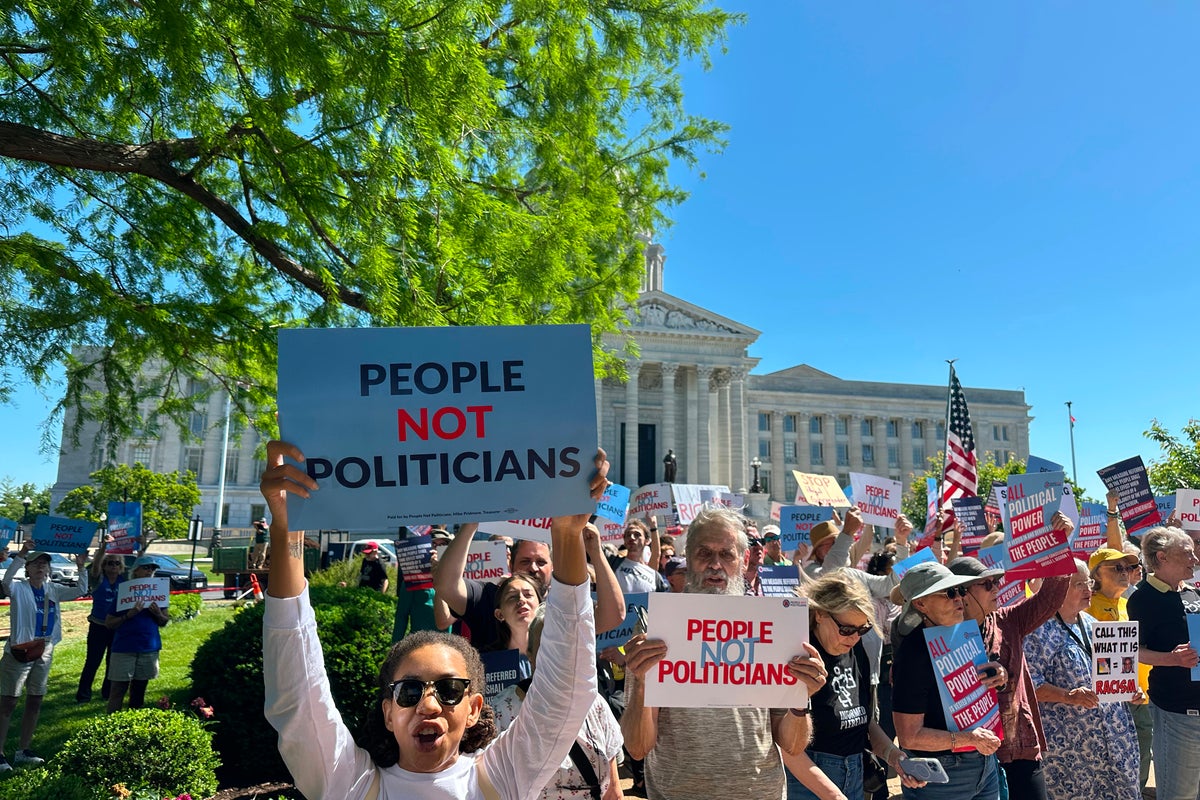
This victory in Missouri is a direct result of a strategic offensive launched last September. Despite a massive petition drive that gathered 300,000 signatures to force a referendum on the map, the court ruled that the new lines will remain in place for the upcoming August primaries. The Secretary of State, Denny Hoskins, now has until the day of the primary to certify those signatures—a timeline that ensures the referendum can only happen after the new map has already been used to determine the next Congress.
Why South Carolina Said No
While Missouri Republicans marched in lockstep, South Carolina’s GOP fractured. The plan there was even more ambitious: redrawing the map to eliminate the state’s only Democratic-held seat, currently occupied by Representative Jim Clyburn. On the surface, it seemed like a layup for a party with a supermajority.
However, the 29-17 vote in the South Carolina Senate failed because five Republicans broke ranks. They didn't do it out of a sudden sense of bipartisan fairness. They did it out of fear.
The math of gerrymandering is a zero-sum game. To eliminate a Democratic stronghold like Clyburn’s, you have to "bleed" those Democratic voters into the surrounding Republican districts. For veteran GOP senators, this is a nightmare scenario. By trying to achieve a 7-0 sweep, they risked making several "safe" 60% Republican districts into "competitive" 52% districts. In a bad year for the party, a 7-0 dream could easily turn into a 4-3 disaster.
Senate Majority Leader Shane Massey summed up the resistance with a bluntness rarely seen in national discourse, noting that he had "too much resistance" in his heritage to be pushed into a plan that might backfire on his own colleagues.
The Ghost of the Voting Rights Act
The fuel for this fire came from a recent U.S. Supreme Court ruling that significantly weakened the Voting Rights Act (VRA). By making it harder to prove racial gerrymandering, the Court essentially handed a "get out of jail free" card to states looking to dismantle minority-opportunity districts.
In states like Louisiana and Alabama, the fallout is already visible. Republican lawmakers are testing exactly how "politically aggressive" they can be before they cross the line into illegal racial targeting. The strategy is to frame these moves as "partisan" rather than "racial," a distinction that the current Supreme Court has shown a great deal of sympathy toward.
The Logistics of a Mid-Primary Pivot
The most chaotic element of this redistricting push is the timing. We are in the middle of an election cycle. In South Carolina, the House was prepared to delay the June primary until August just to accommodate the new maps. Some overseas and military ballots had already been cast.
This is not just about moving lines on a map; it is about the structural integrity of the election itself. When maps are changed weeks before a primary, voter confusion skyrockets, and the advantage shifts heavily toward the incumbent or the candidate with the most name recognition. In Missouri, the decision to keep the contested map in place despite the pending referendum ensures that even if the voters eventually reject the map in November, the "wrong" candidates will have already won their primaries under the "illegal" lines.
The Gamble of Total Control
The mixed results this week prove that even with a clear mandate from the top of the party, local political self-preservation remains a powerful counter-weight.
The Republican gain of 14 seats through redistricting is still a mathematical possibility, but it now requires a level of precision that few legislatures are capable of. If you pack too many Democrats into one district, you lose a seat. If you spread them too thin, you risk losing your majority. Missouri chose the path of maximum aggression and won in court. South Carolina looked at the same ledge and decided not to jump.
The national map is no longer a static document revised every ten years. It is a live, volatile weapon. As we head into the November midterms, the Missouri model—distorting urban centers into rural behemoths—will be the blueprint for every state where the GOP holds the governor's mansion and the state house. The only thing standing in the way isn't the law or the opposition; it is the fear of Republican legislators that they might accidentally draw themselves out of a job.