Ghost towns do not remain empty forever. They simply change hands.
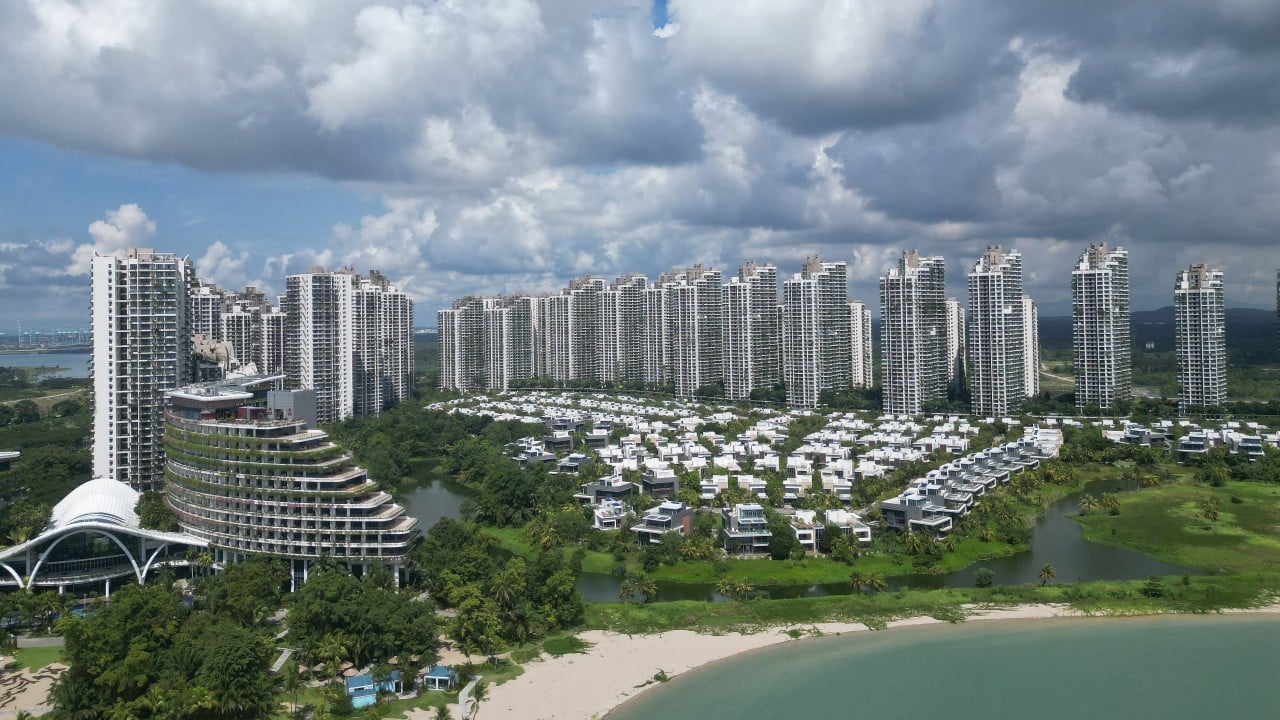
Malaysia’s multi-billion-dollar Forest City development was envisioned as a futuristic eco-paradise for seven hundred thousand affluent residents, sitting just two kilometers across the strait from Singapore. Instead, it mutated into one of the most glaring real estate miscalculations of the twenty-first century, dominated by vacant skyscrapers, distressed investor units, and a sprawling artificial coastline largely devoid of organic pedestrian life. But an empty tower is never truly vacant in the eyes of transnational crime syndicates. When capital flees and governance wanes, criminal organizations move into the void.
Recent law enforcement sweeps across Johor’s signature mega-development revealed a stark reality. Malaysian police raided dozens of residential units and luxury bungalows, unearthing massive online scam operations run by international networks. Hundreds of foreign nationals were arrested, and rooms packed with thousands of mobile phones, computers, and routing hardware were dismantled. The architects of financial fraud realized long before retail investors did that hollowed-out concrete offers the ultimate anonymity.
The Anatomy of an Urban Vacuum
To understand why crime syndicates found a welcome harbor in Forest City, one must examine the mechanics of its failure. Conceived by Chinese developer Country Garden at the height of outbound capital waves, the project relied on a fatal structural flaw. Properties were marketed overseas as high-yield luxury investments to buyers who never intended to live there. When China tightened capital controls and global markets shifted, secondary buyers vanished.
A high-rise tower with single-digit occupancy rates creates a unique logistical ecosystem. Property management companies struggle to cover maintenance costs, security oversight grows lax to cut operational burn, and absentee landlords lose track of who actually holds the keys. For illegal call centers, crypto scam farms, and cross-border fraud rings, these conditions are ideal. High-speed fiber internet, isolated blocks where neighbors rarely cross paths, and security guards accustomed to looking the other way transform a failed luxury enclave into an industrial-scale fraud factory.
The physical isolation that made Forest City an appealing weekend retreat for wealthy tourists also isolated criminal rings from local scrutiny. Tenants could move in under the guise of ordinary remote workers, rent multiple units using corporate shells, and operate around the clock without ever interacting with a local community. Electricity bills soaring past standard residential thresholds were often the only early warning sign that a multi-bedroom apartment was housing dozens of operatives running cross-border phishing campaigns.
Policy Pivots and the Burden of Proof
Malaysian authorities are aggressively attempting to rewrite this narrative. The establishment of the Forest City Special Financial Zone, coupled with duty-free status and tax incentives for family offices and financial institutions, represents a desperate government salvage operation. Ministerial backing and bilateral economic zones with Singapore aim to inject legitimate corporate energy into the district. Asking rents for commercial offices have climbed, and a trickle of specialized firms has begun exploring tax-advantaged footprints.
Yet administrative optimism cannot instantly scrub away structural vulnerabilities. Commercial tenants and corporate executives considering the Special Financial Zone now face rigorous compliance hurdles. Every illicit operation busted within the township adds a layer of administrative friction, forcing authorities to tighten vetting procedures for residents and commercial leases alike. Regulatory compliance costs rise, making businesses think twice before anchoring operations in a zone still battling severe reputational drag.
The local real estate market remains heavily skewed in favor of buyers who are trapped. Thousands of retail investors who purchased units at peak launch prices are staring at steep depreciations, with resale values plummeting to a fraction of their original cost. Even as the master developer cooperates with law enforcement to establish permanent police stations and round-the-clock security posts, restoring market confidence requires more than police presence. It demands the slow, unglamorous accumulation of ordinary human activity, functioning schools, grocery stores, and hospitals that make a neighborhood resilient against exploitation.
Reviving a ghost town requires eradicating the shadow economy that feeds on its emptiness. Until the towers fill with families rather than fraudulent servers, every policy incentive introduced to save Forest City will have to contend with the ghosts of its past.