The fragile ceasefire renewal between Israel and Lebanon is not a triumph of diplomacy. It is a shotgun marriage engineered by an enraged American president who viewed his closest Middle Eastern ally as an immediate threat to his own geopolitical ambitions. When Donald Trump called Israeli Prime Minister Benjamin Netanyahu "fucking crazy" during an expletive-laden phone call, he exposed a raw reality that decades of diplomatic boilerplate have successfully hidden. The strategic alignment between Washington and Jerusalem is no longer an unshakeable bond. It is a transactional arrangement subject to the personal fury and electoral anxieties of the American commander-in-chief.
On the surface, the joint statement issued after the fourth round of U.S.-mediated talks at the State Department offers a familiar blueprint. Israel and Lebanon have agreed to establish pilot security zones south of the Litani River. The Lebanese Armed Forces are tasked with taking full control of these sectors, assuming the responsibility of keeping Hezbollah operatives out. It sounds orderly, almost clinical.
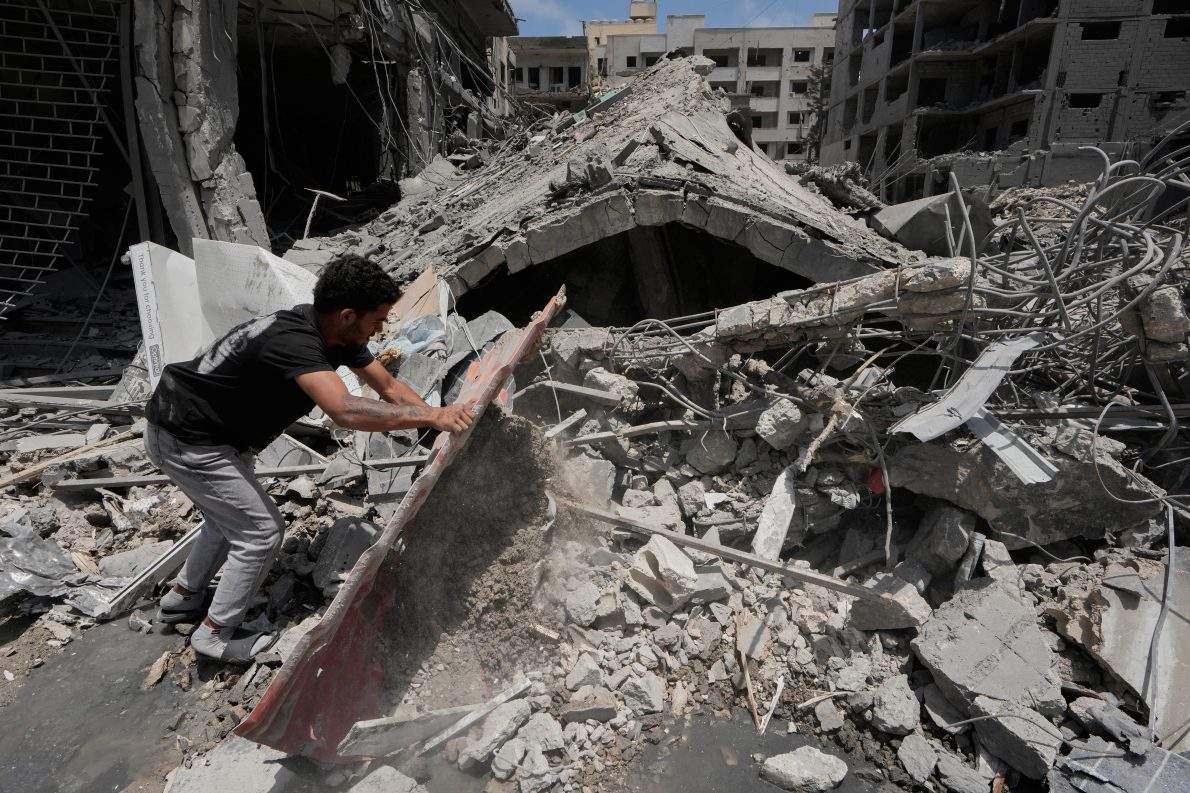
The reality on the ground is anything but orderly. Hours before the second day of negotiations commenced in Washington, an Israeli strike slammed into a car on a bustling highway in Khaldeh, just south of Beirut. Air sirens continue to wail across the Galilee Panhandle as the Israeli military intercepts hostile drones. This is a truce observed primarily in the breach. It exists because Donald Trump forced it into existence, not because either combatant believes the underlying conflict has been resolved.
To understand why this nominal peace is so brittle, one must look past the border villages of southern Lebanon and focus on the Persian Gulf. Trump is currently trapped in a high-stakes poker game with Tehran. The war with Iran, now in its fourth month following devastating joint U.S.-Israeli airstrikes in late February, has choked global commerce. The Strait of Hormuz remains largely blocked, a chokepoint that Trump acknowledges could stay shut through the Labor Day holiday on September 7.
For the White House, the economic consequences are severe. Rising energy prices and pervasive market uncertainty are actively threatening Republican prospects in the upcoming midterm elections. Trump desperately needs a preliminary peace agreement with Iran to reopen the shipping lanes and declare a foreign policy victory.
Iran knows this. Tehran also understands that its regional proxies are its most effective leverage. When Netanyahu ordered relentless airstrikes on Hezbollah strongholds in Beirut's southern suburbs of Dahiya, mass evacuations clogged the streets of the Lebanese capital. In response, Iranian Foreign Minister Abbas Araghchi delivered an ultimatum, declaring that a ceasefire with the United States must apply to all fronts, specifically Lebanon. Tehran backed up the threat by abruptly suspending indirect negotiations with Washington.
That suspension triggered the volcanic phone call on Monday. According to U.S. officials briefed on the conversation, Trump did not merely express policy disagreements; he unleashed a torrent of personal and political grievances. He reminded Netanyahu of the political cover he had provided during the Prime Minister's protracted corruption trials, allegedly shouting that Netanyahu would be in prison if it were not for his intervention.
The underlying message was unmistakable. The United States will not allow its broader regional strategy, or its domestic economic stability, to be hijacked by Israel's tactical objectives in Lebanon. Facing an American president willing to air dirty laundry and threaten total diplomatic isolation, Netanyahu blinked. The planned devastating bombardment of Beirut was quietly shelved, replaced by a reluctant acceptance of the U.S.-brokered framework.
This creates an unsustainable paradox for the Israeli security establishment. Netanyahu's public stance remains defiant. He insists that Israel will continue its ground operations in southern Lebanon until Hezbollah is permanently disarmed and Israeli citizens can safely return to the north. His far-right coalition partners, led by National Security Minister Itamar Ben-Gvir, are openly mutinous, publicly declaring that this is the exact moment Netanyahu should say "no" to Washington.
But saying no to Trump carries a price Netanyahu cannot afford to pay. Prominent Israeli commentators have noted with growing alarm that Israeli defense policy is increasingly dictated by American political timelines. Israel relies heavily on Washington for munitions, intelligence coordination, and veto protection at the United Nations Security Council. By making that support explicitly conditional on Israel's compliance with the Iran negotiations, Trump has effectively stripped Jerusalem of its strategic autonomy.
The security zones established under the renewed agreement are unlikely to provide lasting stability. Expecting the hollowed-out Lebanese army to successfully police and disarm Hezbollah operatives south of the Litani River is a fantasy. Hezbollah has spent decades embedding its infrastructure into the fabric of those very villages. They will not simply pack up and retreat because of a communiqué issued in Washington.
Furthermore, the regional theater remains highly volatile. Iranian-engineered drone strikes continue to test American and allied resolve, illustrated by the recent attack on a passenger terminal building at Kuwait’s main airport. The conflict has become thoroughly globalized, with the financial fallout of a closed Strait of Hormuz directly influencing the decisions made in the Oval Office.
What we are witnessing is a fundamental shift in the mechanics of American hegemony in the Middle East. Under the current administration, alliance management is conducted via raw leverage and explicit coercion. Trump’s subsequent attempts to soften the blow on conservative podcasts, claiming he still likes "Bibi" and that both are simply wartime leaders, cannot erase the structural damage done to the relationship.
The renewed ceasefire between Israel and Lebanon is a temporary band-aid on a gaping geopolitical wound. It was designed to buy Trump the time he needs to force Iran to the negotiating table before the American electorate goes to the polls. It satisfies no one on the ground. Israel feels choked by its patron, Hezbollah remains entrenched, and Iran retains its ability to disrupt the global economy at will. When the immediate political pressure on the White House shifts, the illusion of this ceasefire will vanish as quickly as it was conjured.


