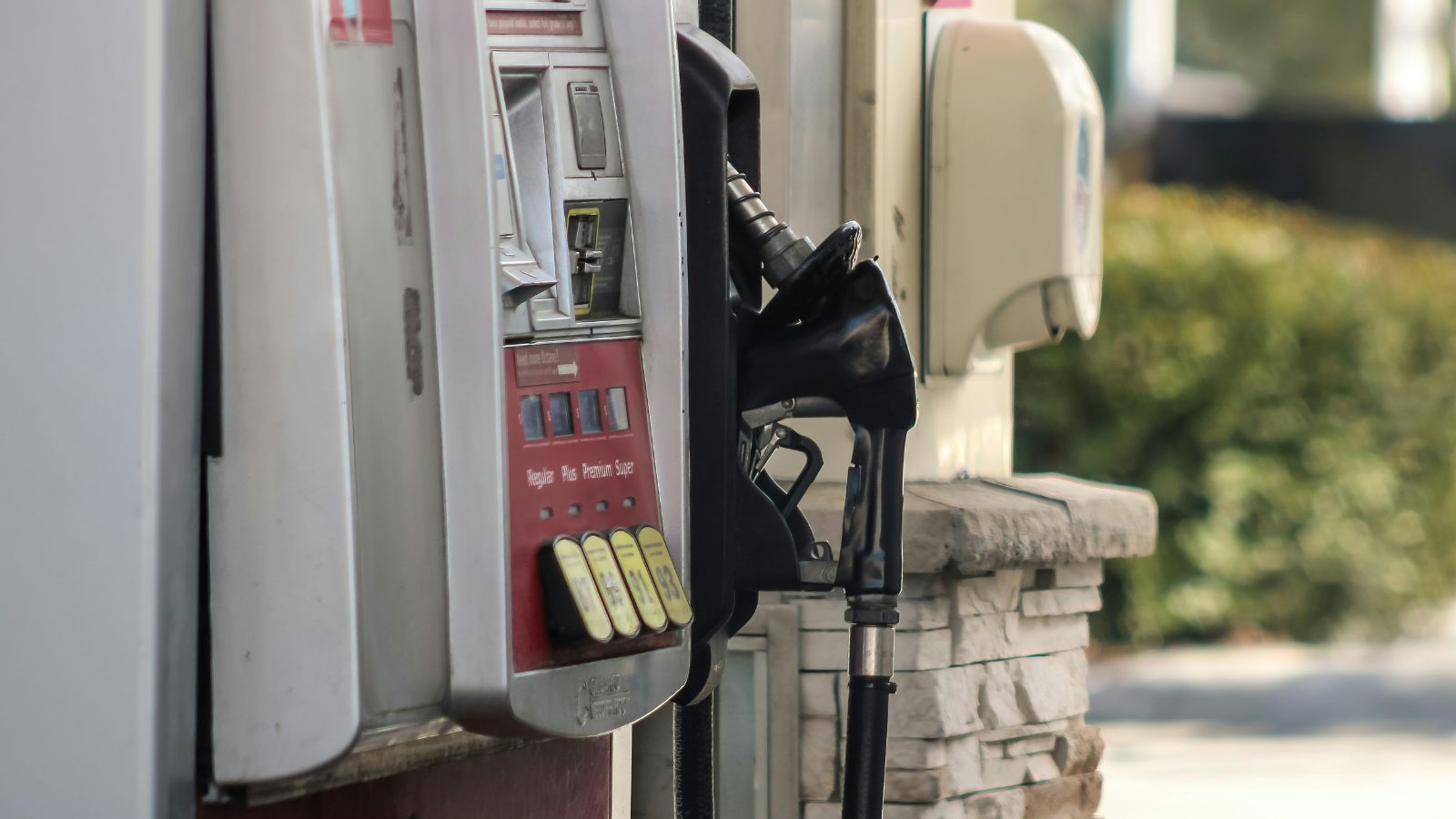
The sticker shock at American gas stations is no longer a temporary fluctuation but a structural crisis. Since the outbreak of hostilities involving Iran, US petrol prices have climbed by a staggering 50 percent, driven by a global crude oil rally that shows no signs of cooling. This spike is the direct result of a choked Strait of Hormuz and a frantic reconfiguration of global energy logistics. While domestic production remains high, the integrated nature of the global market means American consumers are paying a premium for geopolitical instability thousands of miles away.
The Myth of Energy Independence
For years, political rhetoric suggested that hitting record levels of domestic oil production would insulate the United States from Middle Eastern volatility. That turned out to be a fantasy. Oil is a global fungible commodity. When tensions in the Persian Gulf escalate, the price of every barrel on earth moves in lockstep, regardless of whether it was pumped in West Texas or the Rub' al Khali.
Refineries on the Gulf Coast are configured to process specific grades of crude. Many of these facilities still rely on heavy sour imports that are now becoming increasingly expensive or difficult to source as shipping lanes become combat zones. When the cost of the raw input jumps, the refiner passes that cost to the distributor, who passes it to the local station. The consumer is the final link in a chain that is currently under immense tension.
Why the Strait of Hormuz Dictates Your Commute
The geography of the current conflict is the primary driver of the 50 percent increase. Roughly one-fifth of the world’s total oil consumption passes through the Strait of Hormuz. It is the world’s most important transit chokepoint. With the threat of a prolonged blockade or persistent kinetic strikes on tankers, insurance premiums for maritime transport have entered the stratosphere.
Shipping companies are not just paying more for fuel; they are paying for the risk of losing the entire vessel. These "war risk" surcharges are baked into the price of every gallon. Even if a single drop of Iranian oil never reaches American soil, the disruption of the flow to Asia and Europe creates a vacuum. European buyers, desperate to replace lost Middle Eastern barrels, outbid others for Atlantic Basin crude, effectively pulling the price floor out from under the American market.
The Paper Oil Problem
Speculation is the hidden accelerant. On the commodity exchanges in New York and London, traders are not just buying oil; they are buying the fear of future scarcity. The moment news broke regarding the expansion of the conflict, long positions in crude futures surged.
This "paper oil" market often moves faster than the physical delivery of barrels. Financial institutions and hedge funds hedge against inflation by pouring capital into energy futures, creating a self-fulfilling prophecy of rising costs. We are seeing a disconnect where the price at the pump reflects a worst-case scenario that hasn't fully materialized yet, but the market is already pricing it in as a certainty.
The Refining Bottleneck
Crude oil is useless until it is "cracked" into petrol, diesel, and jet fuel. The United States has not built a major new refinery with significant capacity since the 1970s. We are operating on a razor-thin margin of error.
When global prices rise, refiners have every incentive to export finished product to the highest bidder. If a liter of petrol fetches more in Rotterdam than a gallon does in Ohio, the molecules will move toward the profit. This global competition for refined products keeps domestic prices high even when the US is technically "energy independent" on a net basis. The infrastructure is aging, and the maintenance cycles are being pushed to the limit to keep up with demand, leading to unplanned outages that further tighten supply.
Strategic Reserves and Short-Term Band-Aids
The White House often looks to the Strategic Petroleum Reserve (SPR) as a tool to blunt price hikes. However, the SPR is a finite resource designed for total supply disruptions, not for managing the long-term price effects of a regional war.
Releasing oil from the reserve provides a temporary psychological boost to the markets, but it does nothing to address the underlying lack of refining capacity or the permanent shift in the geopolitical risk premium. It is a bucket of water thrown on a forest fire. Traders know the reserve must eventually be refilled, which creates a guaranteed floor for future prices.
The Transport and Logistics Tax
Moving petrol from a refinery to a local gas station requires a complex web of pipelines, barges, and trucks. Each of these segments is sensitive to its own energy costs.
Trucking companies are facing a double-sided blade. They are paying more for the diesel required to deliver the petrol, and they are struggling with a labor shortage that has driven up wages. These "last mile" costs are often overlooked in the broader discussion about crude oil rates, but they account for a significant portion of the recent 50 percent hike. In states with high fuel taxes and strict environmental blending requirements, these pressures are amplified.
Regional Disparities
The pain is not distributed equally. The West Coast, largely isolated from the pipeline networks that serve the rest of the country, relies heavily on waterborne imports. When tankers are diverted or delayed due to international conflict, California and Washington feel the impact immediately and more severely than the Gulf States. This creates a fragmented market where some Americans are seeing prices well above the national average, further straining household budgets in already expensive regions.
The Real Cost of a Protracted Conflict
A 50 percent increase in fuel costs is a massive regressive tax. It hits the lowest earners the hardest, as commuting is rarely an optional expense. When transport costs rise, the price of every physical good—from milk to construction materials—follows suit.
We are entering a period where the "peace dividend" of the last few decades has evaporated. Low energy prices were predicated on stable global trade and open sea lanes. That stability is gone. The current price level reflects a world where energy security is no longer a given, but a costly overhead.
The shift toward electric vehicles or alternative fuels is often cited as the long-term solution. However, the electrical grid and the supply chains for battery minerals are currently facing their own inflationary pressures and geopolitical risks. Transitioning the entire American fleet will take decades, not months. In the meantime, the internal combustion engine remains the backbone of the economy, and its fuel is tethered to the most volatile regions on the planet.
Inventory Management and the "Rocket and Feather" Effect
Economists often track the "rocket and feather" phenomenon in fuel pricing. When crude prices jump, retail petrol prices go up like a rocket. When crude prices eventually fall, retail prices drift down slowly like a feather.
Station owners, burned by rapidly rising replacement costs, are slow to lower their prices. They need to maintain a margin to afford their next delivery, which will be priced at the new, higher market rate. This lag means that even if the conflict in the Middle East saw a sudden de-escalation tomorrow, the 50 percent surge would likely linger at the pump for weeks or months. The financial trauma of the initial spike leaves a long tail of high prices that drains consumer confidence.
The New Baseline for Energy Costs
Investors and consumers must accept that the era of cheap, predictable energy has ended. The current 50 percent rise is not a freak accident; it is the market adjusting to a reality where the world's primary energy taps are located in a theater of war.
The pressure on the American middle class will continue as long as the global supply chain remains vulnerable to a single missile strike or a closed strait. Every time you pull the trigger at the pump, you are paying for more than just the liquid in your tank. You are paying for the defense of the global order, the insurance on a tanker in the Indian Ocean, and the anxiety of a floor trader in Manhattan.
Stop waiting for prices to return to "normal." This is the new normal. The global energy market has been permanently re-priced to account for the end of the unipolar era. The only way to mitigate the impact is a ruthless focus on domestic infrastructure and a sober realization that our energy destiny is tied to geography we cannot control. Adjust your budget, rethink your logistics, and prepare for a volatile decade. The cheap ride is over.