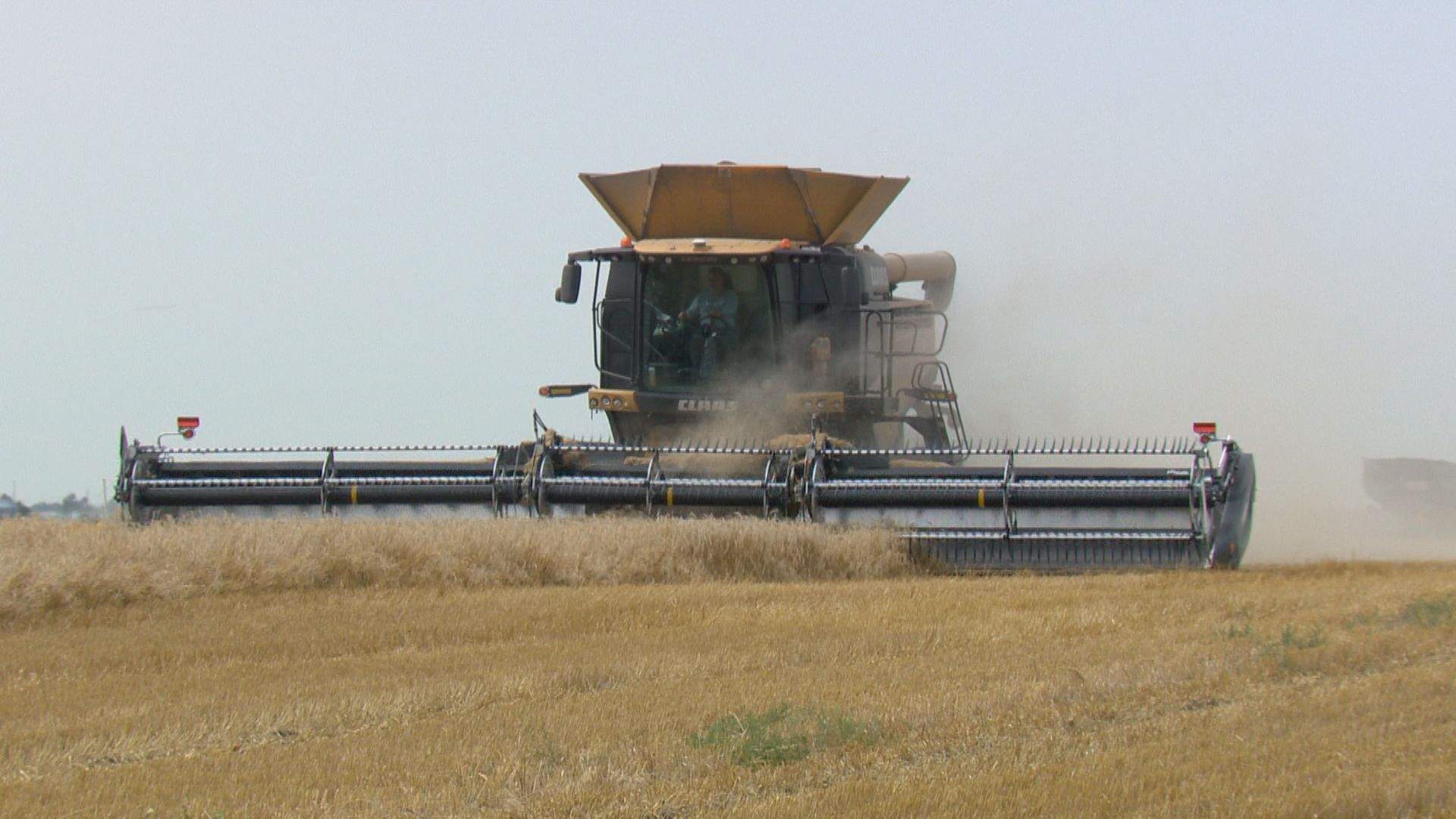
The headlines in late summer often comfort the public with a neat narrative. Crops are in the ground, rain falls, and nature takes its course until machinery rolls across the prairie to gather the bounty. Behind that comforting illusion lies a much more unforgiving reality. When excess moisture and unyielding autumn rains turn black soil into bottomless gumbo, the agricultural timeline breaks down completely. Manitoba's agricultural belt faced a harrowing rhythm of delays, leaving combines parked in waterlogged ditches while producers watched million-dollar investments hang in the balance.
To understand why a late-season scramble to catch up on fieldwork is much more than a routine seasonal inconvenience, one must look closely at the compounding mechanics of modern prairie farming.
The Anatomy of a Saturated Delay
Agriculture does not operate on an elastic schedule. Every crop planted across the Canadian Prairies follows an exact biological clock, dictating when it emerges, flowers, matures, and dries down enough to pass through a combine cylinder. When excessive spring moisture delays initial seeding operations by weeks, it initiates a domino effect.
Crops that should have matured under the high-intensity heat of July and August were pushed deeper into a wetter, cooler autumn. In regions like southwestern and northwestern Manitoba, precipitation totals soared significantly above historical norms, keeping fields stubbornly saturated.
When the calendar turned toward September, the provincial harvest sat significantly behind historical averages—hovering near 40 percent complete while previous years had cleared the halfway mark by the same point. Combines cannot float. Heavy machinery rolling across waterlogged clay soils risks deep rutting, severe soil compaction, and getting permanently stuck axle-deep in the muck.
The physical delay creates an operational bottleneck akin to a railway pileup. Canola swathing, spring wheat combining, and dry bean desiccation all collided into the same compressed calendar window. Producers were forced into agonizing triage, deciding which fields to prioritize and which acres carried a higher probability of total write-off.
The Hidden Cost of Waiting
Optimism is a mandatory trait for anyone who signs a loan with an agricultural lender, but optimism does not dry grain. As combines sat idle waiting for a dry spell, the quality of standing crops began to deteriorate.
Every rain event that hits a mature, unharvested field extracts a heavy toll. Canola pods become brittle, leading to pod drop and shatter losses. Cereal crops subjected to endless cycles of wetting and drying experience sprouting in the ear, low test weights, and severe fungal downgrading. Grain that might have graded high-value milling wheat or top-tier oilseed suddenly gets relegated to feed channels, drastically slashing revenue per acre.
Consider a hypothetical grain farm managing twelve hundred acres of spring wheat and canola in the western region of the province. If prolonged moisture pushes the harvest window past the tipping point, a drop from a number one grade to a feed grade can easily erase forty to fifty percent of the anticipated net margin on those specific acres. The bills for fertilizer, seed, and chemical were paid months prior. The bank loan remains static, but the realized market value of the crop shrinks with every passing week of rain.
Even as a sudden stretch of open weather later in the season allowed provincial progress numbers to climb rapidly—pushing toward the finish line by late October—the aggregate completion percentage tells only half the story. Pushing numbers up on a spreadsheet does not reverse the grade losses already locked into the bins.
The Equipment and Labor Strain
When the weather finally breaks and fields crust over enough to bear weight, the pressure shifts instantly from psychological endurance to mechanical survival. Equipment does not run indefinitely without maintenance, and modern high-capacity combines operating twenty-four hours a day demand constant parts replacement and servicing.
Local implement dealerships and mechanics become critical nodes in the survival chain. Bearings, belts, and headers fail under the immense torque required to push through tough, damp crop material. Operators work through the night under the glare of high-intensity LED light bars, trading sleep for forward momentum before the next front rolls in.
This frantic pace introduces acute safety risks. Fatigue-induced errors during high-stress harvest sprints account for a disproportionate share of machinery accidents and field fires. Dry crop residue wrapping around hot exhaust manifolds combined with long hours create a persistent hazard that keeps rural fire departments on edge throughout the autumn push.
Structural Pressures on Grain Handling
The logistical shockwaves do not stop at the farm gate. Grain elevators, crushing plants, and export terminals operate on tight scheduling models designed to handle a steady, predictable flow of incoming commodities.
When weather compresses the harvest window into a furious, abbreviated dash, the grain handling system experiences severe acute congestion. Country elevators fill to capacity in days rather than weeks. Grain trucks queue for hours on rural access roads, waiting to dump loads before heading back to the field for another round.
Transportation bottlenecks ripple outward into the rail networks. Grain companies scramble to secure hopper cars, while railways attempt to balance unit trains heading toward export positions on the West Coast against domestic processing demand. If the crop comes off tough or damp, country elevators must expend significant energy and propane to dry the grain before storage, adding another layer of cost and delay to the commercial chain.
Looking Past the Final Percentage
By the time the final fields of corn and late-seeded soybeans are scraped off under frosty November skies, the collective exhaustion of the agricultural community is palpable. Official crop reports eventually log the provincial harvest at or near completion, offering a neat statistical period to a messy year.
Yet, treating harvest completion as a binary success metric misses the structural vulnerabilities exposed by extreme weather volatility. Climate patterns across the northern plains are shifting toward sharper extremes, characterized by sudden moisture deluges followed by compressed windows of opportunity.
Producers are forced to re-evaluate their entire operational framework. Investment decisions are shifting toward larger, wider, and more aggressive machinery fleets capable of harvesting massive volumes of crop in vanishingly small weather windows. On-farm grain drying and storage infrastructure are no longer viewed as optional luxury additions; they are absolute prerequisites for survival in an era where autumn weather can no longer be trusted to naturally dry the crop in the field.
The resilience of Manitoba's agricultural sector is well-documented, built on generations of adaptation and grit. But grit alone cannot offset the financial erosion of repeated quality downgrades and soaring operational overhead. As the machinery is finally winterized and parked in sheds across the plains, the true reckoning of the season takes place around kitchen tables and accountant's desks, where the margins between a viable farm business and a restructuring conversation grow narrower with every erratic season.