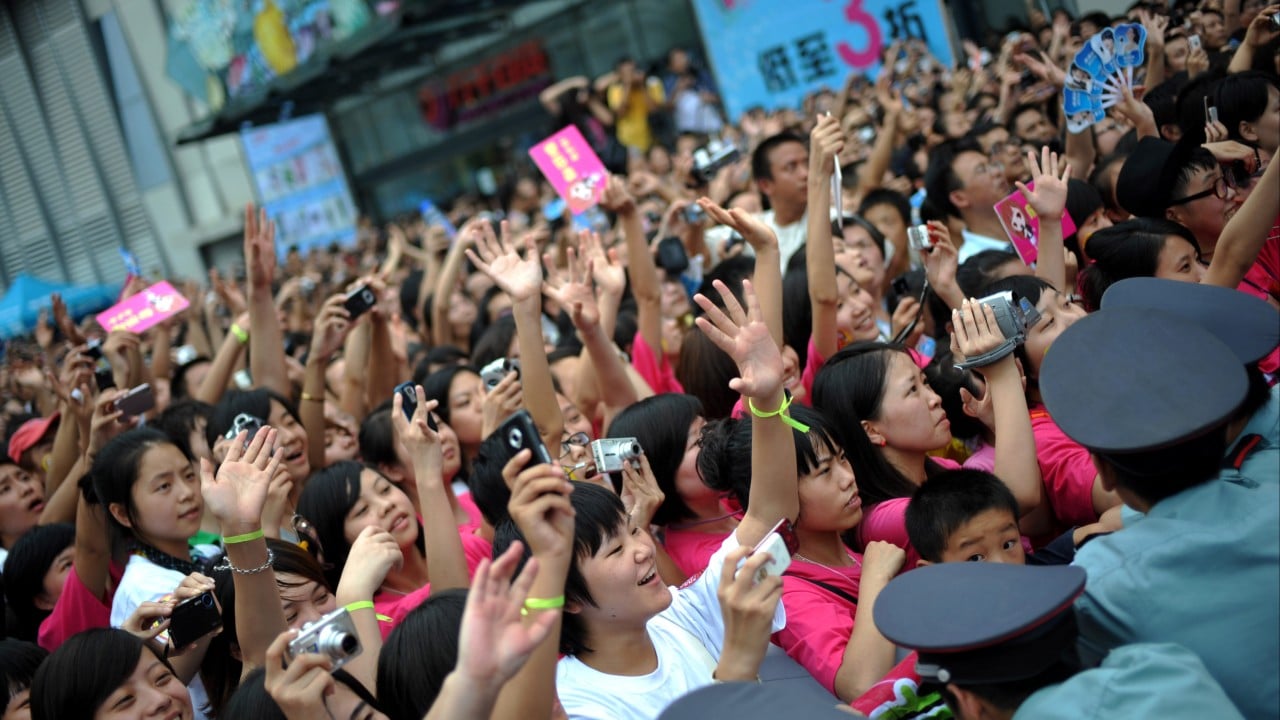
The modern obsession with Chinese "idols" is not a byproduct of social media or talent shows. It is a dormant psychological trait that has been part of the cultural fabric for nearly two millennia. While Western observers often view the "rice circle" (fanquan) culture as a chaotic digital-age anomaly, the reality is far more visceral. The desire to literally and figuratively consume the object of one's affection traces back to the Wei and Jin dynasties, where fans chased poets to their deaths or quite literally attempted to swallow their words. This historical precedent explains why today’s fans are willing to bankrupt themselves for a billboard: they aren't just supporting an artist; they are participating in a ancient, ritualistic form of devotion that borders on the religious.
From Ink to Marrow
In the year 815, a small-time official and poet named Li He died at the age of 26. History remembers him as the "Ghost Poet," but his fans remembered him as something closer to a deity. During his life, and for centuries after, the devotion shown to such figures wasn't expressed through "likes" or "shares." It was physical.
There are historical accounts of fans who, upon reading a poem that moved them, would write the verses on paper, burn the paper, and mix the ashes with water to drink. This wasn't madness. It was a belief in the transference of essence. By eating the idol’s poems, the fan believed they could internalize the poet’s genius. It was the ultimate "merchandise" purchase.
This ritualistic consumption highlights a fundamental difference between Western and Chinese fan psychology. In the West, fandom is often about observation and appreciation from a distance. In the Chinese historical context, it is about incorporation. You do not just watch the idol; you become one with the idol. This explains the terrifying intensity of modern "sasaeng" fans (obsessive stalkers) in the region. They are the logical, albeit extreme, evolution of the ink-drinkers.
The Beautiful Death of Pan An
Long before the curated perfection of Instagram, there was Pan An. A scholar and poet of the Jin Dynasty, Pan An is still the gold standard for male beauty in China. Historical records describe him driving through the streets of Luoyang while women—old and young—threw fruit into his carriage until it was full. This was "throwing fruit to fill the car," the first recorded instance of fan gifts.
However, the dark side of this adoration was immediate. Pan An couldn't walk the streets without being mobbed. His life was a gilded cage where his physical form was public property. The pressure of this visibility eventually led him into the crosshairs of political intrigue, resulting in his execution and the extermination of his entire family.
The lesson here is one that modern agencies still haven't learned: the crowd that gives you the fruit is the same crowd that will eventually demand your head. The volatility of the mob is a constant. In the 2020s, we see this when a "Little Fresh Meat" (young, feminine-presenting male idol) loses a million followers overnight because he was spotted smoking or dating. The fan’s "ownership" of the idol’s moral and physical purity is a direct inheritance from the days of Pan An.
The Business of Manufactured Intimacy
If the ancient fans were driven by spontaneous spiritual hunger, modern agencies have turned that hunger into a high-precision extraction machine. The "fanquan" ecosystem is a multi-billion dollar industry built on parasocial labor.
Agencies don't just sell music; they sell the illusion of a debt. They position the idol as a vulnerable figure who can only succeed if the fans work. This shifts the dynamic from "fan as consumer" to "fan as employee."
- Data Laundering: Fans spend 18 hours a day managing multiple accounts to "irrigate" (boost) an idol’s social media statistics.
- Crowdfunding Manipulation: Encouraging fans to buy hundreds of thousands of digital copies of a single to ensure it tops the charts.
- Moral Policing: Fans act as a volunteer PR army, attacking any critic or rival who threatens the idol’s brand.
This isn't just enthusiasm; it's a sunk cost fallacy on a national scale. Once a fan has spent three months’ salary on "voting" for an idol in a survival show, they are no longer just a listener. They are a shareholder. And like any shareholder, they demand a say in how the "company" (the idol) lives their private life.
The Digital Alchemists
The move from ink-drinking to digital data-boosting isn't as large a leap as it seems. Both are attempts to bridge the gap between the mundane self and the divine idol.
In the Tang Dynasty, the poet Lu Tong was so revered that fans would try to mimic his "tea-drinking" rituals to achieve his level of clarity. Today, fans use "Super Topics" on Weibo to coordinate massive, synchronized actions that mimic the rituals of the past.
Comparison of Devotion Styles
| Feature | Ancient Fan Culture | Modern Fanquan Culture |
|---|---|---|
| Physical Act | Eating poem ashes / Burning incense | Buying 500 digital albums / LED billboards |
| Primary Goal | Intellectual/Spiritual Transference | Commercial Dominance / "Face" |
| Risk Factor | Social Ostracization | Financial Ruin / State Crackdown |
| Social Structure | Loose literary circles | Highly militarized "Rice Circles" |
The transformation of the fan from a solitary seeker of beauty into a cog in a digital machine has stripped away the art. We are left with the industrialization of obsession. When the Chinese government launched the "Qinglang" campaign to clean up fan culture, they weren't just fighting toxic internet comments. They were fighting a deep-seated cultural impulse that perceives the idol as a vessel for the fan's own identity.
The Commodity of Suffering
One of the most overlooked factors in this "definitive" history is the role of suffering. In ancient China, the best poets were the ones who suffered most—exile, poverty, and loss were the catalysts for great art. Fans bonded over the poet’s pain.
Modern idols are marketed similarly. The "trainee" narrative is a carefully scripted story of hardship. They practice for 14 hours a day in windowless basements, they don't see their families, and they live on strict diets. Agencies weaponize this suffering to trigger a "protective" instinct in fans.
This creates a toxic feedback loop. The more the idol suffers, the more the fan feels obligated to spend. If the idol is successful, the fan feels their "investment" paid off. If the idol fails, the fan feels a personal sense of grief. It is a psychological trap that turns entertainment into an endurance sport.
The State vs. The Stan
The final evolution of this saga is the collision between the fan circles and the state. In ancient times, the Emperor was the only "idol" allowed to have a cult of personality. Any poet or scholar who garnered too much influence was viewed as a threat to social stability.
History is repeating itself. The Chinese government’s recent crackdown on "irrational" celebrity worship is a recognition that the "rice circles" have become a shadow government. They have their own hierarchies, their own funding mechanisms, and their own "laws." They can mobilize millions of people faster than many official organizations.
By banning "rankings" and "fundraising," the state is attempting to forcibly de-ritualize the relationship between the idol and the fan. They want to return the fan to the role of a passive observer. But you cannot simply legislate away two thousand years of cultural DNA. You can take away the leaderboards, but you cannot take away the hunger to "eat the poems."
The current quiet in the industry is not a resolution; it is a stalemate. The energy that once drove fans to drink ash is currently being suppressed, but it is not gone. It is searching for a new vessel.
Understand that the next "big thing" in Chinese entertainment won't be a new genre of music or a new film style. It will be the next clever way for fans to bypass the rules and find a way to consume their idols again. The thirst for the divine is too old to be killed by a regulation.
Stop looking at "rice circles" as a teenage fad. Start looking at them as a modern manifestation of a spiritual void that has been being filled the same way since the Han Dynasty. The medium changed, but the madness remains identical.
Protect your capital. The industry isn't selling stars; it's selling the right to be consumed by them.
Key Takeaways for the Industry
- Agency Liability: Any agency relying solely on "data" fans is building on sand. The state has proven it will prioritize social order over entertainment tax revenue.
- The Authenticity Pivot: As "manufacturing" becomes harder, the market will shift toward idols who appear "un-managed," even if that too is a performance.
- Niche over Mass: The era of the "National Husband" is ending. The future lies in hyper-specific subcultures where fans can fly under the radar of mass-market regulations.
Invest in the infrastructure of the subculture, not the face of the superstar. The face will eventually be discarded by the mob or the government. The hunger of the fan, however, is a permanent market force.