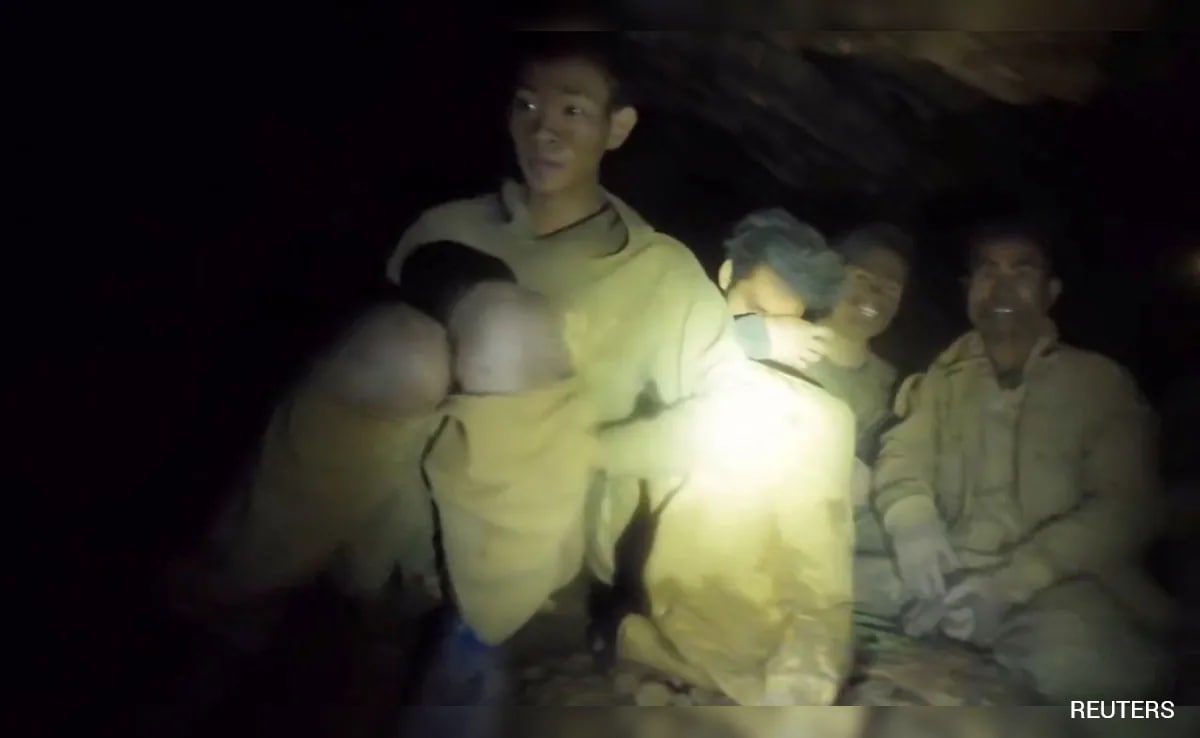
Five men are alive today because elite divers literally felt their way through liquid mud inside a remote mountain in central Laos. Over a grueling 48-hour window ending Saturday, May 30, 2026, an international coalition pulled five exhausted gold prospectors from a terminal chamber deep within a flooded cave system in Xaisomboun province. Two miners remain missing, their chances of survival dwindling by the hour. The successful extraction of the five survivors exposes the extreme physical and structural vulnerabilities defining modern ultra-deep wilderness rescues.
The incident began on May 20, 2026, when seven local villagers entered the cave near Longcheng district to seek out valuable mineral deposits, lured by unusually colored rocks and sand. Sudden, heavy rains triggered flash flooding and massive landslides, sealing the entrance and trapping the men 300 meters from safety. One companion escaped before the collapse, alerting authorities and sparking a ten-day race against time that drew veterans of the legendary 2018 Tham Luang Thai cave rescue back into the subterranean darkness. For a different look, read: this related article.
Diving in Coffee
The physical environment inside the Xaisomboun cave system presented obstacles that standard search and rescue protocols are entirely unequipped to handle. While early media dispatches focused heavily on the drama of the multi-nation response, they routinely glossed over the fluid mechanics and structural geology that made this operation significantly more volatile than the 2018 event in Thailand.
Australian cave diver Josh Richards described the water conditions inside the tunnels simply as "diving in coffee." Heavy rains did not merely fill the cave; they liquidated the highly unstable clay and mud walls of the mountain, transforming the water column into a thick, opaque slurry. Similar insight on this matter has been provided by NPR.
[Cave Entrance]
       │
       ▼ (5km Mountainous Jungle Trek)
[Choked Sump] ───► [60cm Restriction] ───► [25m No-Turn Sump] ───► [Terminal Chamber]
 (Zero Visibility)   (Sharp Jagged Rock)   (Unstable Clay Walls)   (5 Survivors Found)
In this environment, high-powered dive lights are useless. Backscatter turns the beam into a blinding white wall. Divers like Finnish expert Mikko Paasi and Thai diver Norrased Palasing had to navigate entirely by tactile sensation, crawling through a 25-meter-long flooded choke point with zero visibility.
The Geometry of Entrapment
The structural architecture of the cave imposed brutal physical constraints on the rescue team.
- The 60-Centimeter Ceiling: Long stretches of the primary access tunnel measured just 60 centimeters in height. Rescuers could not swim; they had to crawl flat on their stomachs while pushing or pulling heavy scuba cylinders ahead of them.
- The No-Turn Zone: The 25-meter flooded segment was so narrow that a diver could not turn around. If a piece of equipment failed or a panic incident occurred, the only way out was backing out blindly over razor-sharp rock edges.
- Abrasive Topography: The cave walls consisted of highly abrasive, jagged stone capable of tearing drysuits and severing critical guide lines.
The Psychology of the Untrained Diver
Finding the men alive on Wednesday was only half the battle. The true crisis emerged during the extraction phase. Unlike the classic image of open-water diving where a diver floats weightlessly, cave diving requires absolute spatial awareness and flawless buoyancy control.
Teaching dehydrated, malnourished prospectors how to survive a blackout dive through a tight tube is a psychological nightmare. Norrased Palasing had to conduct emergency underwater breathing tutorials on a muddy ledge, instructing the men to breathe strictly through their mouths.
The greatest hazard in an extraction like this is not equipment failure; it is survivor panic. A single frantic movement inside a 60-centimeter tunnel can dislodge a regulator, mask, or kick up enough sediment to trap both the survivor and the rescue diver permanently. The first survivor brought out on Friday emerged unsteadily, covered in mud and crying out from severe hand injuries sustained while scrambling through the jagged rock. On Saturday, the remaining four men were pulled through the same gauntlet, wrapped in foil blankets, and placed on stretchers with oxygen masks.
The Sovereign Logistical Bottleneck
While individual heroism dominated the headlines, the systemic friction of conducting a multi-nation rescue under a highly insular government represents the true structural hurdle of the operation. Xaisomboun province is a rugged, historically sensitive region. Reaching the actual cave site required a punishing five-kilometer hike up vertical mountainous jungle terrain.
+-----------------------------------+-----------------------------------+
| Logistical Asset                  | Operational Reality               |
+-----------------------------------+-----------------------------------+
| Heavy Pumping Equipment           | Blocked by mudslides; required    |
|                                   | heavy machinery to clear roads    |
+-----------------------------------+-----------------------------------+
| Specialized Oxygen Resupply       | Delayed by remote mountain paths; |
|                                   | required manual portering         |
+-----------------------------------+-----------------------------------+
| Incident Command System (ICS)     | Fractured between international   |
|                                   | volunteers and local military     |
+-----------------------------------+-----------------------------------+
The Laotian rescue group had to formally appeal to Thai charities for basic industrial assets, including high-capacity water pumps, generators, and thermal imaging devices. The lack of an established, centralized domestic incident command system meant that early efforts were heavily fragmented.
Precious time was spent clearing mudslide debris just to get heavy machinery close enough to begin draining the cave. Draining the water was critical not just for extraction, but to stabilize the cave atmosphere. When a cave fills with water and organic material, the air quality in isolated chambers rapidly degrades, creating pockets of deadly carbon dioxide.
The Missing Two and the Reality of Cave Search
By Saturday evening, the focus shifted to a grim reality. Rescuers have already searched roughly 95 percent of the known accessible tunnel system. Kengkaj Bongkawong of the Metta Tham Rescue Kalasin indicated that teams plan to push an additional 20 to 25 meters beyond the terminal chamber where the survivors were found, but this section remains completely submerged.
Mikko Paasi noted to reporters that there are simply no dry spots left in the unsearched zones. In a completely flooded cave passage, an untrained individual without breathing apparatus cannot survive more than a few minutes. The sand and gravel washed into the system by the initial flash flood likely filled these deep recesses entirely, sealing any secondary pockets.
The mission now transitions from a dynamic rescue to a hazardous recovery operation. The international teams face a choice: continue risking elite divers in an unstable mud-choked cave system with zero visibility, or call off the search as the seasonal rains threaten to completely inundate the mountain once more.