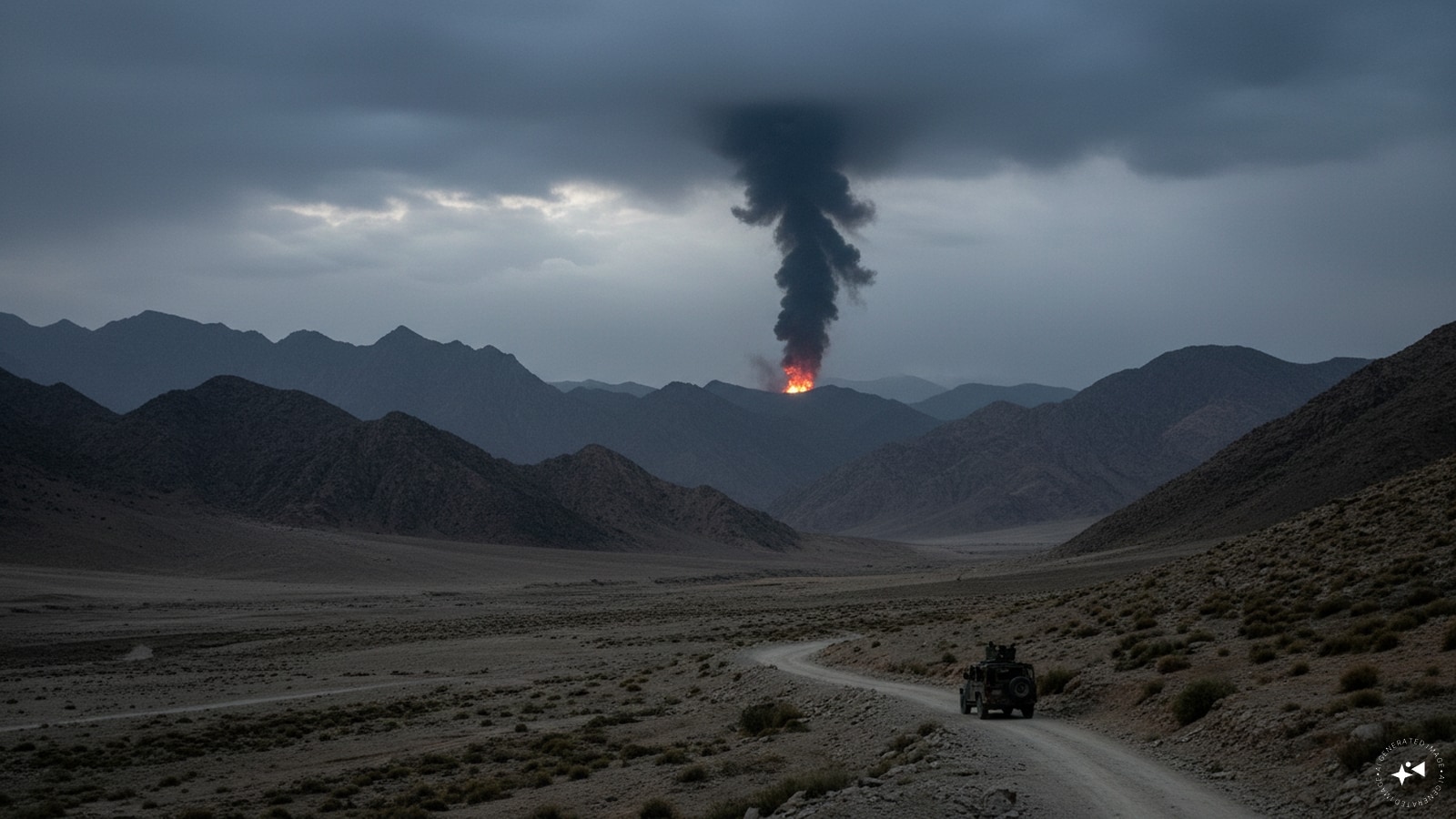
The Durand Line has never been just a line on a map. For decades, it has served as a bleeding scar separating two neighbors whose fates are hopelessly and dangerously intertwined. When Pakistani warplanes cross over to strike targets inside Afghan territory, the headlines usually focus on the immediate explosions and the official denials. But the deeper reality is far messier than a simple exchange of cross-border fire.
If you want to understand why Islamabad and the Taliban administration in Kabul have drifted into a state of open, persistent conflict, you have to look past the press releases. You have to look at how a shared ideology, a porous frontier, and a rising tide of domestic insurgency created a powder keg that everyone saw coming.
The TTP Factor That Changed Everything
When the Afghan Taliban swept back into power in Kabul, many in Islamabad initially breathed a sigh of relief. They expected a friendly government next door. Instead, they got a complicated roommate who refused to evict troublesome guests.
At the heart of this breakdown is the Tehrik-e-Taliban Pakistan, commonly known as the TTP. While ideologically cut from the same cloth as the Afghan Taliban, the TTP focuses its fire entirely on the Pakistani state. Over the past few years, attacks on police compounds, military posts, and infrastructure inside Pakistan have surged dramatically.
Islamabad’s stance is blunt and unyielding: the TTP uses safe havens inside Afghanistan to plan and launch these assaults. Afghan authorities routinely deny these claims, insisting that no foreign militant group operates freely on their soil. But patience in Islamabad ran dry long ago. When backroom diplomatic channels and requests for crackdowns failed, Pakistan turned to military air power, launching operations targeting militant hideouts in border provinces and even near the capital.
Retaliation and the Spiral of Escalation
Airstrikes rarely solve deep-seated security crises. Instead, they trigger immediate, messy blowback. Whenever Pakistani jets strike eastern and southeastern provinces like Paktika, Khost, or Nangarhar, Afghan border forces frequently respond with heavy artillery fire aimed at military posts along the frontier.
This tit-for-tat dynamic has transformed localized skirmishes into full-scale border warfare. Major commercial crossings like Torkham and Spin Boldak routinely face closures, choking off trade and stranding thousands of travelers. For ordinary citizens on both sides of the border, the economic fallout is brutal. Small-scale traders, truck drivers, and families with relatives across the divide bear the brunt of every political breakdown.
International mediators—including figures from Qatar, Turkey, and various diplomatic envoys—have tried stepping in to broker ceasefires. Brief pauses during holidays like Eid have occasionally quieted the guns, but these truces rarely hold. The underlying grievance remains unaddressed: Pakistan demands an end to cross-border terrorism, while Kabul accuses Islamabad of violating its national sovereignty.
Why Simple Solutions Do Not Work
It is easy to argue that better fencing or heavier military patrols will secure the frontier. Pakistan has spent billions constructing a massive border fence along the nearly 2,600-kilometer stretch, yet militant groups continue to find ways through or around the barriers. The rugged terrain, deep tribal loyalties, and shared ethnic ties across the Pashtun belt make total border control an illusion.
Furthermore, putting pressure on the Taliban regime has limits. Decades of war have left Afghanistan isolated and economically devastated, leaving Kabul with little incentive or capacity to police remote mountain ranges to satisfy Islamabad's security demands. At the same time, domestic political pressure inside Pakistan leaves its military leadership with zero room to absorb mounting domestic casualties from militant attacks.
The cycle of accusation, airstrike, and retaliation is likely to persist because neither side can afford to back down. Until a realistic framework for managing cross-border security takes root, the frontier will remain one of the most volatile flashpoints in South Asia.



