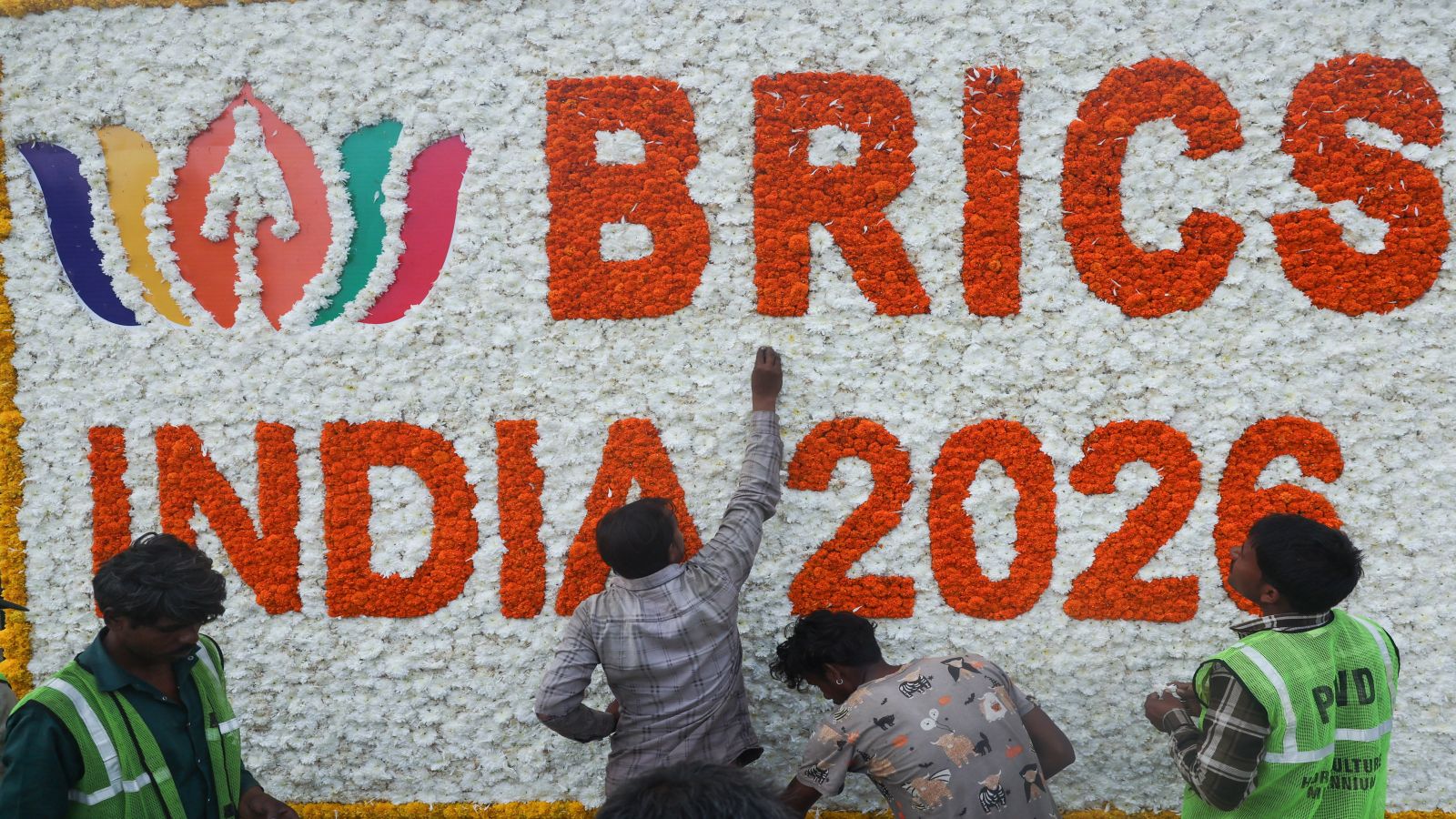
Everyone loves a good growth story. The media feeds on summit handshakes, group photos, and breathless headlines about a new economic bloc rewriting the global order. The consensus narrative sounds smooth and comforting: BRICS is quietly building a parallel financial system, stacking gold, and systematically dismantling the dollar's monopoly without firing a single shot.
I have watched executives and institutional strategists panic over spreadsheets projecting total de-dollarization by decade's end. It is theater.
Strip away the diplomatic communique boilerplate and the carefully curated photo ops from recent summits. What remains is a fractious coalition of rivals bound together by little more than a shared distaste for Washington's foreign policy whims. They do not trust each other. They trade in each other's currencies under strict bilateral duress. They maintain active border disputes.
The Fatal Flaw of Consensus Economics
The mainstream media treats BRICS like a unified corporate merger. That is a fundamental category error. A true economic bloc requires deep institutional alignment, capital mobility, transparent dispute resolution, and a willing hegemon to absorb trade deficits. The Eurozone has these mechanisms, and it still stumbles. BRICS has none of them.
Consider the baseline mechanics of international trade settlement. To bypass the greenback, surplus nations need a currency they can actually store without fear of sudden confiscation, capital controls, or arbitrary devaluation. Does anyone genuinely believe Beijing will accumulate billions of Indian rupees with zero guarantees of convertibility? Conversely, does New Delhi want to anchor its national sovereignty to an unhedged hoard of yuan while its military stares down Chinese troops in the Himalayas?
Of course not.
Bilateral trade deals settled in local currencies sound revolutionary in a press release. In reality, they are messy barter systems. If Russia sells oil to India for rupees, Moscow faces a structural surplus of currency it can only spend on Indian goods. If India does not export enough high-value goods that Russia actually wants, those rupees sit in accounts gathering dust. That is not a challenge to global finance. That is high-cost inefficiency masquerading as geopolitical defiance.
The De-Dollarization Mirage
Look at the data that the headlines ignore. Central banks continue to hoard US Treasuries and dollar-denominated assets not out of historical nostalgia, but out of absolute necessity. Liquidity dictates reality.
I spent years managing cross-border capital flows. When markets panic, capital does not flee to a basket of volatile emerging market currencies with opaque governance frameworks. It rushes straight into the deepest, most liquid debt market on earth.
+------------------------+---------------------------------+
| Asset Class            | Global Liquidity & Depth        |
+------------------------+---------------------------------+
| US Treasuries          | Unmatched / Trillions Daily     |
| BRICS Local Currencies | Restricted / Thin / Controlled  |
+------------------------+---------------------------------+
You cannot fiat your way around market depth. Until a currency features open capital accounts, independent judiciaries that protect foreign capital from political whims, and infinite secondary market liquidity, it is a domestic token with regional side effects. The dollar maintains its crown not because Washington forces the world to use it, but because nobody has built an alternative that does not carry twice the political and financial risk.
Why the Expansion Strategy Backfired
Adding more members to the coalition does not dilute American hegemony; it accelerates internal paralysis.
When you expand a club from five members with divergent interests to ten, fifteen, or twenty, you replace efficiency with endless compromise. Try reaching a consensus on monetary policy, trade tariffs, or institutional leadership when your members include arch-rivals, oil autocracies, and fragile democracies teetering on currency collapse.
Imagine a scenario where the bloc attempts to launch a unified commodity-backed trading currency. Who sets the monetary policy? Beijing? That hands absolute financial dominance to a single capital city, a prospect that scares Moscow and New Delhi far more than Federal Reserve rate hikes ever could. Decentralized sovereignty cannot survive centralized monetary control.
This is the exact contradiction the experts gloss over. They mistake the desire for an alternative with the capacity to execute one.
The Uncomfortable Truth About Global Fragmentation
Do not mistake my skepticism of BRICS for an endorsement of western economic policy complacency. Washington has weaponized the financial plumbing of the world for decades through secondary sanctions, asset freezes, and SWIFT exclusions. That overreach created the exact political motivation for emerging markets to look for an exit door.
Nations are hedging their bets. They want insurance policies. But buying insurance is entirely different from building a new insurance company from scratch.
When you look past the declarations on cooperation and the refusal to issue dramatic, market-shaking announcements, the reality is stark. The coalition survives precisely because it avoids binding commitments. As long as it remains a talking shop rather than a treaty organization with teeth, everyone can play their domestic political audience at home while continuing to conduct 90 percent of their real business using western financial infrastructure.
Stop treating every summit as an inflection point. Watch where capital moves when a crisis hits, not where politicians stand when the cameras roll.
The next time someone tells you the global financial architecture is shifting eastward overnight, ask them how they plan to convert billions of unconvertible bilateral trade surpluses into liquid assets during a global liquidity crunch.
They will change the subject.