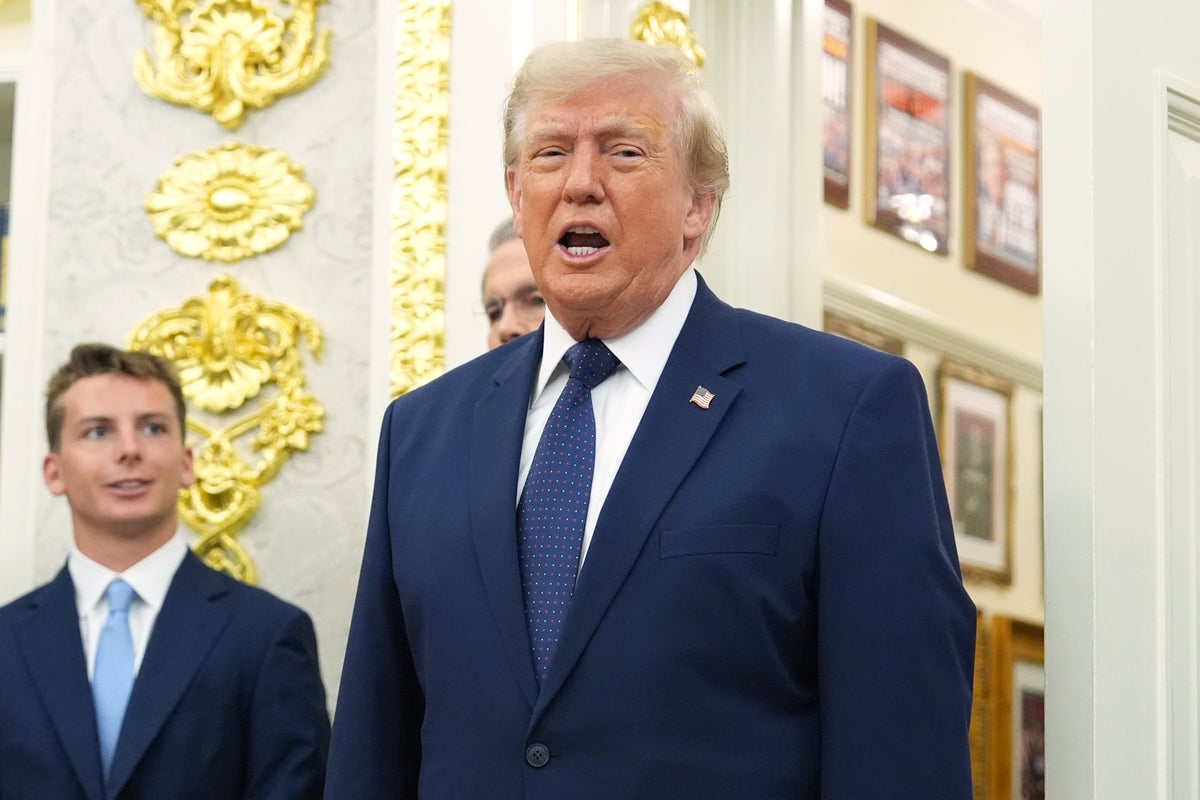
A standard secure tablet went airborne inside the Oval Office because a direct patch to Ottawa failed to connect. When reports surfaced that Donald Trump hurled his communications device across the room during a botched attempt to reach Canadian Prime Minister Mark Carney, public attention fixated immediately on the temperamental display. Yet the tantrum itself obscures a far more troubling reality. The modern White House operates under a system where fragmented technological protocols and erratic diplomatic backchannels frequently collide, leaving official state relations vulnerable to the mechanics of a glitch.
The incident occurred against a backdrop of escalating trade friction and tariff disputes that have strained the historic alliance between Washington and Ottawa. When a leader relies on immediate, unfiltered access to foreign counterparts, any technical delay becomes a political flashpoint. This was not merely an isolated outburst. It was the predictable result of an administration attempting to bypass traditional diplomatic channels using consumer-adjacent secure technology that often fails under pressure.
The Friction in the Secure Network
The White House Communications Agency handles some of the most sophisticated secure transmission networks in the world. However, connecting a direct, encrypted call to a foreign head of state requires an intricate handshake between disparate national security systems. In this instance, a series of dropped cryptographic handshakes delayed the connection, transforming a routine piece of government hardware into a target of presidential frustration.
White House staff frequently manage a delicate balance between security compliance and the executive demand for instantaneous communication. The pressure to deliver immediate connectivity means that technical technicians often bear the brunt of political anger when systems lag. In the high-stakes environment of international trade negotiations, a thirty-minute delay caused by a software update or a key-exchange failure is interpreted not as a technical hiccup, but as a bureaucratic failure.
Traditional diplomacy utilized structured schedules and advance briefings prepared by the State Department to insulate foreign policy from sudden personal friction. When an administration strips away these bureaucratic shock absorbers in favor of direct, spontaneous executive contact, the technology itself becomes the bottleneck. When the technology stumbles, the policy stumbles with it.
Washington and Ottawa on a Collision Course
The underlying tension animating that failed phone call runs deep. The relation between the United States and Canada has faced structural shifts as Washington pushes aggressive tariff policies, fundamentally upending decades of cross-border economic integration. Prime Minister Mark Carney has held a firm line against American economic pressure, explicitly stating that Canada is not open to coercive buyouts or threats.
- Tariff Pressures: The threat of broad 25 percent tariffs on Canadian goods has destabilized long-standing supply chains.
- Sovereignty Clashes: Repeated rhetoric suggesting aggressive geopolitical dominance over Canadian territory has stiffened Ottawa’s diplomatic resistance.
- Channel Bypass: Bypassing embassy staff to initiate direct confrontational calls increases the likelihood of operational misfires.
This economic standoff has turned every routine interaction into a high-pressure environment. When communication channels fail during these moments, it signals a deeper systemic vulnerability. It shows that the infrastructure supporting modern statecraft is ill-equipped to handle the erratic pacing of contemporary executive decision-making.
The Logistics of Executive Isolation
Forcing policy decisions through a single screen creates a distinct operational hazard. When a president relies primarily on a tablet or a personal device to review intelligence and initiate global contact, the entire weight of executive authority is concentrated into a fragile consumer interface. This isolation minimizes the influence of seasoned regional analysts who historically managed these delicate bilateral ties.
Relying on direct, unmediated communication often produces chaotic policy outcomes. Without the stabilizing presence of career diplomats to frame the conversation, a single dropped call can derail weeks of quiet trade negotiations. The airborne tablet was a symptom of a broader operational philosophy that prioritizes speed and personal dominance over deliberate, institutional strategy.
The fallout from these internal friction points extends far beyond the walls of the West Wing. Foreign intelligence agencies monitor these structural vulnerabilities closely, recognizing that an administration easily frustrated by its own internal communications security is an administration that can be systematically exploited through targeted delays and strategic silence.
Trump Asked About Hot Mic Moment Between Him And Canadian Prime Minister Carney
This footage captures the public face of the tense diplomatic dynamic between the two leaders following their high-stakes interactions.